Spanish Ceiling (1952.18)
The Spanish Ceiling (1952.18) is located in the Medieval Gallery (111)
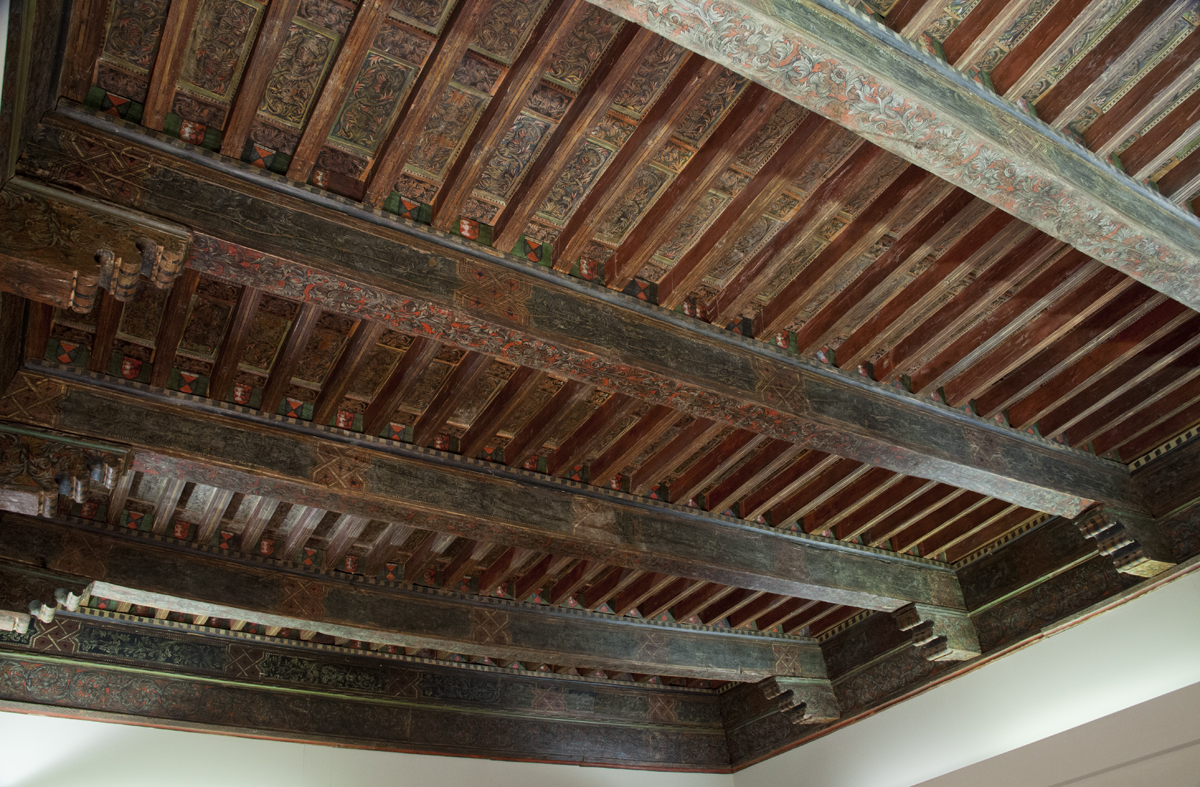
The paneled-wood ceiling overhead is characteristic of the Mudéjar style, a unique blend of Christian and Islamic ornament developed between the 1200s and the 1500s. The ceiling is a testament to the distinct blend of cultures and often peaceful coexistence that characterized the Spanish region during the medieval period. As a symbol of wealth, the ceiling created a powerful ambiance for gatherings of the nobility. The perpendicular layers of strong, narrow beams spanning the length of the ceiling create visual depth. Naturalistic floral decorations and geometric designs wrap around all of the wooden surfaces in three dimensions. While the painters of this ceiling were apparently trained in Islamic traditions, the woodworkers may have come from North Africa, and both the patron and owner of the house as well as its builder were probably Christian.
Vedanth Natarajan, Class of 2027, College of the Holy Cross
.jpg)
This page has paths:
- Spanish Ceiling (1952.18) Kaitlyn Stanton
- Sources Erica Belden
- Wood Kaitlyn Stanton
- Spanish Ceiling (1952.18) Kaitlyn Stanton
- Spanish Ceiling (1952.18) Kaitlyn Stanton
- Spanish Ceiling (1952.18) Kaitlyn Stanton
- Spanish Ceiling (1952.18) Kaitlyn Stanton
- Spanish Ceiling (1952.18) Kaitlyn Stanton
- Medieval (111) Kaitlyn Stanton
- All Objects Kaitlyn Stanton
Contents of this path:
- Spanish Ceiling (1952.18)
- When was the Spanish Ceiling made?
- Why was the Spanish Ceiling made, and how was it used?
- How was the Spanish Ceiling made?
- Who made the Spanish Ceiling?
- Where was the Spanish Ceiling made?
- What does the Spanish Ceiling tell us about the early global world?
- Spanish Ceiling: Sources and Further Reading
_thumb.jpg)