The Great War
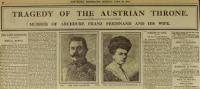
The catalyst that sent the world reeling into absolute chaos was the assassination of Archduke Franz Ferdinand. The Archduke was the heir to the Austro-Hungarian Empire of the time and was killed by a Serbian nationalist. Serbian nationalists were upset with how Austria-Hungarian powers controlled what was Bosnia and Herzegovina. With the assassination, the Astro-Hungarian leaders had all the enticement to annihilate the Serbian threat once and for all. The issue that arose, was the link between the Serbian people and those in Russia.
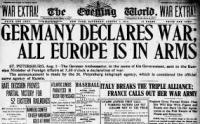
Austria-Hungary being supported by Germany began to make demands towards the Serbian government. The demands made the Serbian country and shell of itself, to the point, the Austria-Hungary leaders decided to annex, or invade Serbia to make it part of its own empire. Once Austria-Hungary made the move to complete this annexation, Russia stepped into defending Serbia. This, in turn, led Germany to declare war on Russia, whose allies, France and Great Britain both, in turn, joined the fighting.
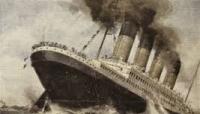
After 2 years of fighting, the United States entered the war in April 1917. The United States wanted to remain a neutral power during the conflict, as leadership did not feel they were ready to get involved in a conflict of the magnitude taking place in Europe. It wasn't until the sinking of a merchant ship, the Lusitania, that the U.S. decided to enter the war.
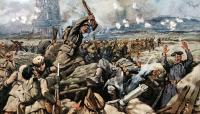
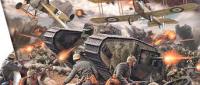
The war essentially began on July 28, 1914, when Austria-Hungary declared war and lasted until November 11, 1918. During that time, more than 9 million soldiers were killed, 21 million were wounded. These deaths and casualties were caused by “the first modern war", as this war implemented the first machine guns, tanks, aerial attacks, and gasses. Even with this new “technology”, the fighting remained rudimentary, as soldiers continued to fight in trenches, and in styles dating back to the 1800s.