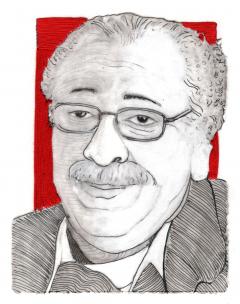
Dr. Raymond Tompkins
How did you come to San Francisco?
I was born in San Diego. My father was a Navy man. He was master chief petty officer. In 1955, he was transferred to Beeville, Texas. That’s just one year after Brown vs. Board of Education. Segregation was in full bloom. The base the housing was not integrated— we were the first. My father had straighter hair than me, so they assumed he was Hawaiian. I came back to California when my father was transferred. We moved to San Francisco because my mother’s parents were here. His active ship would come out of Treasure Island and dock there. That’s where he’d discharge.
We lived in Fillmore. Then they called it Negro Removal in the Western addition. Now after they got rid of more of the Negroes, we call it Lower Pacific Heights.
When the government incarcerated the Japanese and put them in the internment camps, the Fillmore was open. Blacks owned the businesses because they bought them from the Japanese who were only given five days. They had to sell the stuff [for] pennies on the dollar. That’s how the Blacks working over in Hunters Point in the shipyard had money to go buy the property in [the] Fillmore.
Most Blacks that are in the Bay Area are from Texas or Louisiana. They were recruited by the Manpower Commission to bring workers into the shipyards into the military industrial complex. In the Bay Area, Rosie the Riveter was Black. There was over a thousand Black women welders here in the shipyard in Hunter’s Point and in Richmond building the liberty ships.
The workers during World War II—they invested in the homes and bought homes because they were coming from the farms. My mother was a sharecropper her father was a sharecropper. Land had an important value. When they got their dollars, they bought homes, and that’s how the Black middle class was established.
Because of discrimination, all Blacks were forced to live in Bayview. The first Black woman, Mrs. James, was allowed to buy property in 1938. (This is Oscar James’ grandmother. He’s still with us.1 )
By Flora Weinstock and Marisa Weinstock(?) and Adrienne Hall (?)
This page has paths:
- Environmental Justice Henry Brannan