Thanks for your patience during our recent outage at scalar.usc.edu. While Scalar content is loading normally now, saving is still slow, and Scalar's 'additional metadata' features have been disabled, which may interfere with features like timelines and maps that depend on metadata. This also means that saving a page or media item will remove its additional metadata. If this occurs, you can use the 'All versions' link at the bottom of the page to restore the earlier version. We are continuing to troubleshoot, and will provide further updates as needed. Note that this only affects Scalar projects at scalar.usc.edu, and not those hosted elsewhere.
Miter from the Abbey Church of the Benedictine Monastery of St Peter - Elizabeth Griffith '24
12023-01-17T14:12:02-08:00Brooke Hendershottb0a907cd0f989ee79e94592378a1545647719cfb394471The Chertsey Tiles: Miter from the Abbey Church of the Benedictine Monastery of Saint Peter, Salzburg, Austria by Elizabeth ...plain2023-01-17T14:12:02-08:00Brooke Hendershottb0a907cd0f989ee79e94592378a1545647719cfb
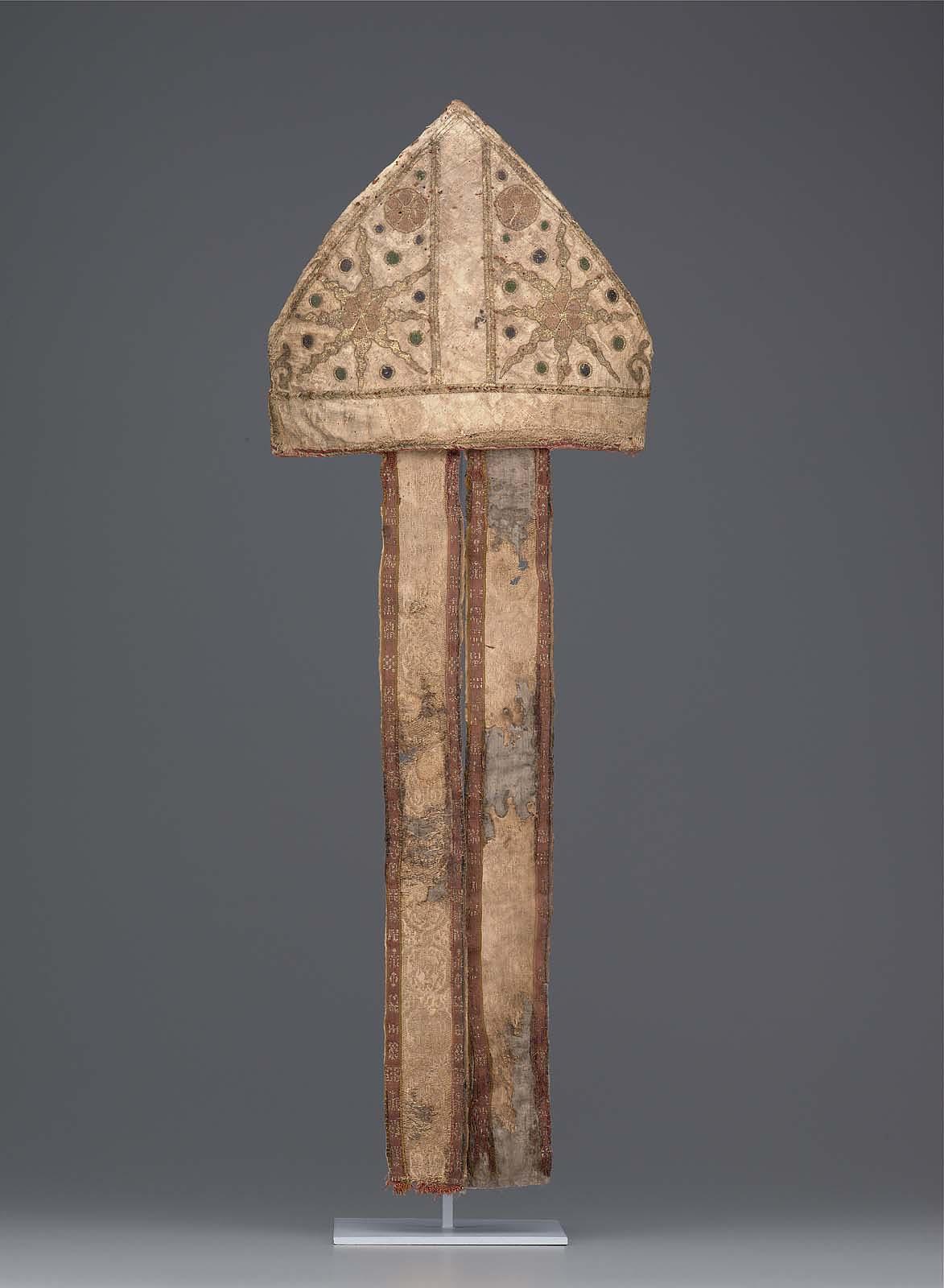
A miter was a liturgical headpiece worn by a bishop or an abbot during church ceremonies. This miter’s purple and gold roundels suggest the prestige and elegance of gemstones. Its eight-pointed stars imply an astrological and otherworldly significance. The silk was woven in the eastern Mediterranean, but the miter was constructed in Germany. The silk used for the miter may have traveled along trade routes or diplomatic channels established during the crusades. The miter itself could have been worn during a monastic event to call support for the crusades. Chertsey Abbey, where the Chertsey tiles were laid, was also Benedictine and could also have owned miters and other vestments made of Islamic or Byzantine silk.