Thanks for your patience during our recent outage at scalar.usc.edu. While Scalar content is loading normally now, saving is still slow, and Scalar's 'additional metadata' features have been disabled, which may interfere with features like timelines and maps that depend on metadata. This also means that saving a page or media item will remove its additional metadata. If this occurs, you can use the 'All versions' link at the bottom of the page to restore the earlier version. We are continuing to troubleshoot, and will provide further updates as needed. Note that this only affects Scalar projects at scalar.usc.edu, and not those hosted elsewhere.
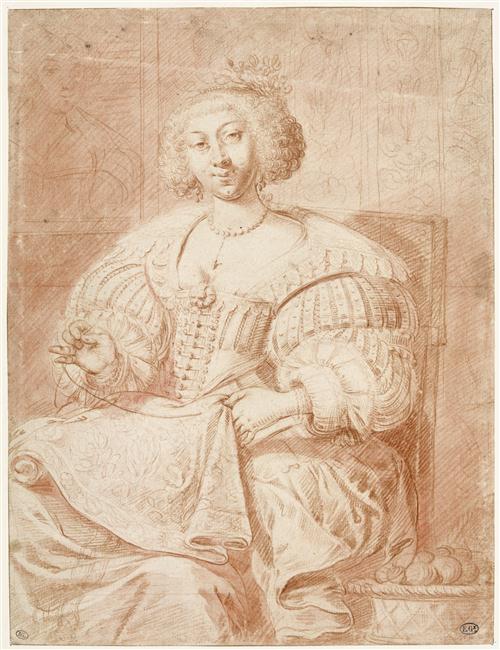
1media/woman embroidering_thumb.jpeg2022-11-21T07:35:36-08:00Elizabeth Griffith88d5cade55b1586c8abf308311a3248c872ba89c394471It was typical for a woman to have knowledge on basic weaving and embroidery skills. They would then use their skills to create different vestments.plain2022-11-21T07:35:36-08:00Elizabeth Griffith88d5cade55b1586c8abf308311a3248c872ba89c
This page is referenced by:
1media/group of women emroidering.jpeg2022-06-16T12:27:34-07:00Who made this?7image_header2023-01-15T12:09:17-08:00We do not know who constructed or embroidered this miter. However, in the Middle Ages, women were often responsible for sewing and embroidering. We can imagine that it was a woman with long experience of needlework who created this miter. Perhaps this miter was even created by a nun. Religious women often created textiles for use in religious environments. Germany was home to many convents. German convents such as Wienhausen and Lune were famous for their embroidery and still hold some of medieval embroidery to this day.