Scalar
With initial funding from the Mellon Foundation and support from the NEH and Institute for Multimedia Literacy at USC, Scalar was conceived under the umbrella of the Alliance for Networking Visual Culture, led by Tara McPherson and an inter-institutional group of scholars including Wendy Chun, Brian Goldfarb, Nicholas Mirzoeff and Joan Saab. The actual design and development of the platform was undertaken by the core Vectors team, consisting of McPherson, Loyer, Dietrich, Anderson and veteran scholarly multimedia creator, historian Phil Ethington. Scalar development also took place in parallel with the development of a an institutional network that includes several archive and library partners. These include The Getty Library, the Hemispheric Institute Digital Video Library and NYU Libraries, the Internet Archive, Shoah Visual History Archive and Critical Commons. Finally, Scalar negotiated a partnership arrangement with numerous university presses committed to exploring the platforms potentials for book-length publications as well as digital supplements to conventional print publications and electronic journal articles. These include Duke University Press, MIT Press, NYU Press, the Open Humanities Press, University of California Press, and University of Michigan Press.
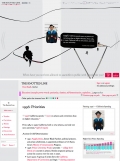
As with Vectors, development of Scalar was shaped in direct dialogue with scholars who participated in a series of NEH-funded workshops devoted to "Broadening the Digital Humanities" held between 2009 and 2011. During these workshops, Scalar designers and developers worked directly with scholars to implement strategies to address immediate research or project goals, marking a sharp distinction with the development process for many tools that are created with abstract digital humanities applications in mind. Because of its connections with the Vectors journal, many scholars come to Scalar expecting an authoring environment that approximates the richly designed, user-experience of a Vectors project. While Scalar does allow significant "look-and-feel" customization via CSS (cascading style sheets) and its database structure supports externally authored user-interfaces - see, for example, Erik Loyer's Flash interface for Evan Bissell's civil rights history project The Knotted Line - the emphasis within the platform's native affordances remains on information architecture, rather than highly interactive or dynamic user interfaces.
Scalar supports a variety of web-compatible digital files – images, audio, video, text – as well as the linear and non-linear organizational conventions of paths and tags, respectively. The database underlying Scalar "sees" these things as equivalent and capable of existing in any designated relationship to any other element. Another way of saying this is that the database does not rely on traditional hierarchical structures such as parent-child relationships or sets and subsets – each element in a project can be defined as having any kind of relationship to any other object. For example, authors may be familiar with the basic practice of annotating a video file with text or using tags to identify and retrieve elements of content. In Scalar, it’s possible to annotate a video with another video or create a tag that is a critical pathway unto itself. The creative potentials enabled by this type of flexibility in information architecture are best recognized in the reverse engineering of the critical processes it enables. That is to say, the affordances of Scalar’s flat database ontologies include the ability to ask different kinds of questions and respond with different kinds of answers. The real potential of Scalar is realized when it is used to rethink the potential structures of scholarly argumentation.
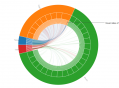
Historically there has been a divide between "close" and "distant" reading within humanities scholarship; with close textual analysis often perceived as a casualty of the movement to computational analysis of large collections of media. Scalar was deliberately architected to support both types of analysis, inviting authors to consider not just one or the other, but parts in relation to wholes. The platform offers built-in visualization tools for mapping the broad contours of a media archive as well as tools for doing analysis that may be as granular as commentaries attached to individual frames of video or pixels in an image.
This page has paths:
- Critical Interfaces Steve Anderson