Scalar's 'additional metadata' features have been disabled on this install. Learn more.
Colors in the waterMain MenuAna Drinovanaa7464d947287799e70e60041b3dd733413ebbe0
Gold
12017-04-14T07:44:50-07:00Ana Drinovanaa7464d947287799e70e60041b3dd733413ebbe01562213plain2017-04-28T06:09:59-07:00Ana Drinovanaa7464d947287799e70e60041b3dd733413ebbe0While the color of gold is similar to yellow, its fundamental difference originates from its composition and is explicit in cultural context. In Japanese art, gold is associated with Buddhism, as the objects of its practice often incorporate gold in reference to the Pure Land, a paradise promised to those who are properly worshipful and accumulate good karma. This significance aside, it was also a clear indicator of wealth, as its expense as a material is well-known.
Contents of this annotation:
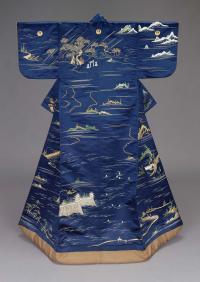
12017-04-20T19:37:03-07:00Ana Drinovanaa7464d947287799e70e60041b3dd733413ebbe0Uchikake3Edo period uchikake (outer robe). 19th century. Gifted to the Museum of Fine Arts, Boston in 1924. This robe is to be worn on the outside of other garments, in order to display to best advantage the gold embroidery on the white, green, and deep blue silk representing the sights of the city of Kyoto. The watery motif of the deep blue ground inspires a stillness of presence and is directly evocative of the cool waters surrounding Japan. White picks out sacred torii gates, whereas the green hills of Japan may be easily distinguished.media/Edo period uchikake.jpgplain2017-04-21T06:01:44-07:00Ana Drinovanaa7464d947287799e70e60041b3dd733413ebbe0
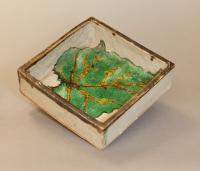
12017-04-27T17:38:23-07:00Ana Drinovanaa7464d947287799e70e60041b3dd733413ebbe0Funaki ware2Anonymous, undated. Ceramic. Smith College Museum of Art. The green leaf design at the bottom of this sushi tray is rich in color, providing a visual and naturalistic surface upon which the sushi can be arranged. The green leaf is painted atop a white base; the shape of the tray thus evokes the white of Japanese castle walls, all color and delicacy contained within.media/Funaki ware.jpgplain2017-04-27T17:43:35-07:00Ana Drinovanaa7464d947287799e70e60041b3dd733413ebbe0
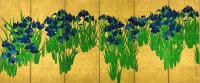
12017-04-27T17:36:52-07:00Ana Drinovanaa7464d947287799e70e60041b3dd733413ebbe0Irises2Ogata Korin (1658-1716), 18th century. Screen painting. Nezu Museum. The Rinpa school of painting revolutionized the representation of color, with its broad expanses of color and abstraction of space in favor of these planes. Taking yamato-e as inspiration with its swathes of gold and treatment of naturalistic scenes, Rinpa painting often uses hues like rich green to represent the lush Japanese landscape.media/Ogata Korin Irises.jpgplain2017-04-27T18:08:50-07:00Ana Drinovanaa7464d947287799e70e60041b3dd733413ebbe0
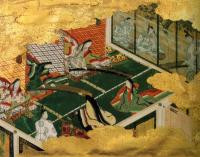
12017-04-14T05:13:55-07:00Ana Drinovanaa7464d947287799e70e60041b3dd733413ebbe0Genji Scrolls: Spring Shoots II2Anonymous, c. 1120-1140. Painted handscroll. The Genji scrolls are a national treasure, depicting the story of a young man and his adventures in the luxurious Heian court. The representation of the landscape in these scrolls are examples of yamato-e, a painting style that showcases the lush landscape of Japan in green hills and swathes of golden clouds. Here, green indicates the freshness in the tatami flooring, wherein the fresher the more luxurious.media/Genji monogatari emaki wakana ge.jpgplain2017-04-27T18:33:27-07:00Ana Drinovanaa7464d947287799e70e60041b3dd733413ebbe0