Scalar's 'additional metadata' features have been disabled on this install. Learn more.
Digital Exhibits: Ancient Art 203
Main Menu
Ancient Art
Table of Contents
Sample Exhibit - Herakles in Greek Art
Depictions of Herakles in Greek Art
Angyal- The Culture of Pre-Columbian Times
This exhibit displays the important symbols culture during ancient Pre-Columbia.
Aversa- Ancient Faces
The collection includes portraits of many Ancient faces made of marble, limestone, bronze and black basalt.
Brookes - Sculptures Of The Gods
A look at Sculptures of Gods during the classical and hellenistic period of Greek history. This will tell you the stories of the Gods being shown and the growth of realism during this period.
CERMINARA-Ancient Greek Figurines
Exploration of different Terracotta figurines from ancient Greece
Cooke -- Black Figure Art from Ancient Greece
This page will highlight some works that were made using black figure, which is named for the color of the figures depicted in the art.
Costa- Death and Afterlife
Foley - Statues and figures of Greek Mythology
My theme is Greek Mythology in the forms of statues and figures
Fowler
How the human body is depicted through Ancient Art
Harris - Greek Athletes
The Olympian games began in Greek times. These pieces will depict Greek Athletes doing the games
Joseph - Hellenistic Art
The Hellanistic art style focuses on realistic, natural human forms. Straying away from the rigid unnatural forms of ancient sculpture styles before it.
Lamon- Mythical Creatures in Greek and Cycladic Art
This exhibit will take a look at how Mediterranean civilizations depicted a few mythical beasts throughout different periods.
Leszczynski - Late Minoan, Creature, Covered, Gems
A collection of Lentoid gems engraved by Minoan craftsman. Some served a useful purpose as seals. This collection spans the Late Minoan I-II period to the Late Minoan II-IIIA period.
McDonough - Medusa in Ancient Greek Art
A look at one of Greek mythology's most feared creatures
Meehan - Ancient Spartan Art
Popular Art and Customs of Sparta and Laconia
Nelson - Ancient Egyptian Statues
This digital exhibit displays a collection of statues from Ancient Egypt
Ramos- Marble Figurines
Females figurines are an important part of ancient Greeks art history .
Raquet- The Acropolis Reunited
Putting the Parthenon back together
SHORT - Representations of the Minotaur and His Story
SmithKali - Depictions of the Human Body
Starrs--Art of the Trojan War
A sampling of pottery inspired by the mythical Trojan War.
Wible - Aphrodite
My theme is the representation of Aphrodite through different types of art.
Danielle Bennett
672675c081461104799d4151a54a1faf0c800419
Venus de Milo
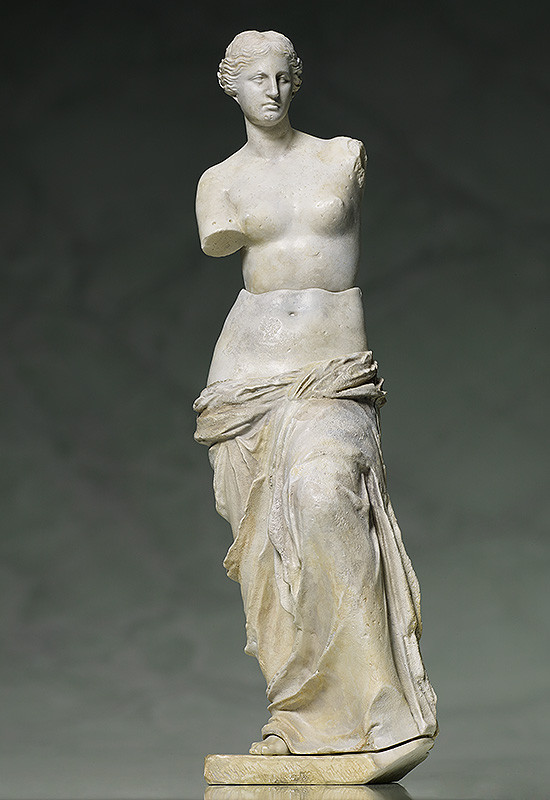
1 2017-10-13T12:20:07-07:00 Ben Brookes 4c48c9f168a71b2d207abeb7787f2ec78da7e8da 21307 2 Made of marble and stands at 2.03m (6 ft 8 in) is located in Paris at the Louvre Museum. It depicts Aphrodite(Venus) the Goddess of love. plain 2017-10-13T12:23:45-07:00 Ben Brookes 4c48c9f168a71b2d207abeb7787f2ec78da7e8daThis page is referenced by:
-
1
media/Artemision Bronze.png
media/Artemision Bronze.png
2017-10-12T07:28:40-07:00
Brookes - Sculptures Of The Gods
37
A look at Sculptures of Gods during the classical and hellenistic period of Greek history. This will tell you the stories of the Gods being shown and the growth of realism during this period.
plain
2017-10-13T19:26:27-07:00
Introduction
Sculptures have always been connected with Greek culture but it was during the classical and hellenistic period when the art form was revolutionized. During this period a change in sculptures began to happen. People were depicted more realistically. The poses became natural because of the advancement of science and the understanding of anatomy. Technical skill also moved forward allowing more detailed work to be done. Many of these sculptures were made in order to show good favor to the Gods. In this digital exhibition you will see the evolution of Greek sculpture and how Gods were depicted in this era.
The Artemision Bronze is made of bronze and stand at 209 cm (6ft. 8in.). The sculpture is of Zeus the God of Thunder or Poseidon the God of the Sea it is not clear to who it is because key key pieces is missing. In his hand would have been either a thunder bolt or a trident depending on who the God was. The advancement in tools allowed for greater detail in the work to be done. If you look at the face of the unknown god you can see the detail in his beard. Looking at the arms of the sculpture It is a prime example of how human anatomy became more realistic. Today it is unclear where the sculpture originated from or where it was traveling to when it was shipwrecked in the sea off of Cape Artmision. They estimate that it was made in 460BCE.
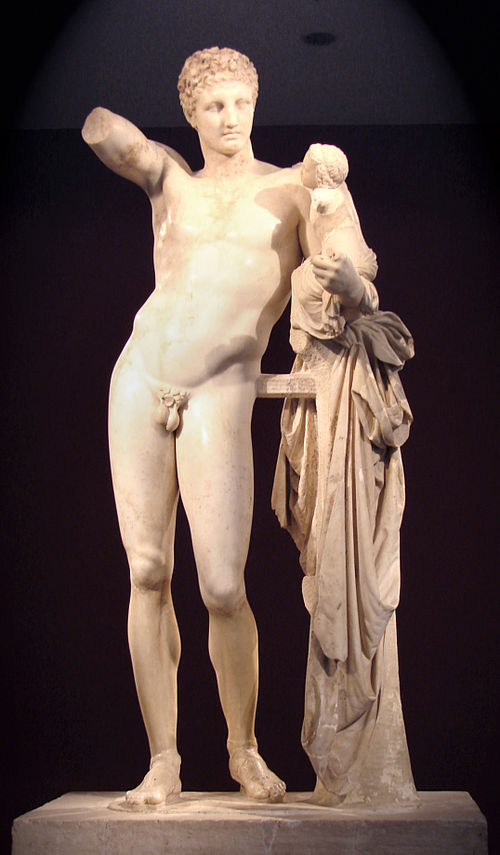
Attributed to one of the most famous Greek sculptors Praxiteles the statue of Hermes and The infant Dionysus is one of the icons of classical greek art. Hermes is the son of Zeus and the messenger for the Gods. Hermes had the ability to travel between the worlds. Due to this ability he became know as the protectors of roads and travelers. The infant shown in Hermes arm is Dionysus the God of wine and intoxication. Dionysus was another son of Zeus that was born in unusual circumstances. Due to Dionysus tittle as the God of wine and intoxication many cults were formed in his honor. Parts of the of the sculpture have been lost, most noticeably Hermes right arm. Along with the tree trunk and python that is on the left of them. The sculpture is also believed to have a reddish tint to Hermes' hair and sandals. The sculpture was rediscovered in 1874 newer Olympia it would take years for the full sculpture to be uncovered.
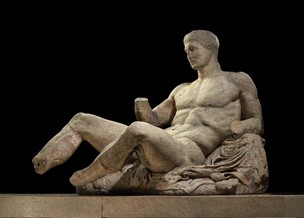
During the classical period sculptures began to be placed on temples. The Parthenon in Athens an example of sculptures being part of the architecture. On the east pediment of the Parthenon sat a sculpture of an adult version of Dionysus the God of wine. While most of it is lost it is understood that the sculpture is part of a larger scenes that is depicting the birth of Athena from the head of her father Zeus. In the scene Dionysus is shown looking away form the birth of Athena. What remains at the east pediment is located at the British Museum in London. Looking closely at the form of Dionysus you can see how the realistic form shined during the classical period. He is slightly twisted and one can see the way his abdominal muscles are positioned to reflect that pose.
One of the most important gods in ancient Greece was Aphrodite who was the Goddess of love. However she is more commonly known by her Roman name of Venus. She was the subject of great rivalry among men due to her beauty. This often lead to conflicts and all out war. Due to the love of her temples were made in her honor and she was celebrated all over Greece. The most famous representation of her that still remains is the Venus de Milo. Although she may have lost her arms the figure is still able to show key feature of her body. This allowed the sculpture to truly capture the beauty of the Goddess of love. Venus de Milo was sculpted between 30 and 100 BCE. It was found on the island of Milos in 1820. That is where the name Venus de Milo comes from. It is the inspiration for many modern artist. It is curently on display at the Louvre Museum in Paris.
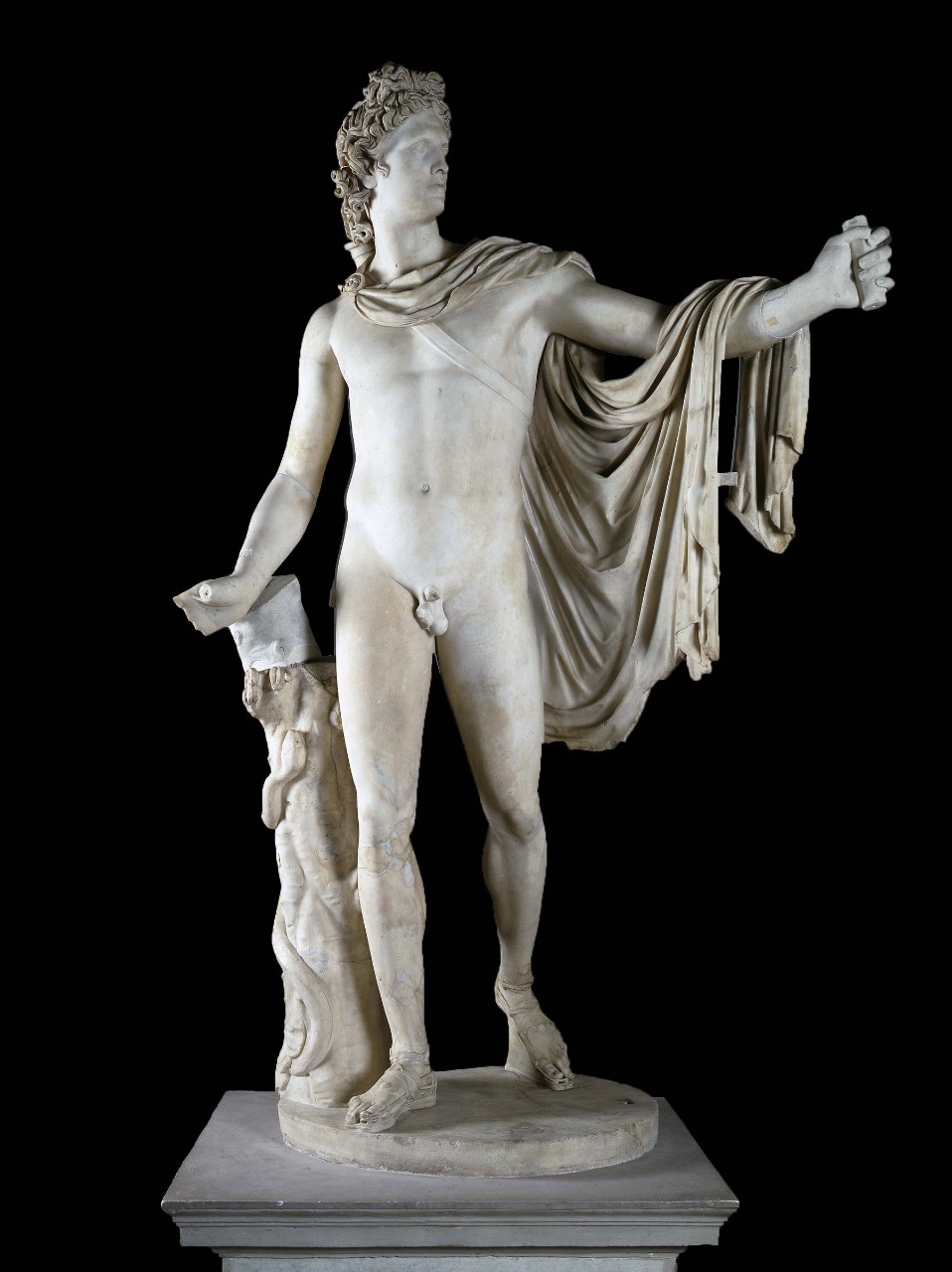
Apollo was one of the most import and complex Gods of ancient Greece. He is known as the God of sun, light, music, and knowledge. He became known as a healing God making him an important god in Greece. He was often said to have an athletic and youthful appearance. In the sculpture Apollo Belvedere he is shown this way. It dates back to the 350-325BCE the original sculpture has been lost but was cast from bronze. The one that is has survived is a marble Roman copy of the original dating back to 120BCE that stands at 2.24 m (7ft. 3in). It captures the human form of Apollo as he reaches out. What is missing from this copy is Apollo's bow that he is usually depicted with. The bow was most likely damaged over time. The youth face of Apollo can be seen allowing with the flowing locks of the young God. Looking at the legs of the sculpture you can see how the muscles are slightly impacted matching the realistic form they would be in from that positions. While this maybe a copy it is made from the same techniques as the original.