Scalar's 'additional metadata' features have been disabled on this install. Learn more.
Digital Exhibits: Ancient Art 203Main MenuAncient ArtTable of ContentsSample Exhibit - Herakles in Greek ArtDepictions of Herakles in Greek ArtAngyal- The Culture of Pre-Columbian TimesThis exhibit displays the important symbols culture during ancient Pre-Columbia.Aversa- Ancient FacesThe collection includes portraits of many Ancient faces made of marble, limestone, bronze and black basalt.Brookes - Sculptures Of The GodsA look at Sculptures of Gods during the classical and hellenistic period of Greek history. This will tell you the stories of the Gods being shown and the growth of realism during this period.CERMINARA-Ancient Greek FigurinesExploration of different Terracotta figurines from ancient GreeceCooke -- Black Figure Art from Ancient GreeceThis page will highlight some works that were made using black figure, which is named for the color of the figures depicted in the art.Costa- Death and AfterlifeFoley - Statues and figures of Greek MythologyMy theme is Greek Mythology in the forms of statues and figuresFowlerHow the human body is depicted through Ancient ArtHarris - Greek AthletesThe Olympian games began in Greek times. These pieces will depict Greek Athletes doing the gamesJoseph - Hellenistic ArtThe Hellanistic art style focuses on realistic, natural human forms. Straying away from the rigid unnatural forms of ancient sculpture styles before it.Lamon- Mythical Creatures in Greek and Cycladic ArtThis exhibit will take a look at how Mediterranean civilizations depicted a few mythical beasts throughout different periods.Leszczynski - Late Minoan, Creature, Covered, GemsA collection of Lentoid gems engraved by Minoan craftsman. Some served a useful purpose as seals. This collection spans the Late Minoan I-II period to the Late Minoan II-IIIA period.McDonough - Medusa in Ancient Greek ArtA look at one of Greek mythology's most feared creaturesMeehan - Ancient Spartan ArtPopular Art and Customs of Sparta and LaconiaNelson - Ancient Egyptian StatuesThis digital exhibit displays a collection of statues from Ancient EgyptRamos- Marble FigurinesFemales figurines are an important part of ancient Greeks art history .Raquet- The Acropolis ReunitedPutting the Parthenon back togetherSHORT - Representations of the Minotaur and His StorySmithKali - Depictions of the Human BodyStarrs--Art of the Trojan WarA sampling of pottery inspired by the mythical Trojan War.Wible - AphroditeMy theme is the representation of Aphrodite through different types of art.Danielle Bennett672675c081461104799d4151a54a1faf0c800419
12017-10-13T13:57:47-07:00CERMINARA-Ancient Greek Figurines8Exploration of different Terracotta figurines from ancient Greeceplain2017-10-13T15:49:04-07:00Exploration and Significance of Terracotta Figurines in Ancient Greece
Introduction Figurines made of Terracotta were popular in ancient Greece and were found during archeological excavations, some in complete form and some in fragments with pieces missing. In early Cylcadic Greece, they were using marble for figurines, then later started using Terracotta during the later ages. It is said that these figurines were used for multiple purposes wether it was for decorations in houses, charms to ward off evil, cult images, and also used as offerings to the gods in sanctuaries. When used as offerings, these figurines were usually deposited into the graves of the deceased to stand as gifts or protective devices for the dead, or also as cherished possessions of the dead. It is also said that these figurines were possibly used as children's toys acting as dolls, but some have dismissed this theory due to the fact that the figurines are too fragile, but one may never fully know. However, we do know that it is clear that there was not jus one function for these figurines, there were numerous functions and meanings for them. This exhibit will show some examples of popular ancient Greek figurines and their significance.
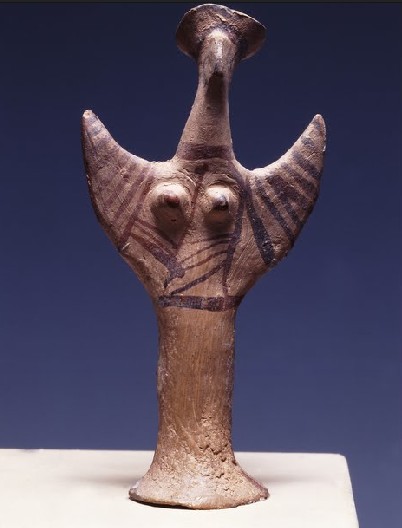
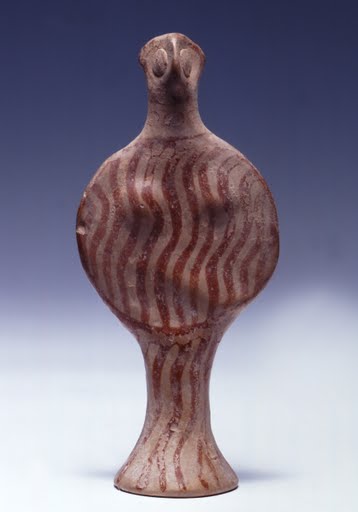
Looking into the Figurines These first figurines date 1300-1150 BCE. These are the Mycenaean Female Psi Figurine, and the Female Phi Figurine. They are made of Terracotta and the Psi is now in the Athens Museum of Cylcadic Art, while the Phi is at the Metropolitan Museum of Art in New York. These are called the Psi and Phi types because of their similarity to that corresponding letter of the Greek alphabet. These types of female figurines were frequently found in shrines, houses, or graves. They were also thought to have been used as cult objects. There are also many different theories for what these female figures could represent such as different goddesses, possibly of fertility. Others think they could have been used as toys as mentioned in the introduction above.
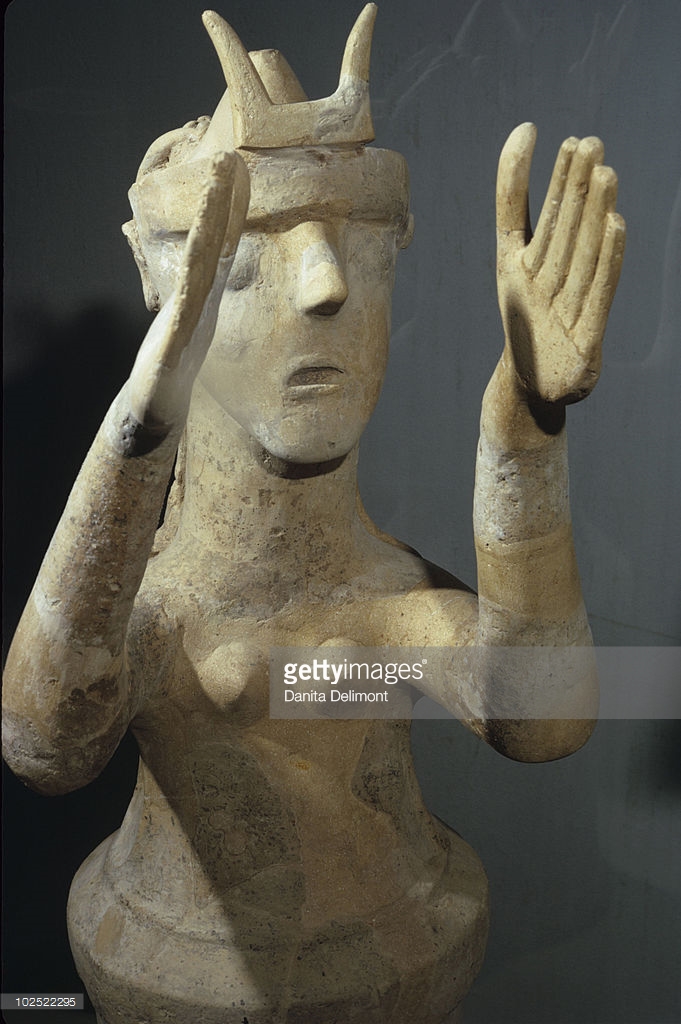
This figurine dates 1100-1000 BCE during the late Bronze Age and it is known as the figurine of the "Goddess with Raised Arms." This is a female figurine and was discovered in Karphi and is now in the Heraklion Museum in Crete. This dates to the period following the destruction of the Minoan palaces. Her arms are said to have been raised in a gesture of prayer. Her features include a long dress, a large head resting on a tall, strong neck, and top of her head is decoration with the horns of consecration. It is possible that this was a cult statue of a goddess, having some sort of religious significance.
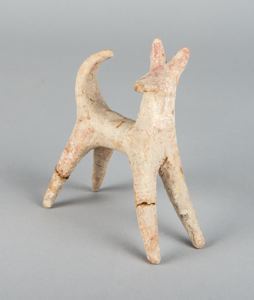
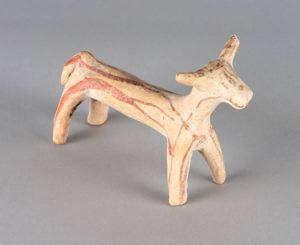
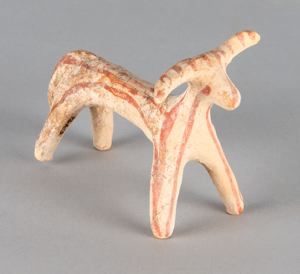
Figurines like the ones shown, a Figure of the Dog dated 600 BCE to 500 BCE, the Figure of the Bull dated 1200 BCE, and another Figure of the Bull dated 1300-1200 BCE. These small figurines have significance in Ancient Greek Minoan culture because they were used during ritual celebrations as sacrifice. They would hold these ritual celebrations in sanctuaries or temples that contained a monumental cult image of deity, and outdoor alter, statues, and votive offerings to the gods. These figurines were used as cult images and offerings to these gods during these rituals. The Bull was an animal that was especially worshiped and sacrificed during this period of time, which is why the bull figurines were especially popular.