Scalar's 'additional metadata' features have been disabled on this install. Learn more.
ADHD: Alternative Treatments
Main Menu
ADHD: The Fact and the Fiction
This project is intended to make connections between media portrayals of ADHD and their impacts on alternative treatments such as neurofeedback, behavioral therapy, parent training, and diet-alteration therapy.
ADHD Medications
Today, the use of ADHD medications such as Ritalin and Adderall is still the most popular treatment method for ADHD. Let's explore the adverse side effects of the medications, which are a reason alternative treatments have been gaining more attention recently.
Common Misconceptions
How YOU Can Avoid Parent Shaming
This page is designed to promote an active learning style for parents to avoid feeling shamed by media surrounding ADHD. The media often uses fear and anxiety to shame parents into trying treatments they are not comfortable with or spreading false information. I will teach you how to spot these things and avoid them!
Neurofeedback
Behavior Therapy
Behavior therapy is the most common alternative treatment for ADHD. It is currently recommended as a supplement to drugs but some parents believe that this treatment alone may be just as effective as a supplementation.
Parent Training
Diet Restriction
Diet restrictions are gaining popularity as an alternative treatment for ADHD. The Feingold Diet has stood out as a diet that improves behavioral issues with manipulation of diet.
About Me
Katy McCarthy
52d4dc2d6cf99de1642c9855dd2bae6c30ec3e42
Neurocore3
1 2017-04-21T14:07:45-07:00 Katy McCarthy 52d4dc2d6cf99de1642c9855dd2bae6c30ec3e42 16394 1
This page is referenced by:
-
1
2017-04-21T12:08:44-07:00
Neurofeedback
8
plain
2017-04-21T14:08:13-07:00
Treating behavior becomes complicated because there are many different approaches. You will explore neurofeedback, behavior therapy as a on on one treatment, and parent training. Each treatment offers its own unique way to treat behavior and looks at ADHD from a slightly different angle. Now let's explore the approach that neurofeedback takes to treating the behavioral symptoms of ADHD.
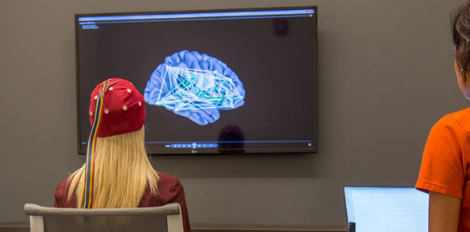
Behavior therapy, and in particular neurofeedback, is the most common and potentially the most accepted alternative treatment method for ADHD. Neurofeedback refers to the chemical messages that are sent by hormones and ions in the body and their interactions with various receptors throughout to keep it at a stable state often referred to as homeostasis. The behavior therapy method treats ADHD as a physiological imbalance. In general, children with ADHD lack important active circuits in the brain due to a lack of receptors or neurotransmitters (chemicals messages) (3). This translates to a low arousal in the regions and circuits of the brain that are associated with alertness, attention, and self control (3). Children are instructed to play cartoon-like video games that require a strategy to move a character around a simulated environment while connected to an EEG to observe the electrical activity in their brains. The idea is that these games will help children to understand important associations and neurological connections that most children their age are making. In a study published in the Journal of Psychology and Psychiatry in 2016, patients experienced at 93% retention rate of incorporating the behaviors they learned from their training sessions four months prior (4). Many children subject to cognitive training have had their symptoms significantly decrease in severity after their trials (4).
Neurocore is a company the focuses on using neurofeedback to treat the symptoms of ADHD. Specialists assess brain function using a Quantitative Electroencephalogram (qEEG) and look for deviations from normal set points. This allows for a individual treatment plan to be drawn up to focus on a specific region of the brain and "train it." Another initial test is Heart Rate Variability (HRV) to assess heart function because its function is vital to that of the brain. Sensory processing, impulsivity, and attention are measured using an Integrated Visual and Auditory Continuous Performance Test (IVA). Lastly, a behavioral checklist is filled out by parents to help a clinician begin to understand the issues that need to be addressed.
For more information on Neurocore please visit https://www.neurocorecenters.com/