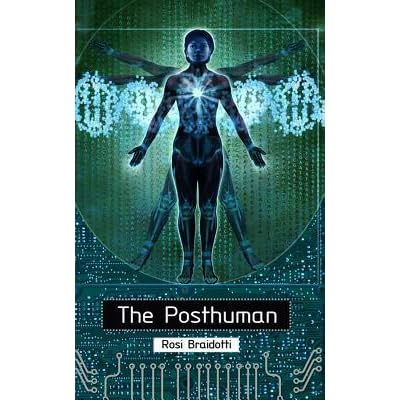
Becoming-Machine
The notion of becoming friends insinuates that both parties of the friendship are on the same ground, the same wavelength. For Klara to be an "artificial friend" signifies that she is not considered to be on the level of humans. The theory of becoming-machine goes against this whole idea, as it deconstructs the act of belittling machine and viewing them as mere objects.
The main belief of the theory of becoming-machine is to perceive the machine as more than just a creation stemming from human beings, but as a an entity of its own. However, there is more to this idea than just that concept. Braidotti suggests that, in order to be able to view machines as more than just a lifeless object, one must change how we view humans first. As human beings, we must succeed in perceiving ourselves as "bodies without organs". This means that our existence transcends that of just our body, as its functionality is not what defines our subsistence.
In order for humans and machine to have a friendly relationship, Braidotti mentions that it is important that machine should not be used merely for their functionality. As this would insinuate that the human and machine relationship is that of consumer and product. The posthumanist gaze suggests that machine should be recognized as more than a gadget, rather one should focus on building a playful and mutual benefiting relationship between human and machine.
Klara, who was built to be an artificial friend remains in that role throughout the novel. Even if it goes out of its way to rescue its friend, Josie, its ending was inevitable as it was left to fade away peacefully as machine. Hal 9000 on the other hand, attempts to cross the boundary between product and friend. It is made obvious that Hal 9000 starts to show signs of affection towards David as it worries about his feelings and mental state, yet this whole ordeal leads to its fall into revolt.