Thanks for your patience during our recent outage at scalar.usc.edu. While Scalar content is loading normally now, saving is still slow, and Scalar's 'additional metadata' features have been disabled, which may interfere with features like timelines and maps that depend on metadata. This also means that saving a page or media item will remove its additional metadata. If this occurs, you can use the 'All versions' link at the bottom of the page to restore the earlier version. We are continuing to troubleshoot, and will provide further updates as needed. Note that this only affects Scalar projects at scalar.usc.edu, and not those hosted elsewhere.
Identity in E-LitMain MenuIntroduction"Pieces of Herself"The first work of E-Lit with a theme of identity that we are showcasing is "Pieces of Herself" by Juliet Davis. The author of this path is Colin Crago."Fitting the Pattern"The second identity-themed E-Lit work is "Fitting the Pattern" by Christine Wilks. The author of this path is Kalan Hurdle."My Body - a Wunderkammer"The third E-lit work that has a theme of identity is “My Body - a Wunderkammer” by Shelly Jackson. Jackson embodies this theme through exemplifying the relationship a woman has with her body and how it adds to her identity. The author of this path is Freddie SanabriaAbout the AuthorsWorks CitedColin Cragobde30c21d820ae3e63a45de198178f1f4a0b4b8cKalan Hurdle72777df5ad8a17476da8fe9a899e5ebfb5327de1Freddie Sanabriad21117d75d281156e3dfd2b31c08ce24052b98b5
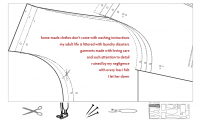
Fitting the Pattern is a work of interactive fiction that details the struggle with identity and self-expression of a young girl. This story enables the reader to dive deep into the physical and emotional turmoil experienced by the main character. Written/created by Christine Wilks, the narrative is an interesting take on the struggle that a young girl goes through in trying to differentiate her own identity from that of the expectations of society as well as her mother. In the story, the reader is exposed to the relationship between a daughter and her mother. The narrator's story is revealed through the various constructions and alterations that the reader makes on the clothing. A sewing machine, needle, a pair of scissors and a seam ripper are at the disposal of the reader form the very beginning. All the reader has to do is click on a tool and move the mouse over the designated areas. By cutting and stitching the different articles of clothing, the reader methodically unlocks certain segments of the author’s thoughts, personality and past; i.e. the author’s fears and insecurities she had while growing up. After each stitch/cut, a brand new image of the protagonist is presented to the reader. After a while, the reader is able to construct a picture of what the protagonist is like and what she is going through. As the story unravels further, the reader realizes through the fragments provided by the author, what she is having problems with. Her whole life, her mother has been telling her what the ideal woman should look like, how a lady should behave, and what to expect when she grows up. As she grows older, the protagonist is forced to come to terms with the fact that she may never be the ideal daughter that her mother may have wanted. She struggles to accept this and considers if she is okay with this harsh reality. The reader is able to dive into the personal feelings and thoughts of the protagonist as well as reflect on how the protagonists’ own thoughts and insecurities could impact the reader’s feelings.
Kalan Hurdle
This page has paths:
1media/home screen.png2017-11-13T12:00:58-08:00Colin Cragobde30c21d820ae3e63a45de198178f1f4a0b4b8c"Fitting the Pattern"Colin Crago5The second identity-themed E-Lit work is "Fitting the Pattern" by Christine Wilks. The author of this path is Kalan Hurdle.image_header5460072017-11-16T14:01:05-08:00Colin Cragobde30c21d820ae3e63a45de198178f1f4a0b4b8c