Thanks for your patience during our recent outage at scalar.usc.edu. While Scalar content is loading normally now, saving is still slow, and Scalar's 'additional metadata' features have been disabled, which may interfere with features like timelines and maps that depend on metadata. This also means that saving a page or media item will remove its additional metadata. If this occurs, you can use the 'All versions' link at the bottom of the page to restore the earlier version. We are continuing to troubleshoot, and will provide further updates as needed. Note that this only affects Scalar projects at scalar.usc.edu, and not those hosted elsewhere.
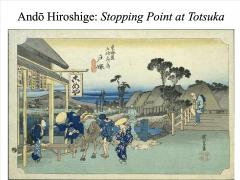
12018-06-12T00:43:00-07:00Ronae Matriano8ed24d71e6036affdb22f6e2fd0ec83a8e515e95149433plain2019-01-30T23:19:55-08:00Ronae Matriano8ed24d71e6036affdb22f6e2fd0ec83a8e515e95More importantly, for the purposes of our course, this system led indirectly to a flourishing infrastructure and culture of the road. This system of alternate attendance required good roads and amenities like inns, restaurants, and travel stops. In this class, we’ll see very little evidence of the military governors who traveled back and forth from Edo, but keep in mind that the roads and amenities used by the monks, poets, pilgrims, lovers, and fugitives we do encounter emerged as a result of this system.