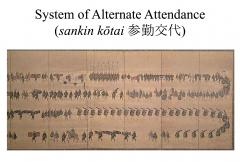
12018-06-12T00:39:35-07:00Ronae Matriano8ed24d71e6036affdb22f6e2fd0ec83a8e515e95149432plain2019-01-30T23:19:00-08:00Ronae Matriano8ed24d71e6036affdb22f6e2fd0ec83a8e515e95For instance: soon after the Tokugawa family establishes power at the beginning of the seventeenth century, the ruler (known in Japanese as a shōgun) institutes a clever policy to keep his followers in a relatively weakened state. In Japanese, this policy is known as sankin kōtai (alternate attendance system), and it required Japan’s military governors to spend their time alternating residences between their home domains and Edo, where they waited in attendance on the shōgun. Governors were required to maintain expensive second residences in Edo, leave their families in Edo as effective hostages, and spend staggering sums of money transporting themselves and their retinues between Edo and their home domains. This enormous outlay of effort and capital left them too exhausted (physically and financially) to consider rebellion.
This page references:
12018-06-12T00:39:11-07:00System of Alternate Attendance2media/systemofalternateattendance.jpgplain2019-06-08T00:34:58-07:00