Scalar's 'additional metadata' features have been disabled on this install. Learn more.
Water Policy (US & China)
Main Menu
Water Policy, Water Issues: The US & China
Jerry Yu Qin
23fc037ab548c03749b50c42a74105394d1ccf3a
Federal_Budget_2017
1 2017-02-13T09:53:04-08:00 Jerry Yu Qin 23fc037ab548c03749b50c42a74105394d1ccf3a 15032 1 plain 2017-02-13T09:53:04-08:00 Jerry Yu Qin 23fc037ab548c03749b50c42a74105394d1ccf3aThis page is referenced by:
-
1
2017-02-13T09:53:29-08:00
Federalism and Water Wars
10
Week 5 Response
image_header
2017-02-19T21:59:23-08:00
"Here it is, the year 2001, and we still do not have a coherent federal water policy, in spite of repeated calls for action for more than half a century....What is missing is a rational, consistent, comprehensive and yet concise federal policy...Considering that water is widely recognized to be the looming resource issue of this century, the lack of a clear and succinct federal policy is troubling"
-Janet C. Neuman (2001)
Jurisdiction of Federal Agencies:
Federal: interstate and international bodies of water for commerce..i.e."navigable waters"
States: Local water allocation
EPA: point source pollution
States: non point source pollution
Army Corps: Wetland management
Fish and Wildlife: endangered and threatened aquatic species
Bureau of Reclamations & Army Corps: Construct, manage, and operate large infrastructures and facilities
US Geological Survey: data collection and survey
Overall, federal funding for water is given to 30 different agencies every year.
Water resources in the U.S. are dynamic and diverse. Water policy follows this biophysical trend; the U.S. lacks one cohesive federal governing agency regarding its water policy but instead has a number of governance structures at the federal, state, and local levels. The current array of water policies is the result of a 150 years characterized by litigations guided by increasing interest in the range of benefits water provides as the country continues to expand. The fragmented nature of water governance in the United States is rooted in the U.S. system of federalism and the realm of water policy is indicative in many ways of the evolution of federal power since the founding of the country. And the role of federalism in the governance of water will have complex environmental, economic, and social impacts for the US for decades to come.
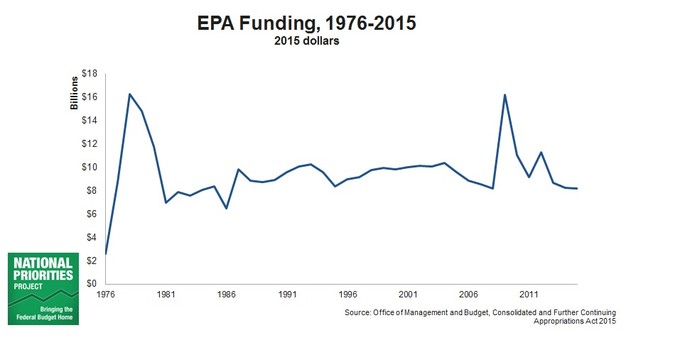
According to the 21st Century US Water Policy book, water usage in the US increased throughout the 20th century, peaking in the 1970s and 80s before declining slightly thereafter. Water usage increased over 200 percent between 1950 and 2000, driven by and eventually outpacing population growth (population increased 90 percent over the same period) as standards of living and increases in electricity usage of the average household as well as irrigated agriculture led to increasing withdrawals (Allin, 2008). But federal budget from Congress did not increase at the same rate. During the Reagan administration, the EPA lost nearly 40% of its budget between 1980 and 1984.
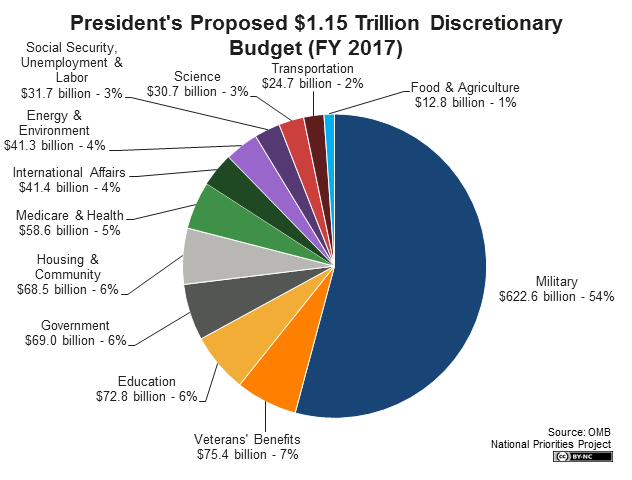
A main concern that I noticed during this week's readings was the excessive lack of data collected on water related information at the federal level. Not only are the policies not uniform in terms of authority and budget, but the data and intelligence on water are also disparate and disjointed. This lack of data can be attributed to many causes, among them is the gap between authority and administration. Although I had laid out earlier a list of the federal agencies who has authority over US's freshwater resources, the administration of laws and regulations are often very porous. This gap between whats the letter of the law and what is actually enforced at the local, county, and state level is one of key roadblocks to uniform federal governance. However, as recent cuts to the EPA's budget shows, it is extremely hard to implement environmental legislation when your finances are crippled from the top down.
In the book's review of CWA enforcement over the years, we see that the EPA had been forced to use its flexibility in increasing the number of criminal violations to refer some civil violators to the DOJ. Even with such ingenuity and effort by the EPA, the future is quite bleak if the jurisdiction ambiguity that illustrated in the Nebraska case is not properly defined in court and then vehemently enforced outside of it. Adding to it the utter lack of data collected, there is no clear way to determine "significant nexus" in court. With no clear definition of "navigable waters" and "relatively permanent" waterways, plus the impending cuts to funding for federal organization like the EPA, it will be impossible for enforcement to improve over the next four years of the Trump administration.