Mapping Robinson Crusoe
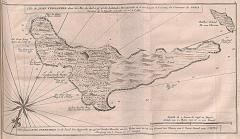
Some sources suggest that Daniel Defoe's inspiration for Robinson Crusoe was based on the story of real-life Scottish castaway Alexander Selkirk, who was stranded for four years on the island of "Más a Tierra," since renamed Robinson Crusoe Island in 1966. The island is one of three volcanic islands that comprise the Juan Fernández Islands off the coast of Chile. The other two islands are called "Alejandro Selkirk Island" (formerly Más Afuera) and Santa Clara Island.
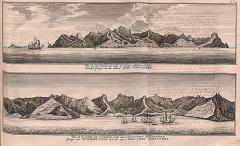
British Commodore George Anson circumnavigated the globe from 1740-1744. Some of the engravings in his A voyage round the world, in the years MDCCXL, I, II, III, IV depict what is now known as Robinson Crusoe Island, including his tent pitched on the island.