How Product Defects Translate Into Economic Costs for Consumers
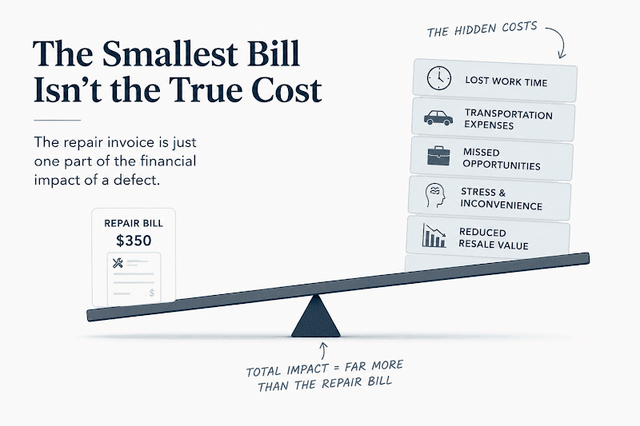
The first cost of a defective product usually looks obvious.
A repair invoice. A diagnostic fee. A towing charge. A replacement part. A few days without the product that was supposed to make life easier.
At first, the problem feels simple enough: something broke, someone has to fix it, and the consumer either pays the bill or waits for a warranty repair.
Then the quieter costs start arriving.
A missed shift. A rental car. A delayed class. A canceled appointment. Another call to customer service. Another trip back to the repair center. The defect may begin with one failed part, but the financial impact rarely stops there.
A product defect does more than create a repair problem. It starts an economic chain reaction.
The Repair Bill Only Tells Part of the Story
Most consumers judge a defect by the number printed on the invoice. That number matters, but it rarely captures the full cost.
A warranty repair may cost nothing at the counter, but still cost the consumer in real life. A car in the shop can lead to ride-share expenses, rental fees, missed work, childcare changes, and hours spent arranging the next appointment. A defective laptop may not require towing, but it can still disrupt schoolwork, remote work, client communication, or the ability to meet deadlines.
The repair bill answers one question: what did the fix cost?
A better question asks: what did the defect interrupt?
That shift matters because hidden costs often create more pressure than the repair itself.
How Defects Create an Economic Chain Reaction
A defective product can create several layers of cost at once. Some show up right away. Others build quietly in the background.
Direct Costs
Direct costs include the expenses consumers notice first: repair bills, diagnostic fees, towing, replacement parts, service charges, or temporary equipment.
Replacement Costs
When consumers lose access to a product, they often have to find a substitute for its function. A vehicle problem may require a rental car, ride-sharing, public transportation, delivery fees, or borrowed transportation. A defective appliance or device may require backup equipment, outside help, or extra services.
Time Costs
Time disappears quickly when a product keeps failing. Consumers spend hours scheduling appointments, waiting at service centers, repeating the same complaint, writing emails, uploading documents, and following up when no one responds.
Opportunity Costs
A defect can also interfere with income and responsibilities. Missed shifts, late meetings, skipped classes, canceled appointments, and delayed business opportunities may never appear on a receipt, but they still carry economic weight.
Value Costs
Recurring defects can reduce confidence in a product. With vehicles in particular, reliability affects resale value, trade-in confidence, future repair expectations, and the owner's ability to still trust the product for daily use.
A defect does not only cost money. It takes time, options, and confidence.
Why Vehicle Defects Make the Pattern Clear
Vehicles illustrate the hidden-cost problem especially well because they are expensive, serve essential daily needs, and shape routines around work, school, family, and transportation.
AAA estimated the average annual cost to own and operate a new vehicle at $11,577 in 2025, with depreciation averaging $4,334 per year. Consumers already carry a major financial responsibility before a defect adds repair downtime, transportation costs, and uncertainty.
Vehicle defects also occur often enough to be more than isolated bad luck. NHTSA reported 997 vehicle safety recalls in 2025, affecting more than 29 million vehicles in the United States. The agency also notes that millions of recalls go unrepaired or unaddressed each year.
A recall differs from a personal warranty dispute, but both point to the same reality: when a product affects safety, transportation, or daily routines, a defect can quickly become bigger than the failed part.
When Downtime Becomes the Real Expense
Downtime often hides the real expense.
A vehicle out of service means a loss of transportation. A laptop that keeps shutting down means lost work or study time. A defective refrigerator, washer, or phone can disrupt an entire household.
One repair visit may feel manageable. Repeated downtime changes the situation. The consumer no longer deals with a single inconvenience. They manage a pattern of disruption.
Every extra appointment takes more time. Every failed repair creates more uncertainty. Every repeated problem raises the same uncomfortable question: can this product still be trusted?
That question carries financial weight.
How to Calculate the Real Cost of a Defective Product
Consumers do not need a complicated system to understand the real cost. A simple record can reveal the full picture.
Step 1: Start With the Direct Expense
Write down repair bills, diagnostic charges, towing fees, replacement parts, rental costs, and any other out-of-pocket payments connected to the defect.
Step 2: Add the Cost of Substitutes
Track ride-shares, rental cars, public transportation, delivery fees, backup equipment, or outside services used because the defective product was unavailable.
Step 3: Count the Downtime
Record how many days or hours the product could not be used. For vehicles, include days at the repair shop. For electronics or appliances, include the time the item remained unusable or unreliable.
Step 4: Note Missed Commitments
List missed work, late arrivals, canceled appointments, delayed school responsibilities, or business opportunities affected by the defect.
Step 5: Save Proof of the Pattern
Keep repair orders, service reports, warranty paperwork, emails, photos, videos, written explanations, and notes showing whether the same problem returned.
That process turns a vague complaint into a measurable story. It helps consumers understand not only what broke, but what the defect costs in real life.
Documentation Does More Than Organize Paperwork
A warranty defines the promise. Documentation shows whether that promise held up.
The Federal Trade Commission explains that written warranties carry legal responsibilities, and sellers generally cannot offer a written warranty on a consumer product while fully avoiding implied warranty obligations.
For consumers, the practical lesson stays simple: save the warranty, save the repair history, and keep important communication in writing.
Phone calls may solve small issues, but emails create a clearer paper trail. After an important phone conversation, send a short follow-up email confirming what the service center, seller, or manufacturer said.
Good documentation will not make a defective product disappear. It will make the consumer’s position clearer, stronger, and harder to ignore.
When Repeated Vehicle Defects Deserve a Closer Look
Not every failed repair signals a larger consumer-rights issue. Sometimes a second visit solves the problem. Sometimes a part arrives late. Sometimes the first repair misses the underlying cause.
Repeated failure deserves more attention.
California consumer guidance explains that the Lemon Law Presumption can apply when a vehicle problem falls under the manufacturer’s warranty, first occurs within 18 months or 18,000 miles, reduces the vehicle’s use, value, or safety, and does not result from abuse.
For California consumers repeatedly dealing with the same covered vehicle defect, a lemon law lawyer in Pasadena can help review whether the repair history indicates options beyond another service appointment.
The goal is not to turn every repair frustration into a legal dispute. The goal is to recognize when the ordinary repair process no longer reduces the economic damage.
Practical Ways Consumers Can Limit the Damage
Consumers may not control when a product fails. They can control whether the failure gets documented clearly enough to matter.
Keep the Full File
Save purchase documents, warranty terms, repair invoices, service reports, receipts, emails, photos, videos, and written explanations from the company.
Track Downtime Early
Write down when the product stopped working, when it went in for repair, when it came back, and whether the same issue returned.
Communicate in Writing
Use email when the issue matters. Written communication creates a timeline that memory alone cannot provide.
Escalate Before the Pattern Gets Messy
When the same failure keeps returning, pause before agreeing to endless repair attempts. Review the record, organize the timeline, and consider whether the problem needs a stronger response.
Count the Full Cost, Not Just the Invoice
A defective product should never be measured only by the repair bill. The true cost includes the time lost, transportation replaced, work interrupted, plans changed, confidence reduced, and effort required to prove the problem kept happening.
Consumers who track that full picture make stronger decisions. They can see when a repair issue remains manageable, when the losses start to compound, and when one more repair appointment no longer makes economic sense.