OVERVIEW
For better or worse, video games are here to stay. They have become part of our routine, being easily accessible through smartphones, computers, and specialized consoles. The media makes speculations about their effect on children's psyche, companies use their simulation features to train employees, and scholars have been studying them as cultural artifacts and lately, even as art.
But one frequent critique made regarding games has to do with their lack of diversity. This becomes painfully obvious when we look at titles by AAA publishers such as Ubisoft, EA Games, Square Enix or Wizards of the Coast. Their products form a somewhat homogenous body of experiences: war-themed FPS, high-fantasy or medieval-Europe inspired RPGs and sports simulators are the top-sellers and they were all created with white-male-players in mind.
In chapter 1 of 'Rise of the Videogame Zinesters', author and game designer Anna Anthropy addresses this problem by pointing out that the game industry began in white-male-dominated fields, such as engineering and programming. This led to video games initially being produced by and for the same group of people, which in its turn made it difficult for them to incorporate other perspectives.
Times are changing and nowadays more people than ever before are playing video games, but there are still invisible walls separating those who create and those who play them. For instance, despite the fact that half of the players today are female, data from both HEVGA (Higher Education Video Games Alliance) and IGDA (International Game Development Association) have disclosed that in North America, only 30% of the students in undergraduate game-related programs are women. That number falls to only 22% when we move the focus the game-industry workforce. The research didn't incorporate other minorities, though it is not difficult to imagine what the results would be.
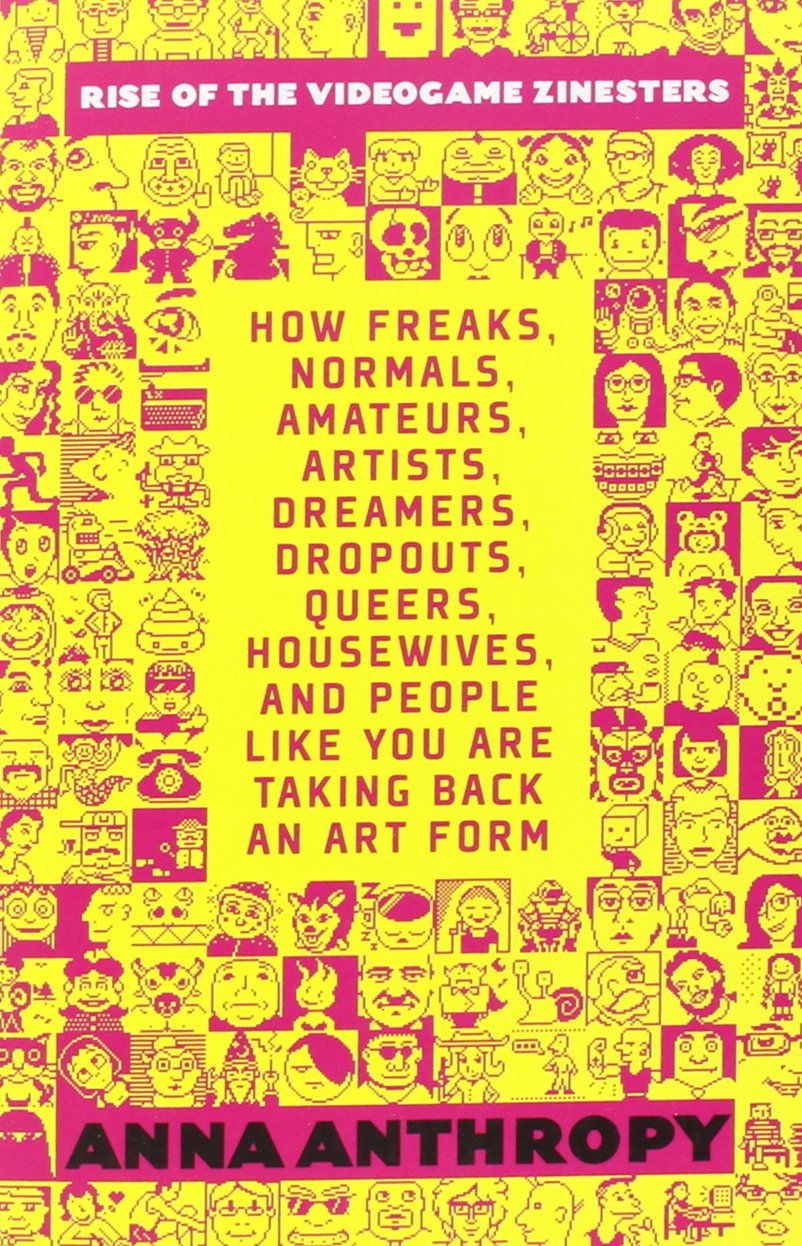
Thankfully, as Anthropy also points out, there has been a lot of effort put into the creation of tools that allow people without the resources and expertise of big studios to bring a broader vision into video games. One such tool is the Unity engine, a valuable technological weapon in the independent game-developer arsenal, and the main topic of this chapter.
Unity is at the very forefront of change, and the engine is closely associated with the boom of indie games witnessed in the scene. Many of these independent creations became quite successful both financially and in the eyes of the public, as was the case with the latest hyped title Hellblade: Senua’s Sacrifice.
As a result, it’s not uncommon now to find rogue game-makers working in private projects, acquiring money through crowd-funding, and then self-publishing directly into hubs like Steam.
This is a major walk-away from the past dynamics of simply joining the ranks of well-established publishers and following the same old game-formula for maximum profit. It is a shift that will have an influence on how this multibillion-dollar industry - recognized as such by the likes of Forbes and The Economist -go about its business.
Big studios have shareholders and invest large sums in games, to the point where innovative concepts are a risk they were not usually willing to take. But now, with so many alternatives in the market, they can't afford to be as conservative.
Another positive twist is in the sheer variety in terms of mechanics, themes, and visual choices a broader group of producers can achieve.
If this is all connected to the Unity engine, it is important that we understand what exactly is a game engine and what other options are there. To learn more, follow this path to What is Unity?