Sign in or register
for additional privileges

The Viking World

A History in 100 Objects

Austin Mason, Jordan Cahn, Sophie Bokor, Nick Cohen, John Scott, Ben Pletta, Rowan Matney, Justin Berchiolli, Lauren Azuma, Phineas Callahan, Ari Bakke, Nick Carlsen, Sarah Wang, Peter Hanes, Alperen Turkol, Claire Jensen, John Kennelly, Madeline Cosgriff, Quinn Radich, Kai Matsubara-Rall, Leah Sacks, Adante Ratzlaff, Kerim Omer Kadir Celik, Jane Kelly, Liza Davis, Hannah Curtiss, Authors
Weapons, page 1 of 13
Previous page on path     Next page on path

Other paths that intersect here:
 
 
  • Death
  • Page 2 of 13 in path

You appear to be using an older verion of Internet Explorer. For the best experience please upgrade your IE version or switch to a another web browser.

Burial Sword

First and foremost, the presence of this sword at a Norse burial in Scotland reminds us that, despite our attempts to dig deeper into Norse life, violence was a major aspect of the Norse presence in the British Isles.1  The sword itself is double-edged and made of iron with a leather grip, and was found with remnants of a wooden scabbard.2  Beyond that, however, the location of the burial is informative.  Found near Balnakeil Bay at the northernmost tip of Scotland, this is evidence of Norse activity and settlement in along the north and west coasts of Scotland, away from the more heavily populated Pictish east coast.  
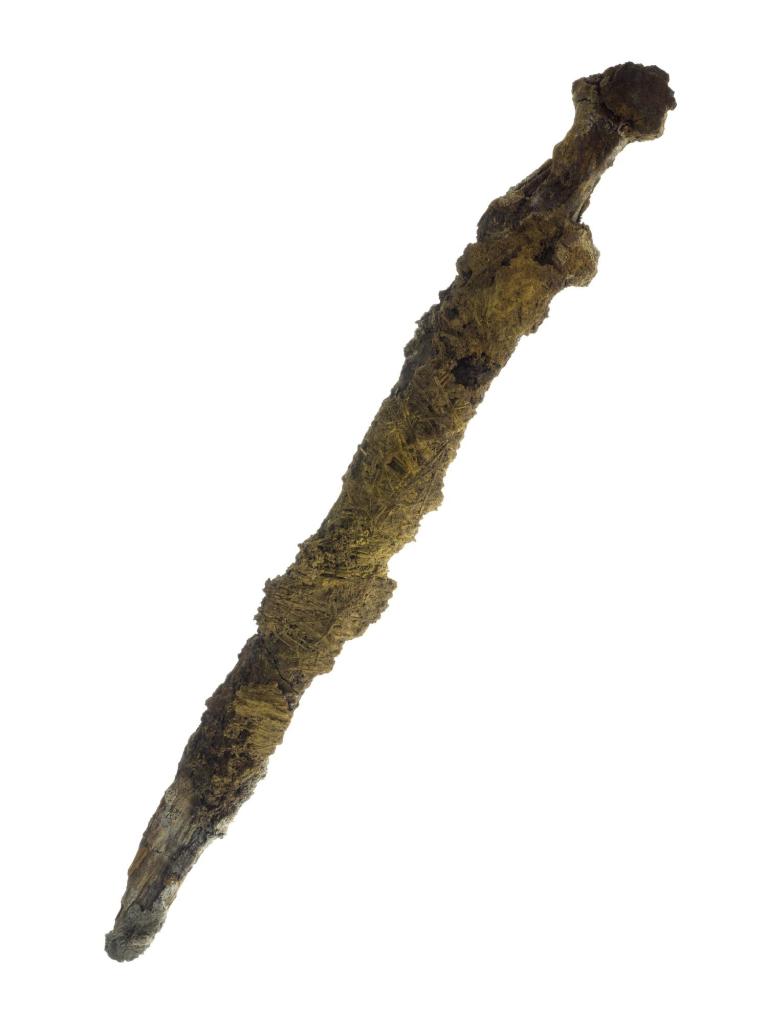
The sword was found, along with several other weapons, in the grave of a male child.3  While one might expect to find such weapons buried with an adult warrior, the fact that they were buried with a young boy indicates that they were viewed at least in part as status symbols, not just as implements of war.
Comment on this page
 

Discussion of "Burial Sword"

Add your voice to this discussion.

Checking your signed in status ...

Previous page on path Weapons, page 1 of 13 Next page on path

Death    Weapons    Metalwork    Iron    Scotland    800-1000 CE

Related:  Funeral of Emperor Leo V, 820 CE.,  Stirrup,  Penny From the Reign of Anlaf Guthfrithsson,  The Silver Penny of Sven Estridsen,  Theme,  A Mold for Religious Amulets,  Norse Key,  Iron Hatchet Head, 9th century,  Decorated Sword Pommel,  The Birka Girl,  Brooch in the Urnes Style from Kiaby, Skåne, Sweden,  Grey Ceramic Pitcher,  Reins Guide in the Borre Style,  Iron Sickle, 800 AD,  Gold Armring,  Kiaby Brooch,  Ranvaig's Casket,  Whalebone Plaque,  Location,  Jelling Stone,  Helmet from Grave I at Vendel, Sweden,  Earl of Pembroke's Sword,  Ring with Inscription "To Allah",  Materials,  Iron Seax,  Clench Bolt,  Bow Brooch in Copper and Garnet,  Pattern-Welded Sword,  Copper Alloy Mount for a Stirrup,  Silver Bracelet,  Drinking Horn / Terminal,  Two Volva Staffs,  Iron Spearhead with Silver Embellishments,  Suontaka Sword,  Mammen Axe,  Picture Stone,  Borre Style Pendant,  Skuldelev Ship 2 - The Great Longship,  Carriage Wheel Fragment,  Rhenish Glass Beaker,  Leather Whip, 11th century,  The New Valkyrie,  DEMO: Circular Bracteate Pendant,  Time,  Iron Necklet,  Eigg Sword Hilt,  Chess Pieces from the Isle of Lewis,  Dress Pin in Bronze,  Weaving Batten,  Cup from the Halton Moor Hoard,  Piraeus Graffiti Lion,  Oseberg Ship,  Terminal for an Open Ring Brooch,  Hoard Find from Vester Vedsted,  Antler Comb with Matching Case,  Uppland Runestone 613,  Finnish Bronze Hoard,  Silver Figure of Freya,  The Ulfberht Sword,  Animal Head Post from Oseberg,  Scale and Weights from the Hebrides,  Brass Ring,  Abassid Coin,  Birka Crucifix,  Rune stone Sö 108,  Tjängvide Image Stone,  Silver Armlet,  Hemdrup Stick,  Gokstad Ship