A Deeper Look
Airlift operations were conducted daily, often in inclement weather. Squadrons of American and British aircraft delivered tons of goods per day to West Berlin. The sorties flew in tight patterns, landing sometimes as frequently as four planes a minute into one of three Berlin airfields.
In the first months of the operation, the airlift gained international fame for delivering food and coal to blockaded Berliners. Many pilots, added bundles of gum and candy to their payload for the crowds of children near the airfield. These "Candy Bombs", gained renowned fame, and soon donations of candy and gum flooded in. In anticipation of winter, clothing donations were also collected from U.S. citizens and businesses for transport to Berlin. Red Cross medical supplies were shipped in the airlift, and passengers were permitted to travel between West Germany and Berlin on a limited basis.
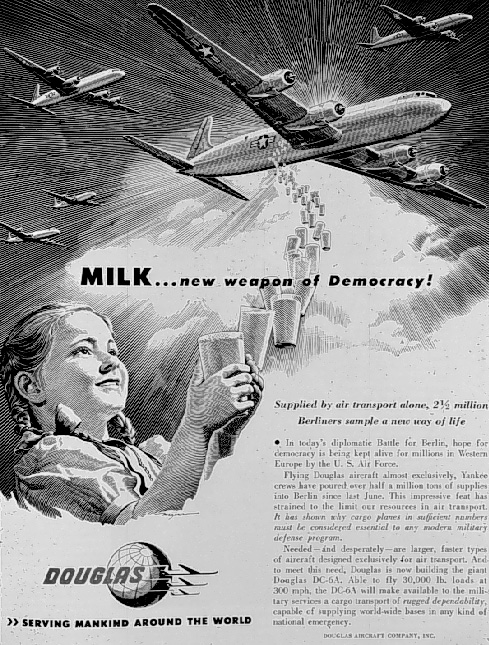

At the height of the airlift, as preparatory efforts for the winter of 1949 were underway, British forces drafted commercial airliners into service. The maximum effort launched by the Combined Airlift Task Force occurred on April 16, 1949. Known as the "Easter Parade," the airlift delivered 12,940 short tons of cargo, in 1,398 individual sorties, in one day, with planes landing every 45 seconds.
Sustained airlift operations required a large-scale military effort not only in the air, but on the ground as well. Since Britain and France were still coping with post-war shortages at home, most supplies were shipped from the United States across the Atlantic to American, British, and French bases in West Germany for final transport to Berlin. Once in Berlin, cargo from American aircraft required hand loading and unloading because the modified aircraft could not support palate loads. Sacks of flour, coal, and other goods then were transported to locations established for distribution.
Major General William H. Tunner commanded the operation with the assistance of a deputy officer, RAF Air Commodore, J. F. Merer. Under their direction, the airlift employed increasingly complicated flying maneuvers and sophisticated technology to maximize the amount of cargo delivered to Berlin. The command team was primarily concerned with operational safety, since planes were required to fly at full tonnage, for long flights, in tight flying and landing patterns. Constant revision of safety standards and operational procedures, the installation of sophisticated ground radar, as well as increased pilot training, aided the success of the Berlin Airlift while minimizing casualties and accidents.

In April 1950, The Big Lift was released Although this film is a Hollywood adaptation, it will give a better look at the mission itself. Filmed on location, The Big Lift is a reenactment of the Berlin airlift of 1948. Flexing their postwar muscles, the Russians blockade the Western sector, refusing to allow the Allies to ship supplies to the starving Berliners. From their headquarters at Templehof Airport, a group of courageous American flyers risk their lives to transport supplies by air.
This page has paths:
- Home Samuel Gordon