Thanks for your patience during our recent outage at scalar.usc.edu. While Scalar content is loading normally now, saving is still slow, and Scalar's 'additional metadata' features have been disabled, which may interfere with features like timelines and maps that depend on metadata. This also means that saving a page or media item will remove its additional metadata. If this occurs, you can use the 'All versions' link at the bottom of the page to restore the earlier version. We are continuing to troubleshoot, and will provide further updates as needed. Note that this only affects Scalar projects at scalar.usc.edu, and not those hosted elsewhere.
Beyond the Boundaries of Fantasia: An ancient imagining of the future of leadershipMain Menuhow to enjoy this albumYou Can Go Your Own WayI Know What Boys LikeSocrates' Last StandThe Song Remains the SameSpirits in the Material WorldA Political Thriller (c. 63 BCE)Born to Run"Caesar gained glory by giving, helping, and forgiving...Cato, on the contrary, preferred to be, rather than to seem, virtuous." - Sallust, Bellum Catilinae 54Golden YearsStranger than FictionMoney TalksHe Will Rock YouGetting to Know YouWho Runs the World? Girls!Meet the New BossI'm Every WomancreditsProject244106e9d2bdcdebde02dbbf69f852d44930279dSunoikisis leadership group
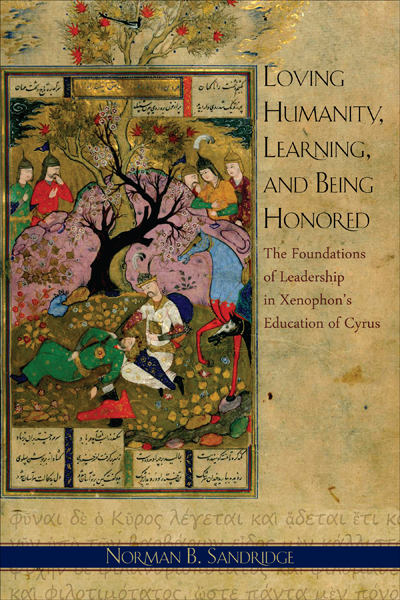
Loving Humanity, Learning, and Being Honored, Book Cover
12016-05-18T09:33:39-07:00Deeper Cuts into Xenohpon's Education of Cyrus6plain2016-05-18T13:01:36-07:00To learn more about Xenophon, his life and literature, check out Eve Browning's exceptional biography of him at the Internet Encyclopedia of Philosophy.
To (learn to) read Xenophon's Education of Cyrus in ancient Greek, check out Cyrus' Paradise, with extensive tutorials, grammatical aids, and expert commentary.
For more on the historical Cyrus check out Reza Zarghamee's biography of him, Discovering Cyrus: The Persian Conqueror Astride the Ancient World (2014).