Thanks for your patience during our recent outage at scalar.usc.edu. While Scalar content is loading normally now, saving is still slow, and Scalar's 'additional metadata' features have been disabled, which may interfere with features like timelines and maps that depend on metadata. This also means that saving a page or media item will remove its additional metadata. If this occurs, you can use the 'All versions' link at the bottom of the page to restore the earlier version. We are continuing to troubleshoot, and will provide further updates as needed. Note that this only affects Scalar projects at scalar.usc.edu, and not those hosted elsewhere.
Self-fashioning: Deconstructivist Approach and Post-Gender Curatorial Practices in the World of Fashion
Main Menu
Charles Sirisawat-Larouche
b6ad6d1a6de4c926cdef3dafe6adb7d5f4702fd8
Mugler - Chimère
1 2019-04-17T08:40:34-07:00 Charles Sirisawat-Larouche b6ad6d1a6de4c926cdef3dafe6adb7d5f4702fd8 33399 3 Chimera (1997-1998 Runway): Using the animality of the lion-monster figure to highlight feminine qualities into a new framework. plain 2019-04-17T08:54:07-07:00 Charles Sirisawat-Larouche b6ad6d1a6de4c926cdef3dafe6adb7d5f4702fd8This page is referenced by:
-
1
media/Fashion-Looks-Forward_Utopian-Bodies_Exhibition_Stockholm-_dezeen_936_12.jpg
2019-04-01T15:44:50-07:00
The Beginning of a Journey into self-styling embodied and affective turn
21
visual_path
2019-04-17T20:06:50-07:00
Within the context of posthuman subjectivity, self-styling is a concept discussed by Rosi Braidotti in terms of self-organizing beings within the nature-culture continuum. Self-styling is a notion which is not challenged by Braidotti's "The Posthuman" book in terms of fashion identity and self-agency in the fashion world (1). The way Braidotti alludes to self-styling is limited to the account of changes in an auto-poeisis understanding of consciousness and intellectual understanding of self-styling as a site of resistance. As I have been questioning the rise of fashion in museums and the implications of gender normativity, I will adopt a deconstructivist methodology to better undermine the binary between women and men to move beyond the anthropocentric male subjectivity in the museum narrative and discursive space.
By analyzing and comparing the curatorial approaches of Thierry Mugler's exhibition Couturissime in Montreal Museum of Fine Arts with other possible ways of reframing a posthuman curating practice, I will critique the linear, the lack of spatial and affective engagement in an experimental use of affective turn into self-styling display of fashion. In this exploratory encounter with Thierry Mugler's exhibition, there are certainly multiple paths that I will not touch upon due to the scope of my research. For instance, the digital museum fashion practices, the biological male and female differences in the interplay of fashion, the sexual and the cultural specificity through fashion will remain open to further discussion.
As I was building a new self-styling subjectivity, I propose alternative approaches to the linear and humanist self-centred relational subject in curatorial methodologies. I would like to transcend the fashion subjugation to the elitism and to the unidirectional material way of thinking.
Primary, I would like to draw the boundaries between self-fashioning and self-styling practices to conceptualize new forms of engagement with art based on recovering creative use of non-human affects and by stressing the minoritarian embodied self. By working with the semiotic of self-fashioning and self-styling, I want to create a shift from an individual fashion into a collective and non-universal subjectivity. By attempting to displace theoretical self-organizing practices in the fashion world, I wish to engender overlapping zones between the humans, non-human life, and materiality in order to set an interconnection between power relationships in the display and practices of fashion.
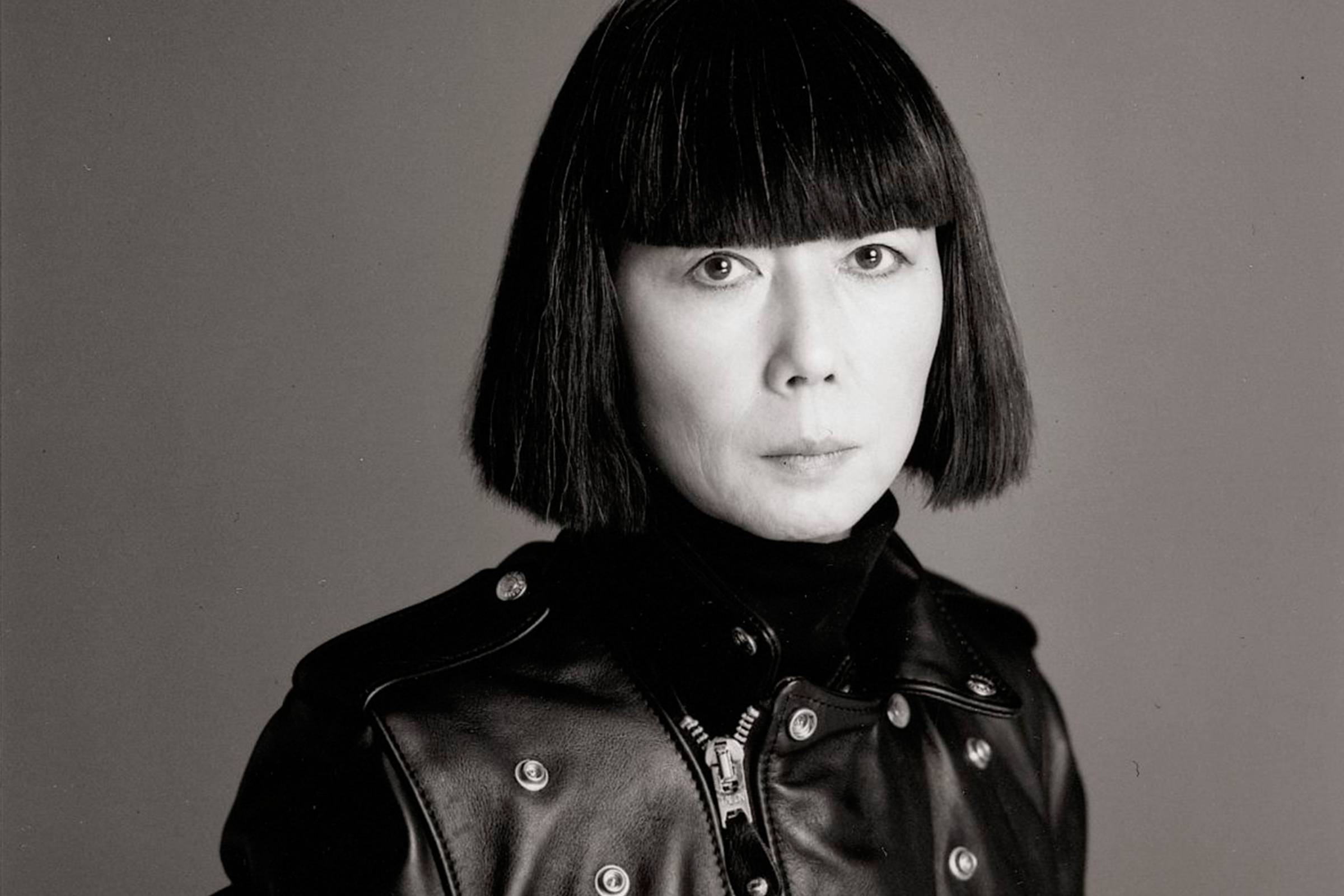
Alongside using comparative approach of Rei Kawakubo deconstructive framework on femininity, Alexander McQueen's intersectionality with the zoe, I will unravel the materialist implication of fashion and its social narrative to draw on the problematic representation of universal women and single belonging speech in fashion. Therefore, a more embodied and non-verbal critical posthuman subjectivity on fashion will indeed question the normative idea of the body through self-styling.