03·22·2024 -- documentary aesthetics
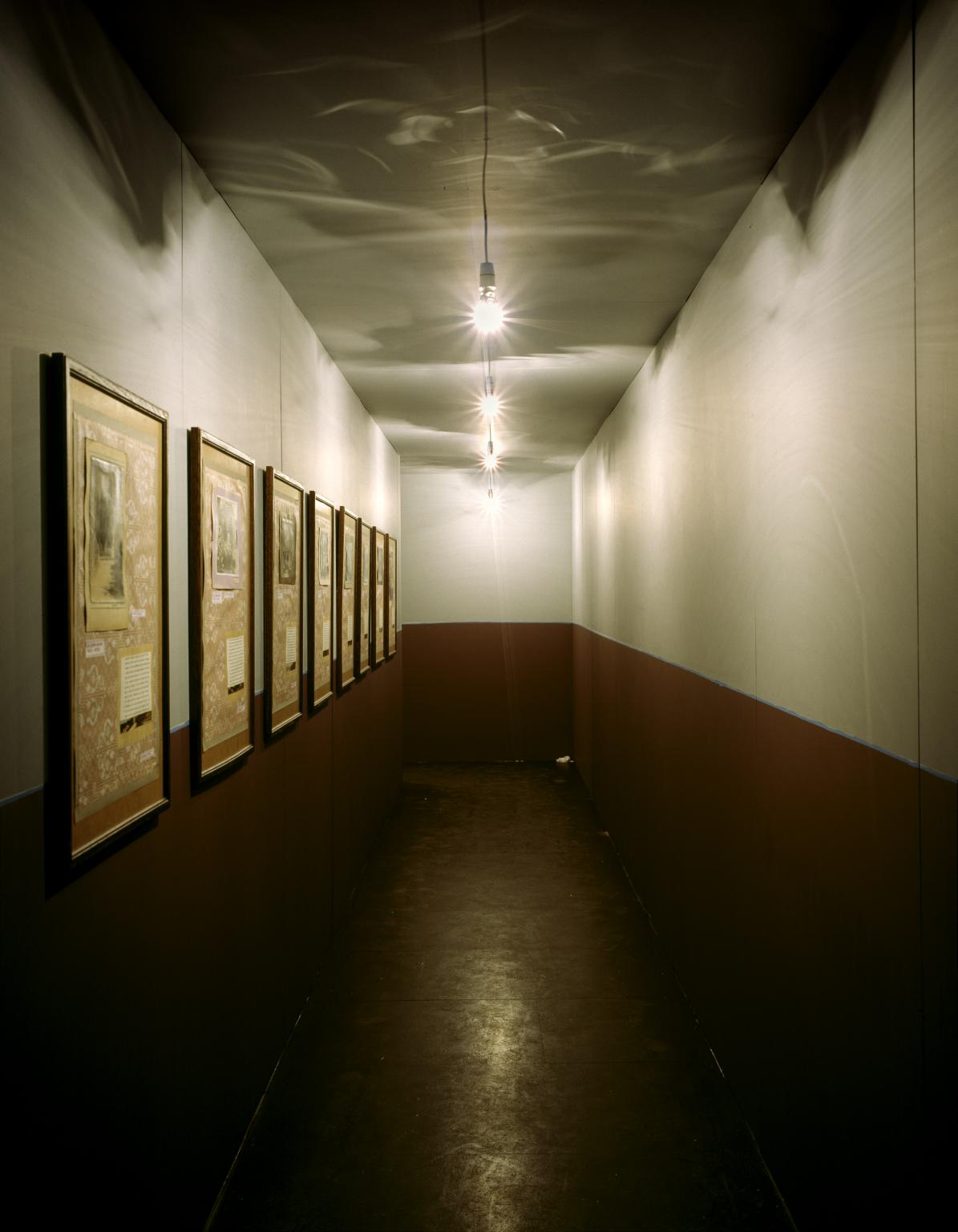
In 2018, the New Tretyakov Gallery organized Emilia and Ilya Kabakov's exhibition "В будущее возьмут не всех" ("Not everyone will be taken into the future"). For me, not so much the Kabakovs' works, but even the exhibition itself became the embodiment of gesamtkunstwerk - based on old sketches, the curators recreated the space of a communal apartment, within which total installations by the artists were placed. One of the objects in the exhibition was "Лабиринт. Альбом моей матери" ("Labyrinth. My Mother's Album") (1990) - the project based on the memoirs of Kabakov's mother, Bertha Solodukhina, which she wrote at the age of 83. The 76 pages of the "album" (Kabakov's favorite format referring either to the romantic tradition of the albums with the poems or to the Soviet daily practice of collecting coins, post stamps, photos, drawings, and so on) looked as the Soviet patterned wallpapers on which Kabakov placed the typewritten excerpts from mother's memoirs in conjunction with the photographs of Zaporizhzhia, Berdyansk, and Moscow taken by his uncle Yuri Bleher. These collages were framed and hung on the walls of the narrow hallway.
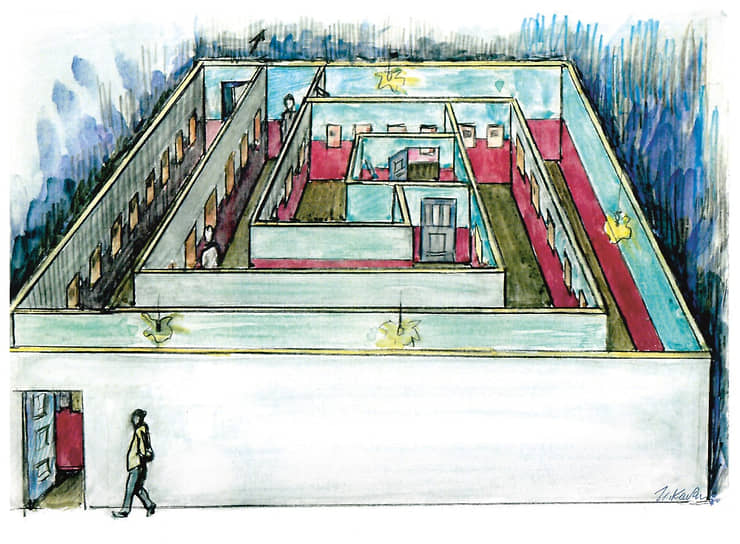

When I was there, it was the least interesting installation for me - I walked down a twisted corridor and read only a few of the memories on the walls. Now, after almost 6 years, I retrospectively feel the poignant nature of this work and perceive this project as an "archival impulse" that, according to Hal Foster, emerges in an attempt of an artist to find lost or displaced historical information and make it physically present (Foster, 143). In the case of Kabakov, it is not the representation of the archival discoveries but a post-production and an artistic contextualization of the fragmented memoirs that he himself requested his mother to write. Behind a personal history spanning an entire century is a paranoid fear of distortion and loss of the personal past. In an attempt to overcome the destructive time, Kabakov, together with a museum visitor, wanders through the labyrinth of memory, where each recollection is discriminant yet indeterminant, public yet private. Does the visitor face the task of reading all 76 sheets of memoirs and what will happen if he, who has come for visual rather than verbal experiential experience, does so? At such installations, each visitor follows his or her own behavioral strategy, but it seems to me that in this case fragmentation verges on totality. In this installation, the main principle for the viewer is metonymy - having read one memory and appreciated the visual scale of a personal story, the viewer can extrapolate someone else's experience in spatial and temporal categories. For Kabakov, however, it is important to capture and organize his mother's memories (related to him, but still alien, which is why the installation has space for alienation even for the artist himself) according to a certain logic that would evoke affective associations in the viewer.
However, according to Derrida, "the archive takes place at the place of originary and structural breakdown of the said memory" (Derrida, 78). The moment of memory reproduction and repetition (in this case, these are both verbalized memories and photographs - distorted repetitions of the past - and collages identical to each other) is inextricably linked to the act of destruction and amnesia. The hypomnesic archive creates an illusion of unforgetting, of being able to return to the past at any moment (something like the photos in the gallery of a telephone, which forever fall into the space of forgetting and lie there for years, never viewed or shown to anyone). The same illusion is given to viewers, such as myself, who read a couple of someone else's memoirs and left with the feeling that I could always come back to reread them. But I never did, and what I read remained forgotten.
This page has paths:
- list of the blogposts Liza Senatorova