A Reflection on Reach LA
Professor Lukes’s Spring 2016 community-based learning course introduced me to REACH LA and its archive. By securing grants from institutions such as Occidental College’s Career Center and the Elton John AIDS Foundations, I have been able to work as REACH LA’s official archivist from June 2016 till August 2017. My position has entailed facilitating oral histories with stakeholders from the organization, creating an archival exhibit for the organization’s 2016 World AIDS Day Event, and developing social media content that publicly displays elements from the organization’s history. In addition to serving as the organization’s in-house archivist, I am the Programming Assistant within REACH’s Social Enterprise Department. Public programs that I assisted with organizing have included the its 11th Ovahness Ball, the first ever Miss Slay LA Drag Pageant, and West Hollywood’s first ever Sunday Funday Mini Ball.
Before elaborating on my interactions with REACH LA, my essay details my first encounter with this non-profit. March 17th, 2016 is the first day that I encountered REACH LA. On that day, Professor Lukes and David Kim (whose friendship with Joseph Stewart, a board member, gave us access), and the nine students in the course (including myself) drove in two separate cars to the organization’s office, which is located in the heart of the Los Angeles Produce Market. As the two cars ventured through LA traffic, I internally reflected on how REACH LA’s materials would finally be my exclusive access to queer of color subjects whose art forms I had only witnessed through Paris is Burning. Once Professor Lukes’s car arrived on top of a building, which we presumed to be the parking lot for REACH LA, we saw Joseph Stewart waving his hand toward us. He was waving his hand from the parking lot on top of the building right across from us. In other words, our class arrived near REACH LA’s parking lot, but we in fact ended up adjacent, at the wrong place!
This experience functions as a metaphor for my experiences with REACH LA’s archive and my own notions of accessing the histories and social landscapes of other queer of color subjects. The sense of “arrival” has occurred repeatedly during my time at REACH. Whether it was toward a conclusion about the nature of queer-of-color subjectivities within archives or access to the house and ballroom scene, feeling that I reached a certain horizon has felt profound. Subsequent experiences immediately illuminated that the arrival location is actually in another destination, or another “parking lot.” This second realization has shown that my initial sense of arrival was based on misleading presumptions. The discrepancy between presumptions and various arrival points has illustrated how queer and trans subjects of color within subcultural networks have developed systems to protect and preserve their historical, social. and artistic formations.
Moving forward, the metaphor of “the wrong parking lot” operates as a guiding principle for a delineation my experience with both REACH LA’s archive and black queer archives in general since March 2016. After returning from abroad in January 2016, I learned that Professor Lukes and Professor Kim solidified a partnership with REACH LA. This news floored me, considering that other partnerships that Professor Lukes, Professor Kim and I pursued in Summer 2015 did not materialize. During the course, we created a preliminary archival survey that outline basic information about the materials in the organization’s in-house archive. As aforementioned, I entered the partnership with REACH LA with an understanding that this opportunity would be a pivotal moment for me to both better understand and connect with queer and trans people of color from the house and ballroom scene. The presumption that access to objects equates to access to people undergirded my work with REACH LA. As I sifted through the archival materials at REACH, I quickly realized that I gained more information about certain queer subjects at REACH, but did not necessarily know them. In other words, even though I was able to recite who won the BQ European Runway at Ovahness 10, this knowledge did not guarantee an interpersonal connection with that individual, nor an understanding of the affective and embodied dimensions of Ovahness 10.
The discrepancy between my original presumption and subsequent realization opened my eyes to the necessity of this living archive interfacing with what Diana Taylor identifies as the “repertoire.” The repertoire, in the context of my experiences with REACH LA, encompasses both the embodied navigation of social interactions with REACH stakeholders and participation in the various art forms such as “runway” that this organization supports. While I understood Taylor’s claim that “[the archive and repertoire] work in tandem and they work alongside other systems of transmission,” I struggled to conceptualize how to engage each mnemonic aid without privileging one system over the other.[1] This mystery surrounding the working relationship of the archive and repertoire fueled a personal desire to build closer relationships with the people and objects throughout REACH LA’s history. In response to this newfound desire, I secured funding to serve as a summer intern at the organization.
During summer 2016, I continued to work on the archival survey that the Occidental College course began. Additionally, the staff invited me to attend several functions, including walking with them at the PRIDE parade and showing their exhibition ball.[2] Working at the office and attending these various events gave me a glimpse into the environments where social relations form, but they did not guarantee access to the social ranks of both REACH LA and the ballroom scene. Entering the internship, I expected to immediately integrate into the social ranks of both REACH LA and the ballroom scene. This assumption was built on the idea that my identities as queer, black, and latino would solidify my position as an insider in the scene. The actual internship, however, proved that establishing intimate bonds with this organization and scene would require establishing mutual trust over an extended period of time. As a result of my surface-level interactions with staff and clientele, I spent the majority of the summer developing a strong sense of the organization’s materials dating back to the first event in 1992.
A turning point during the summer internship was my presentation of my archival work at a staff meeting in late July. My provisional thesis at the time was that REACH LA has significantly contributed to the social and political landscape of queer networks in Los Angeles. The staff –and, particularly, the Director of Development who has been with the organization since 1999 --responded enthusiastically to my presentation. After that point, they started handing me materials that they thought should be incorporated into the archive. They asked for my opinions more frequently. Activating the archive, in the form of a presentation at balls and fundraisers, opened up more avenues for me to engage with the organization on the level of the repertoire. These experiences deepened my interpersonal relationships and positively shaped the construction of the archival survey and archive. The staff provided more insight about the materials that I viewed. With that in mind, my summer internship during the fall showed me a concrete manifestation of Taylor’s claim that the archive and repertoire work in tandem.
Following that 2016 summer, the Elton John AIDS Foundation provided me funding to continue my role as the organization’s in-house archivist in Fall 2016 and Spring 2017. In the fall, my primary priorities were developing an oral history collection that covered the REACH LA’s 25-year history and building an archival exhibit for the organization’s World AIDS Day Event on December 1st, 2016. Between September 14th and December 14th, 2016, I collected and transcribed 18 oral histories with a wide range of REACH LA’s stakeholders. Oral history narrators included the four founders, the first three peer health educators, current staff, two ballroom participants, and former participants in the organization’s art lab.
As I transcribed the oral histories, I initially felt frustrated that the recording did not capture the bodily transmission of emotion or mannerisms. Transcribing the oral histories complicated my understanding of the staying power of the repertoire. “Embodied memory,” according to Taylor, “because it is live, exceeds the archive’s ability to capture it.”[3] In other words, the repertoire does not follow archival guidelines regarding transmission or storage. Oral histories blur the lines of the repertoire and archive. While the process of recording falls within the realm of the repertoire, Taylor would consider the actual recording of eventual archival material as mere transcription. Distinguishing between the various elements of oral histories clarified my purpose at REACH LA. In addition to documenting the history of REACH LA, I discovered that a newfound desire among queer and trans youth of color at REACH to experience the live interview of an older generation LGBT individual.
The Director of Development at REACH LA and I have applied to numerous grants in 2017 that would enable me and others to train and guide LGBT youth of color in conducting queer oral histories. This oral history program intends to democratize the repertoire aspect of oral histories and, in turn, ensure that other queer youth of color have the opportunity of experiencing the liveness of queer history storytelling.
With regard to the World AIDS Day Event, the actual event included my exhibit as well as several contemporary and hip-hop performances. Incorporating the archival exhibit into the World AIDS Day Event, rather than creating a separate unveiling, was intended to illustrate how REACH LA’s current endeavors fit within a lineage of innovative programming. My archival exhibit consisted of placing flyers from the organization’s 25 years worth of programming, projecting sex-positive slides from Club Positive in the center of the flyers, and mounting two iPads with videos. One iPad featured the digitally annotated flyer of Ovahness 10 that Professor Lukes’ and Professor Kim’s course created, while the other iPad showcased my video that incorporated footage from past events and oral history testimonies.Considering that many ballroom individuals attended the event, the digital version of the Ovahness 10 flyer was an exciting moment to pay homage to these leaders. Moreover, circulating the archival materials in a public space materialized the Spring 2016 course’s desire to create a living and active archive that REACH LA would use. Unlike my typical interactions with the archive, the course did not assume a particular type of engagement with REACH LA’s archive. Rather, the course entered the partnership with an openness as to how students would engage with the materials and how REACH LA would be able to use the materials. This flexibility enabled me to serve as the bridge between the class’ work and REACH LA starting in the summer. The result of this flexibility is the exhibit.
After the exhibit, one of my main engagements with REACH LA’s physical archive has entailed using archival materials to promote upcoming balls such as Ovahness 11 and West Hollywood’s first ever Sunday Funday Mini Ball (image of the ball flyer). For Ovahness 11, which took place on December 17th, 2016, I created a social media campaign entitled “10 Days, 10 Balls: Countdown to the Ovahness 11 Crown.” Each day before the ball, I posted various media clips from REACH LA’s previous 10 Ovahness Balls with an accompanying caption that explained highlights from past balls and advertised the current ball (link to an example of the Facebook post). Posts averaged 500 views. Displaying highlights from previous balls has challenged my assumption regarding how to “properly” engage archives. Initially, I was adamant that the role of digital in archival work was constructing complete and holistic digital platforms that extensively featured materials. This framework made me dubious of showcasing a small portion of archival materials periodically on social media. Upon witnessing the positive response from REACH LA’s clients, I have realized that the archive and social media hold a powerful relationship. Social media pushes against the Paris is Burning twentieth-century style of documentation and display in which those with access to film equipment and distribution routes are able to narrate stories. In the case of REACH LA, social media enables REACH LA to publicly showcase its longstanding relationship to and support of the house/ballroom scene. Furthermore, the public nature of social media allows for new generations of young queer and trans people of color to find out more about REACH LA.
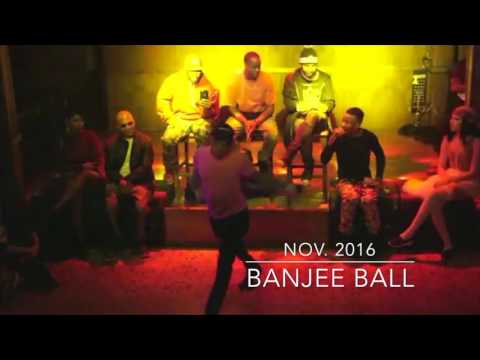
In closing, this reflection returns to my original assertion about desiring to integrate into the queer of color social networks surrounding REACH LA. Initially, I assumed that this process would be simple and enhance my social circles. After working with REACH LA for the last year, I have realized that the process is long and I have gained social circles and more. Through REACH, I have found the courage and opportunities to integrate in the house/ball scene. Back in November 2016, I even spontaneously walked a mini ball. Even though I was chopped for not following the category’s description, the adrenaline of walking the runway affirmed that the house/ballroom scene was a crucial learning space for me. I plan to make my official debut in the ballroom scene by walking Virgin Runway at a ball in late August 2017. In addition to integrating to the house/ball scene, I have pursued my desire to begin drag. This process has included the Legendary Sean Milan Garcon giving tips on how to walk in heels and maintain stage presence. I am proud to announce that my drag name is Octavia’s Butler. Octavia’s is the most ambivalent and self-delusional local librarian that you will ever meet. My personal growth with REACH LA illustrates the power of community-based learning in furthering students’ processes of self-making and becoming. In the case of Octavia’s Butler, the process of self-making and unmaking has entailed a navigation of how to combine the elements of my collegiate education with the life experiences that I have garnered through REACH LA. Interacting with REACH LA has taught me to not only suspend presumptions about archives, but also myself.
[1] Taylor, Diana. “Acts of Transfer.” The Archive and the Repertoire: Performing Cultural Memory in the Americas. Durham: Duke University Press, 2003. 21. Print.
[2]REACH LA’s exhibition ball was a non-competitive event where members of the house/ball scene showcase the various elements of a ball to outside audiences.
[3]Taylor, 20.