Paris is Ovah: Documentary/Archive/Repertoire
[Paris trailer: https://www.youtube.com/watch?v=78TAbjx43rk
[Malcolm: https://www.youtube.com/watch?v=KG44JJ6Ihyo]
[Madonna: https://www.youtube.com/watch?v=GuJQSAiODqI
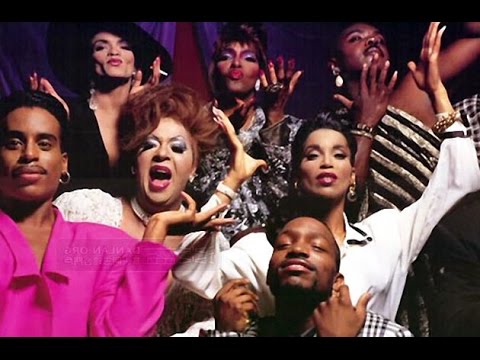
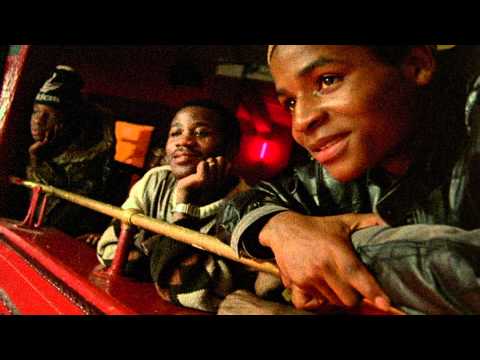
If Madonna and McLaren served up the glamour that many of the ballsters themselves wanted, Jennie Livingston brought the grit. Portraying drag balls and the lives of their community in 1980s New York City, Livingston organized her footage of balls and interviews with participants through a sort of glossary featuring slang from the scene. Intertitles announce these terms, followed by definitions from her respondents and demonstrations from the balls and streets. Examples include activities like reading, throwing shade, and voguing as well as ball categories like banjee boy and butch queen first time in drags at a ball. The following clip features Dorian Corey defining reading and shade.
https://www.youtube.com/watch?v=JnVSklVO-t4
Encapsulating the ethical balance that the film attempts to strike, Livingston’s lexical approach is both a model and cautionary tale for our own framing of the house/ball scene’s repertoire. On the one hand, Livingston respectfully frames her respondents not as mere users of vernacular but rather as creative writers and scholars of their own discourse. Paris is Burning emphasizes that speech acts like slang and personal narrative are as important as embodied performance in this subculture, especially as the film shifts from stylish lexicon to a more standard documentary narrative of lived lives in its second half.
On the other hand, Paris is Burning’s intertitles give the impression that the film is made by an outsider for outsider audiences. As a white and relatively affluent cis-lesbian, Livingston’s involvement inevitably extended a long history of critiques about ethnography and documentary. Although Livingston herself claimed that “the documentary was truly written by the ball people themselves,” and she eventually paid the main respondents, she was nonetheless (unsuccessfully) sued by a number of the cast members when the film did unexpectedly well at the box office.[2] Questions about Livingston profiting from a form of cultural appropriation were no doubt compounded by the tragic fact that most of the primary cast died of HIV related illnesses in the years after the film’s release.
While film critics broadly loved the movie, feminist and queer theorists immediately responded in more ambivalent terms. Indeed, the film’s legendary status may have been sealed as much by its capture of “golden era” of the ballroom legends before cultural mainstreaming of voguing and the ravages of AIDS as by its status as an emblem of the symbiotic nature of queer culture and academic theory in the 1990s.[3] While Lucas Hilderbrand provides a thorough outline of critical and scholarly debates about Paris up to 2013, we touch on some key moments here as they relate to the difference between documentary film and digital archiving and exhibition.
In 1992 bell hooks leveled a damning black feminist critique of the film, accusing Livingston of a white imperialist gaze that in turn supported what she saw as some of the casts’ own uncritical worship of white femininity.[4] According to Hilderbrand, “Unfortunately, her polemic has largely set the terms for much of the subsequent discussion.”[5] Robert Reid-Pharr, for example, claims that Paris’s failure to adequately interrogate systems of oppression placed its valuation of black spectacle in concert with minstrel shows.[6] Among more positive assessments, white queer theorist Judith Butler seized the ball scene portrayed in Paris as another example of how gay drag inherently deconstructs the essentialist ideologies grounding gender norms.[7] Butler herself and queer theory in general would go on to be critiqued by scholars like Jay Prosser and Viviane Namaste for appropriations of trans performances (“gender performativity” being one of Butler’s key concepts) while disregarding actual trans lives. An academic sub-industry of assessing Paris is Burning’s stance relative to its content and form has thrived since these early critiques.
For a low-budget feature made by an amateur filmmaker, Paris is Burning seems to have done at once too much and not enough. The most salient analyses of the film contextualize the material conditions of Paris’s content and production. Chandan Reddy links the invention of the ball “houses” to how a combination of actual housing policy and homophobic expulsion from heteronormative family units has created queer of color poverty.[8] Phillip Brian Harper reads how, as much as the academic flurry the film provoked, the very lawsuits against Livingston have become part of Paris is Burning’s legend. Through dialectics of privacy and publicity, ballroom and courtroom, Livingston’s agency as a Yale graduate plays out through funding access and legal knowledge against the ball children’s agency over their live performance as both subjective expression and commodity.[9]
How dated are these concerns? With regard to the actual film, the answer is, apparently, not at all, as evidenced by the controversy surrounding the twenty-fifth anniversary screening of Paris at the “Celebrate Brooklyn” LGBT* Pride event in 2015. Initially, no one from the house/ball scene was consulted or invited. An ensuing Internet storm lead to cancelations of performers, re-adjudication of Livingston’s initial appropriation, and an eventual attempt to make amends with a staging of a House United ball.[10] Tav Nyong’o points out that this incident demonstrates how paradoxical attitudes toward queer of color life persist: on the one hand, the house members were once again sidelined, their legends presumed to be dead, and their actual thriving community relegated to a kind of social death by nostalgic embrace of the film’s anniversary. On the other hand, the rectification of throwing the ball in conjunction with the screening calls for a command performance that Nyong’o links to José Muñoz’s idea of a particular queer of color “burden of liveness,” which Nyong’o defines as the condition where “queers of color are expected to perform liveness and vitality under conditions of temporary visibility that erase our histories and futures.”[11]
If many of the concerns that vexed Paris is Burning’s initial reception still haunt actual queer of color lives, the status of the film has changed through the sheer force of time. Nyong’o writes that “rather than standing in for ball culture – an unfair expectation of any single film, no matter how amazing — the film could be understand as part of queer history, and specifically part of the ball culture’s history, and even part of its futurity as well.”[12] More productive than making a metonymic critique of the film’s failures to represent the multiple facets of ballroom culture (a culture that is, in its very nature, multifaceted, factitious, and elusive), Nyong’o highlights the ability of the film to showcase the authenticity and contradiction that are inherent to ballroom culture. While there are certainly complex, and even problematic elements at play with Paris is Burning, the film cannot be disregarded for the discourse it produced, and the overall awareness it raised for the black queer demographic that makes up the ballroom community. The film is spectacle, but so is the art form it showcases, and critiquing the film without the context of irony and performativity disregards its significance.
The legacy of Paris is Burning in the academic and popular presses, in courts and balls, reminds us that the medium is not, in fact, always equivalent to the message. Nyong’o points out that the historical position of the film, and the critiques that followed it, contrasts with today’s born-digital age. The increased proliferation of smart phone produced media, viral videos, “webcams and reality TV” have resulted in an increased tactic of “broadcasting our daily lives in a potential revenue stream, if only we make that life interesting/outrageous/abject enough.”[13] Where Harper and others once focused on the material condition of the ball-goers lives and Livingston’s means of production, Nyong’o notes that a culture of ego-casting fueled by new media not only disrupts the documentarian and subject divide but also renders “performance […] almost a default setting for everyone.”
Octavia St. Laurent’s and Venus Extravaganza’s expectations of celebrity, that once seemed tinged with pathos, now seem like viable career ambitions. Dorian Corey’s world-wise wisdom about the illusions of fame seem to come from a vanished queer world now lost in the glare of mass media visibility.
Questions of cultural appropriation have recently been renewed, as evidenced by the controversy over Miley Cyrus’s appropriation of the African American dance style “twerking” at the 2013 MTV Music Video Awards. Yet these age-old issues of racial appropriation that Eric Lott famously framed as an ambivalent interracial relation of “love and theft” significantly change with technological advances.[14] It is ironic that the same summer of the Brooklyn Pride debacle saw the debut of Tangerine (2015), a day-in-the-life narrative feature about black trans sex workers, based largely on the experiences of its main actresses.[15] One wonders whether this movie was not similarly accused of cultural appropriation because audiences and critics were stunned that its white cis-male director Sean Baker shot it entirely on an iPhone for one-fifth of Livingston’s budget. The smashup of heightened technophilia and social justice enthusiasm for the “trans tipping point” of the last few years (and lack of lawsuits) may account for Tangerine’s free pass, but we would note that the burden of queer of color “liveness” is still at play with this movie. Tangerine’s trailer shows how the grit and grain of the cell phone format recovers some glamour by “goin’ hard” with performance and soundtrack.
https://www.youtube.com/watch?v=fUxRxgtYt0M
Yet Nyong’o also states that “Vogueing and walking on the Celebrate Brooklyn stage – welcome as it was --does nothing to transform the real conditions of poverty, racism, and transphobia,” which continue to plague members of the ballroom scene.[16] Paris is Burning arguably catalyzed not just queer theory but the materialist articulations of what is now recognized as “queer of color critique.” Indeed, Muñoz’s foundational text Disidentifications: Queers of Color and the Performance of Politics pointedly pivots toward the documentary The Salt Mines (1990) with its “starker and less glamous” rendering of black and Latinx trans life in New York as an “antidote” to the sensational ethos of Paris.[17] These are perhaps surprising moves coming from performance studies scholars like Nyong’o and Muñoz. The point of queer of color critique, however, has always been to measure the real conditions of the past, present, and future with the fantasy worlds that make for livable lives. As Roderick Ferguson states, “Since historical materialism has traditionally privileged class over other relations, queer of color critique cannot take it up without revision, must not employ it without disidentification.”[18] Moving forward, queer of color critique might take up questions of how the materiality of digitally mediated lives will affect not just fleshly embodiments but emergent methodologies of critique.
We argue that REACH LA disrupts this discussion of spectacle and cultural appropriation by introducing a multitude of artistic and material resources into today’s ball scene of Los Angeles. REACH intervenes both by attempting to address the real conditions that black and Latinx queer folk face on a daily basis and endeavoring to instill creative control over subcultural traditions. We are reminded here of Diana Taylor’s foundational performance studies work on the distinction between the archive and the repertoire. “As opposed to the supposedly stable objects in the archive, the actions that are the repertoire do not remain the same. The repertoire both keeps and transforms choreographies of meaning.”[19] While resisting any simplistic dichotomy, Taylor notes that the archive/repertoire distinction tends to align with a colonizer/colonized division. Documentary craft like Livingston’s purport to preserve the repertoire of the ball for a lasting queer archive. Yet even these divisions dissolve in the context of an organization like REACH LA, which hosts balls, teaches vogue and walking classes, provides material services for HIV prevention, and has inadvertently accumulated a rich archive. Taylor issues a pessimistic view of how the digital era will be effected by the embodied knowledge system of the repertoire: “Now, on the brink of the digital revolution that both utilizes and threatens to displace writing, the body again seems poised to disappear in a virtual space that eludes embodiment.”[20] We, by contrast think that the analog and digital collaborations embodied by the world of REACH suggest new choreographies of meaning.
Our project reframes Nyong'o's challenge to "cool hunters" confronting the open secret of vogue performance by asking what queer digital archiving of an organization like REACH LA might mean. Whereas queer theory has traditionally staked its claim in polemical critiques of normativity, queer of color analysis, according to scholar Amy Villarejo, “takes the prismatic pressures of the normative as impossible to seize and to systematize simultaneously.”[21] With regard to archival practices, this chapter of Finding a Tribe seeks to positively channel some of this impossibility of simultaneous seizure and systemization. We seize REACH’s collections and present them here to speak for themselves. We respect the LA ball scene’s own systemization by displaying its repertoire. Paris is Burning should be seen as part of this archive and repertoire. The urgency of the early years of HIV/AIDS and the rapid popularization of queer culture in the 1990s no doubt commanded much of the critique that film provoked. As Jesse Green wrote in The New York Times, “Paris is no longer burning. It has burned. And not only because of the casualties. No one needs to go to a ball to see drag anymore […] No one needs to go to a ball to see voguing either, not since Madonna gobbled it up, appropriating two Xtravaganzas in the process.”[22] We, by contrast, see Paris as ovah.[23]
[1] Something on McLaren and Amy Robinson, “Is She or Isn’t She” etc.
[2] Lucas Hilderbrand, Paris is Burning: A Queer Film Classic (Vancouver: Arsenal Pulp Press, 2013), 26.
[3] Hilderbrand, Paris, 131.
[4] bell hooks, “Is Paris Burning?” in Black Looks: Race and Representation (Boston: South End Press, 1992).
[5] Hilderbrand, Paris, 125.
[6] Robert F. Reid-Pharr, “The Spectacle of Blackness,” Radical America 24:4 (1990), 57-66, 64.
[7] Judith Butler, Bodies that Matter: On the Discursive Limits of Sex (New York: Routledge, 1993).
[8] Chandan Reddy, “Home, Houses, and Nonidentity: ‘Paris is Burning,’” in Burning Down the House: Recycling Domesticity, ed. Rosemary Marangoly George (Boulder: Westview Press, 1997), 356-57.
[9] Phillip Brian Harper, “’The Subversive Edge’: Paris is Burning, Social Critique, and the Limits of Subjective Agency,” Diacritics: A Review of Contemporary Criticism 24;2/3 (1994), 90-103.
[10] Tav Nyong’o, “After the Ball,” https://bullybloggers.wordpress.com/2015/07/08/after-the-ball/
[11] Ibid.
[12] Idid.
[13] Ibid.
[14] Eric Lott, Love and Theft. See also Daphne Brooks.
[15] This information comes from an interview with actress Mya Taylor at Occidental College, March 16, 2017. When asked about Tangerine’s cultural appropriation and the legacy of Paris is Burning, she refused the terms of engagement with campy consternation.
[16] Ibid.
[17] José Esteban Muñoz, Disidentifications: Queers of Color and the Performance of Politics (Minneapolis: University of Minnesota Press, 1999), 162.
[18] Roderick Ferguson, Aberrations in Black: Toward a Queer of Color Critique (Minneapolis: University of Minnesota Press, 2004), 4.
[19] Diana Taylor, The Archive and the Repertoire: Performing Cultural Memory in the Americas (Durham and London: Duke University Press, 2003), 20.
[20] Taylor, Archive and Repetoire, 16.
[21] Amy Villarejo, “Tarrying With the Normative: Queer Theory and Black History,” Social Text Vol.23, Nos.3&4 (Fall/Winter 2005): 69-84, 70.
[22] Jesse Green, “Paris has Burned,” New York Times, April 8, 1993.
[23] http://www.urbandictionary.com/define.php?term=Ovah