Introduction
In a global Middle Ages, there are few individuals, fictional or historical, who
have secured a more lasting impact on the way that Europeans came to know the
world than Prester John. A product of anxious cultural imaginings mixed with
hope for historical change, Prester John has engaged the imagination of an
increasingly diverse audience since 1145. Over the course of six centuries,
Prester John figured centrally in Christendom’s understanding of what the
distant world was like: crusading aspirations depended on his materialization;
missionary undertakings in the East leveraged their chances of converting
natives against a presumption of his existence, and, mercantile-minded men from
Marco Polo through Christopher Columbus dreamt of the putative riches of his
kingdom.
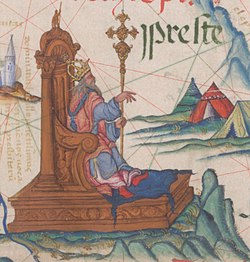
The Prester John legend is known primho have secured a more lasting impact on the way that Europeans came to know the world than Prester John. A proarily through a letter, apparently penned by the Prester himself, which began to circulate in the mid-twelfth century, at the zenith of the crusading impulse. This primary
artifact of the legend, the Letter of Prester John quickly generated attention across Europe. The Letter of Prester John, which survives in some 300 manuscripts in ten-plus languages, describes a Christian sovereign
ruling authoritatively over an East beyond the reach of Dar al-Islam. As the ruler
over the medieval “three Indias” John acts as living proof that nothing can
escape Christian domestication, however unfamiliar the objects and landscape of
the East may appear.