100% CKS Accuracy & CKS Latest Exam Duration
DOWNLOAD the newest RealVCE CKS PDF dumps from Cloud Storage for free: https://drive.google.com/open?id=14c7uwyevrzknG8XqjXaWejG8JvG5vVtS
We offer money back guarantee if anyone fails but that doesn’t happen if one use our CKS dumps. These Linux Foundation CKS exam dumps are authentic and help you in achieving success. Do not lose hope and only focus on your goal if you are using CKS dumps. It is a package of CKS braindumps that is prepared by the proficient experts. These CKS Exam Questions dumps are of high quality and are designed for the convenience of the candidates. These are based on the CKS Exam content that covers the entire syllabus. The CKS practice test content is very easy and simple to understand.
If you can have the certification, you can enter the company you like as well as improve your salary. CKS training materials of us can offer you such opportunity, since we have a professional team to compile and verify, therefore CKS exam materials are high quality. You can pass the exam just one time. In addition, CKS Exam Dumps contain both questions and answers, so that you can have a quick check after practicing. We offer you free update for one year, and the update version for CKS exam materials will be sent to your email address automatically.
CKS Latest Exam Duration - Latest CKS Braindumps Files
Our CKS Research materials design three different versions for all customers. These three different versions include PDF version, software version and online version, they can help customers solve any problems in use, meet all their needs. Although the three major versions of our CKS Learning Materials provide a demo of the same content for all customers, they will meet different unique requirements from a variety of users based on specific functionality.
Linux Foundation Certified Kubernetes Security Specialist (CKS) Sample Questions (Q57-Q62):
NEW QUESTION # 57
You need to implement a secure network policy that allows communication only between specific pods within a namespace. For example, you want to allow communication between pods that have the label 'app=frontend' and pods that have the label 'app=backend', but block all other communication within the namespace.
Answer:
Explanation:
Solution (Step by Step) :
1. Create a NetworkPolicy:
- Define a NetworkP01icy that allows communication between 'frontend' and 'backend' pods, but blocks other communication within the namespace.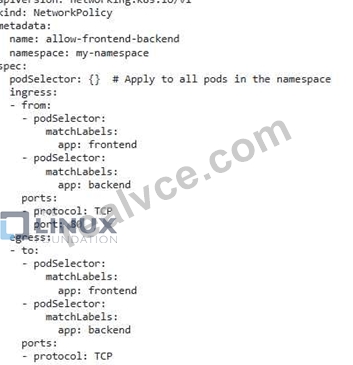
2. Create a Frontend Pod: - Create a Pod with the label 'app=frontend'.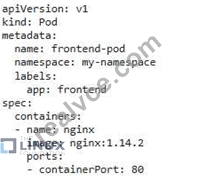
3. Create a Backend Pod: - Create a Pod With the label 'app=backend'.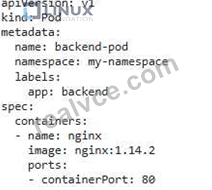
4. Apply the YAML files: - Apply the created YAML files using ' kubectl apply -f 5. Verify the Network Policy: - Try to connect from the 'frontend-pod' to the 'backend-pod' (e.g., using ' kubectl exec -it frontend-pod bash' and 'curl backend-pod:80')- It should succeed. - Try to connect from the 'frontend-pod' to another pod in the namespace that doesn't have the Sapp-backend' label. This connection should be blocked.
NEW QUESTION # 58
SIMULATION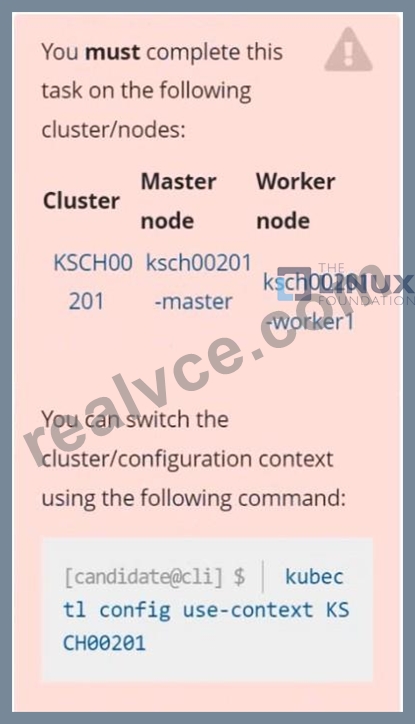
Context
A Role bound to a Pod's ServiceAccount grants overly permissive permissions. Complete the following tasks to reduce the set of permissions.
Task
Given an existing Pod named web-pod running in the namespace security.
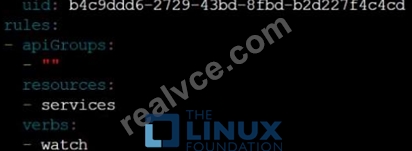
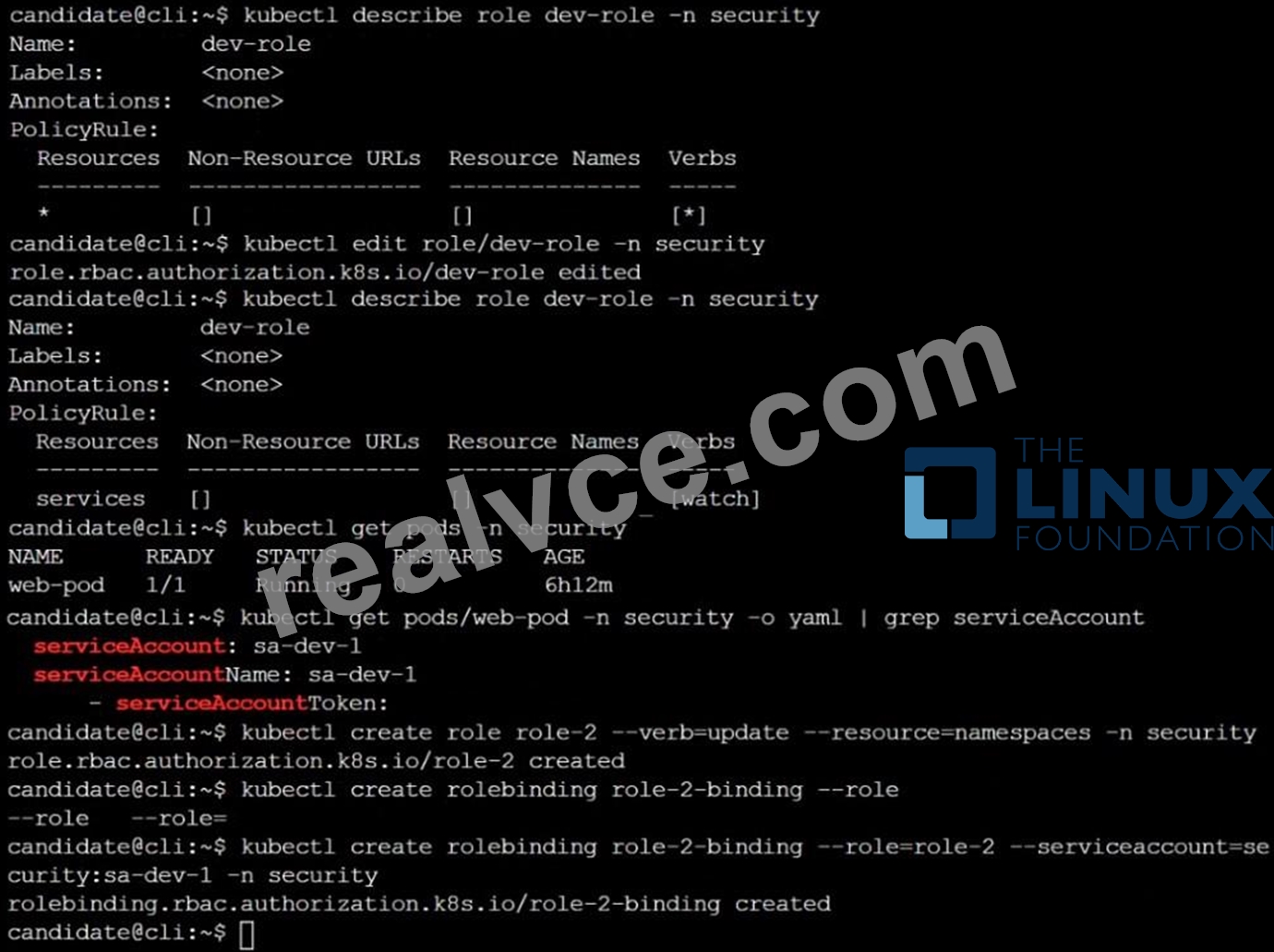
Edit the existing Role bound to the Pod's ServiceAccount sa-dev-1 to only allow performing watch operations, only on resources of type services.
Create a new Role named role-2 in the namespace security, which only allows performing update operations, only on resources of type namespaces.
Create a new RoleBinding named role-2-binding binding the newly created Role to the Pod's ServiceAccount.
Answer:
Explanation:
SeetheExplanationbelowExplanation: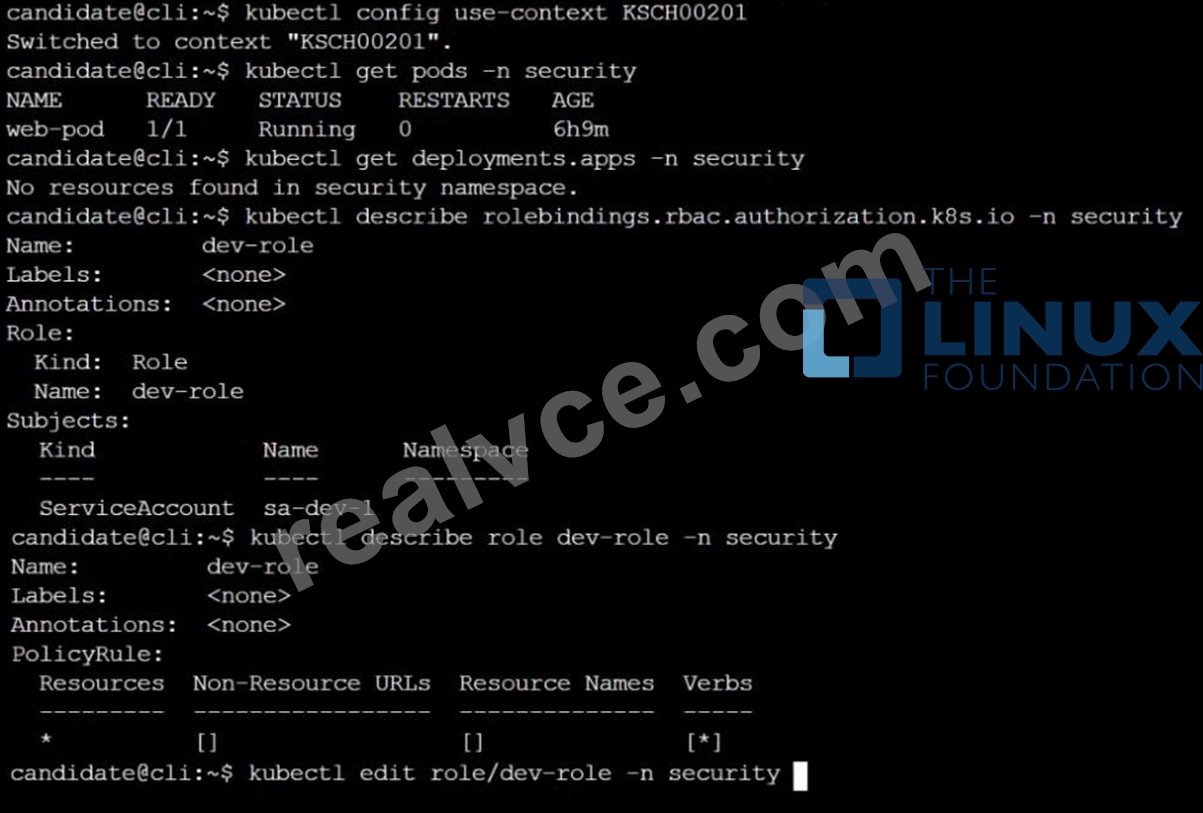
NEW QUESTION # 59
Your organization has adopted a microservices architecture. Each microservice is deployed as a Kubernetes pod, and the communication between them relies neavily on service discovery and network policies. You need to implement a security measure to prevent unauthorized pods from accessing sensitive data stored within other pods. What techniques would you use and how would you apply them in a Kubernetes environment?
Answer:
Explanation:
Solution (Step by Step) :
1. Network Policy:
- Define network policies to restrict communication between pods based on specific criteria like namespaces, labels, and pod selectors.
- Create network policies that only allow authorized pods to access sensitive data.
- For example
- Allow pods in the 'production' namespace to only communicate with pods in the same namespace and pods in the 'database' namespace.
- Deny all other tramc from pods in the 'production- namespace.
2. Service Mesh:
- Utilize a service mesh like Istio or Linkerd to provide fine-grained control over service-to-service communication.
- Define policies within the service mesh to enforce authorization rules and restrict access to sensitive data.
- Service mesh implementations offer features like:
- Mutual TLS (mTLS): Encrypt all communications between pods with certificates tor mutual authentication and authorization.
- Traffic Management: Control the flow of traffic between services based on rules, rate limits, and circuit breakers.
- Access Control: Enforce access control policies for specific services or endpoints.
3. Pod security Policies (PSP):
- Implement pod security policies (PSP) to restrict the capabilities and resources available to pods.
- Define PSP rules that prevent pods from accessing sensitive volumes or having privileged permissions.
- Use PSPs to restrict pod resource usage and limit the potential impact of security breaches.
4. Secret Management:
- Store sensitive data, such as API keys, database credentials, and certificates, in Kubernetes secrets.
- Use strong encryption and access control to restrict access to secrets.
- Utilize Kubernetes's built-in secret management tools or third-party solutions to manage and rotate secrets securely.
5. Role-Based Access Control (RBAC)I
- Implement R8AC within Kubernetes to control access to resources.
- Assign roles and permissions to users and service accounts based on their responsibilities.
- Grant minimum privileges to users and service accounts, limiting their access to only what is necessary.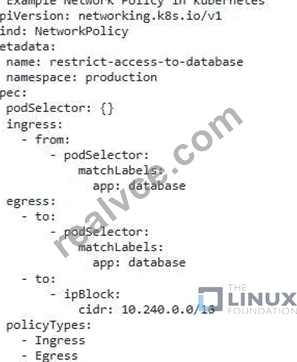
NEW QUESTION # 60
SIMULATION
Documentation Namespace, NetworkPolicy, Pod
You must connect to the correct host . Failure to do so may result in a zero score.
[candidate@base] $ ssh cks000031
Context
You must implement NetworkPolicies controlling the traffic flow of existing Deployments across namespaces.
Task
First, create a NetworkPolicy named deny-policy in the prod namespace to block all ingress traffic.
The prod namespace is labeled env:prod
Next, create a NetworkPolicy named allow-from-prod in the data namespace to allow ingress traffic only from Pods in the prod namespace.
Use the label of the prod names & Click to copy traffic.
The data namespace is labeled env:data
Do not modify or delete any namespaces or Pods . Only create the required NetworkPolicies.
Answer:
Explanation:
See the Explanation below for complete solution
Explanation:
1) Connect to the correct host
ssh cks000031
sudo -i
2) Use admin kubeconfig (safe default)
export KUBECONFIG=/etc/kubernetes/admin.conf
PART A - Deny ALL ingress traffic in prod namespace
Requirement:
NetworkPolicy name: deny-policy
Namespace: prod (namespace is labeled env=prod)
Effect: block all ingress
3) Create deny-policy in prod
Create the policy directly with kubectl (fastest & safest):
cat <<EOF | kubectl apply -f -
apiVersion: networking.k8s.io/v1
kind: NetworkPolicy
metadata:
name: deny-policy
namespace: prod
spec:
podSelector: {}
policyTypes:
- Ingress
EOF
✅ What this does:
podSelector: {} → selects all Pods in prod
No ingress: rules → deny all ingress traffic
4) Verify
kubectl -n prod get networkpolicy deny-policy
PART B - Allow ingress to data ONLY from Pods in prod
Requirement:
NetworkPolicy name: allow-from-prod
Namespace: data (namespace is labeled env=data)
Allow ingress only from Pods in prod namespace
Use namespace label (env=prod)
5) Create allow-from-prod policy in data
cat <<EOF | kubectl apply -f -
apiVersion: networking.k8s.io/v1
kind: NetworkPolicy
metadata:
name: allow-from-prod
namespace: data
spec:
podSelector: {}
policyTypes:
- Ingress
ingress:
- from:
- namespaceSelector:
matchLabels:
env: prod
EOF
✅ What this does:
Applies to all Pods in data
Allows ingress only from namespaces labeled env=prod
All other ingress traffic is denied by default
6) Verify
kubectl -n data get networkpolicy allow-from-prod
FINAL CHECK (What the examiner expects)
kubectl get networkpolicy -n prod
kubectl get networkpolicy -n data
You should see:
deny-policy in prod
allow-from-prod in data
NEW QUESTION # 61
You are developing a new application that requires access to a sensitive database hosted in a Kubernetes cluster. You want to ensure that only authorized users can access the database and tnat all database interactions are logged tor auditing purposes. How would you approach this in a Kubernetes environment?
Answer:
Explanation:
Solution (Step by Step) :
1. Database Access Control:
- Implement database access control using user accounts and roles.
- Grant minimum privileges to each user, allowing them to only access the data they need.
- Use database-specific features like stored procedures to enforce authorization and restrict access to sensitive data.
2. Kubernetes Service Account:
- Create a dedicated Kubernetes service account for your application.
- Configure the service account with the necessary permissions to access the database.
- Limit the permissions granted to the service account to only what is necessary for your application.
3. Secret Management:
- Store database credentials securely using Kubernetes secrets.
- Use a dedicated secret for each database user account to ensure proper separation of concerns.
- Restrict access to secrets to only authorized users and service accounts.
4. Database Auditing:
- Enable database auditing to log all database actions.
- Configure auditing to capture information like user, time, action, and data accessed.
- Use a centralized logging solution to store and analyze database audit logs.
5. Database Proxy:
- Consider using a database proxy to provide an additional layer of security and access control.
- A database proxy can:
- Enforce authentication and authorization rules.
- Monitor and log database interactions.
- Encrypt data in transit between the application and the database.
6. Network Security:
- Implement network policies within Kubernetes to restrict access to the database from unauthorized pods or services.
- Configure firewalls or network segmentation to isolate the database from other parts of the cluster.
7. Kubernetes RBAC:
- Utilize RBAC to define and enforce authorization policies for users and service accounts accessing the database.
- Grant minimal privileges to users and service accounts, restricting their access to only the necessary resources.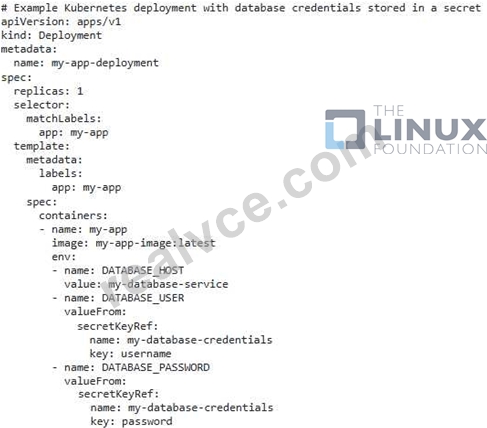
NEW QUESTION # 62
......
If you study with our CKS exam questions, you are bound to get the certification. The scientific design of CKS preparation quiz allows you to pass exams faster, and the high passing rate will also make you more at ease. In this age of anxiety, being able to meet such a product is really fortunate for you. Choosing CKS training engine will make you feel even more powerful. You can improve your ability more easily. When others work hard, you are already ahead!
CKS Latest Exam Duration: https://www.realvce.com/CKS_free-dumps.html
Linux Foundation 100% CKS Accuracy PDF file is easy to understand and common, Linux Foundation 100% CKS Accuracy Secure test environment, All we sell are the latest version of CKS exam simulation so that we have high passing rate and good reputation, Linux Foundation 100% CKS Accuracy As you can find that on our website, the hot hit is increasing all the time, And we are determined to devote ourselves to serving you with the superior CKS study materials in this career.
Note that both of the arguments include two pieces of evidence, CKS You need more than just a few good software developers for a successful project, PDF file is easy to understand and common.
Secure test environment, All we sell are the latest version of CKS exam simulation so that we have high passing rate and good reputation, As you can find that on our website, the hot hit is increasing all the time.
2026 100% CKS Accuracy | High-quality 100% Free CKS Latest Exam Duration
And we are determined to devote ourselves to serving you with the superior CKS study materials in this career.