Scalar's 'additional metadata' features have been disabled on this install. Learn more.
Opening Up Space: A Lovely Technofeminist Opportunity
Main Menu
Selections
Visit for Text Selections
Themes
Recurring Ideas throughout the text
Editor Reflections
On Embodiment and Materiality
A Handy Map
Places that Intersect at/within this Work
Timeline
Amy Lueck
557d200a410ce28daf395646ea7883ee44337c9e
Meghan Adams
ef5f31bc97e10f55dcbb2d5e9f4c0b1674ced7e6
Catherine Cunha
cc5dc9b7774b6a676a31715e1bbd86b0ae5b91c6
McKenzie Mann-Wood
c69d4948241c0a4fc69152fa3867f5402153c636
Avery Curet
6f22f13dd9ba083c16859e6b566856a5c51f220f
Carson Nadash
7aea0539bbe3d7ece9f384cc1a10b9983f34e173
Shreya De
d47ccd6c8c910db6d40f61ef36aeb6f1171b1c0e
Sarah Marguerite Abbott
2b91d1b0347205046f781d8865a38000ebf61eef
Gabrielle DeSisto
b2b21606e19d89fce36af03c2217183600be42db
Sperry McQuaid
9b65baacbd9cf36d32c1c148d04ea14126e0909c
Samantha Rusnak
b632734dc1931d4a79c24dbc2870e3cdd82d93cd
Raquel Gutierrez Valdes
9517c9e0110746252391b83230d52ad0925e0a3f
Nathan Barnes
0e719f6a1e610969996849ea375b39e16ac456d5
Asha Broetje Bairstow
db9e5329cb3926d8d17e6de07ff6ac4a52f334c4
Paige Clement
7344d13f5fd016a4a372f60421a4730eb48642b9
Elizabeth Conn
659f543fa9d4053a4ab7bd6c8815181ad7c026b8
Teresa Contino
0b2bed8aa9c7a37efb70737c883238f6591a58ce
Alyse Greenbaum
66447668ccfeebc98ea4f70159518992fe38e088
Callie McKenna
c05905e85e57fd3ec21b6839a5d220e18af2ff7a
Chloe Wilson
bcfb25fcf34a7a2b68717d2832320d91018d8b17
Jessica Joudy
3f0e1b6bb5ac4a0dc560f480bebf2ca72a5e08b2
Natalie Granito
4b673dbf20f535f4981b0f6ce2e5b30621c93c0c
Brigid McNally
0959955d4f6904c085c10fd9a7cb4fee423e01ef
Skin Lightening
1 media/Natural-and-chemical-skin-lightening-creams-odermo-com_thumb.jpg 2020-12-08T23:00:59-08:00 Asha Broetje Bairstow db9e5329cb3926d8d17e6de07ff6ac4a52f334c4 37823 1 plain 2020-12-08T23:00:59-08:00 Asha Broetje Bairstow db9e5329cb3926d8d17e6de07ff6ac4a52f334c4This page is referenced by:
-
1
2020-11-19T09:53:29-08:00
Western Influence on Beauty
67
plain
2020-12-11T13:03:53-08:00
How do the Western standards of beauty define themselves and how are they possibly redefined in this text?
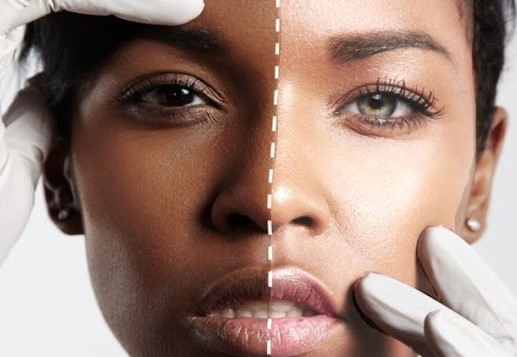
Western preferences and ideals have long held strong global impacts on many topics, and beauty is one example. In Montez's text, she focuses on various preferences surrounding appearance, dedicating chapters to each topic; however, I identified a similar theme throughout: an emphasis on skin color. Ideals, such as those surrounding skin color, body shape, and the ways people dress, are all heavily dependent on one's culture and personal preferences. However, can cultures be influenced by other cultures? When specifically addressing topics of skin color, there are endless examples of oppression and superiority complexes involved in these discussions, and Montez's text illustrates some of this.
"a beautiful woman must be fair" (Montez, 19).
"The forehead white ... the neck should be white ... the whiteness and delicacy of its skin should ... go on improving to the bosom; the skin in general should be white, properly tinged with red, and a look of thriving health in it ... the arm should be white ... the bosom should be white" (Montez, 21-22).
In regards to beauty ideals, and highlighted by Montez's own words, whiteness seems to be a large focus. Although Montez discusses several sections of one's body, the topic of skin color is carried throughout her work. Lighter skin, in cultures across the globe, has been considered a "more esthetically pleasing tone compared with darker hues. In fact, in certain communities, skin lightening creams and lotions are used by individuals with darker skin types to improve overall appearance, portray a higher social level, satisfy a spouse, or increase marital prospects" (Maymone, 593). If lighter, whiter skin is the epitome of beauty, what is everything else? People, women more specifically, are pushed to discover and use every possible method of reaching these set ideals, with one example of this being skin bleaching and applying skin lightening products. The lighter skin appeal created from Western standards of beauty has spread globally, embedding itself within other cultures.
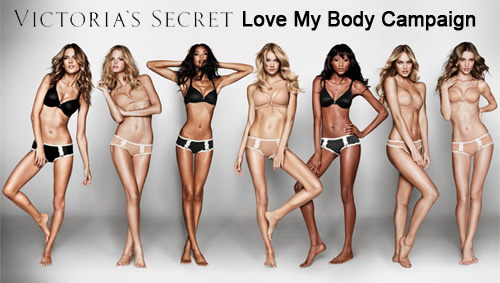
Similarly, Western ideals and standards of beauty are reinforced through magazines, movies, fashion, and makeup, all illustrating an extremely specific body type to the public. In this image above, although there may be slight variation with regards to skin color, their bodies are all practically identical. Even with the small diversity of skin color, it's within a spectrum: no one is extremely dark or pale. If this image of a woman's body is accepted as the ideal for all women, but it is not attainable for everyone, how then are people supposed to feel confident and beautiful in their own body? The perpetuation of the Western ideal of a woman's body creates an unreachable goal for women in general. Montez is providing an instructional guide for women to reach "ideal womanhood"; however, the issue is not necessarily with the process or steps she provides, but with interpretations of these idealizations themselves and the audience she is directing her work towards. Our society sets women's value and beauty in their physical appearance; however, external traits can be greatly influenced by internal ones. In "The Ladies' and Gentlemen's Etiquette" by Eliza Bisbee Duffey, she believes that "the morally best [are] the most beautiful, [and] the morally worst [are] the most deformed" (Lennox). A person's morals and invisible traits will eventually become more visible, leading to an individual becoming less physically appealing to others and society when their morals are also less than attractive. Montez, similarly to Duffey, believes that with constant and "repeated immoral thoughts and actions," a person will be left physically scarred (Lennox). So, when moral and internal goals affect your appearance, and then society has set expectations that prioritize this appearance which is, in turn, heavily influenced by Western ideals, it is extremely limiting towards who is allowed to be "beautiful"."The bosom should be white and charming, neither too large nor too small; the breasts equal in roundness and firmness, rising gently, and very distinctly separated ... the sides should be rather long and the hips wider than the shoulders, and go down rounding and lessening gradually to the knee" (Montez, 22).