Now, Mr. Lincoln?

Case Study: UPS Community Service Programs

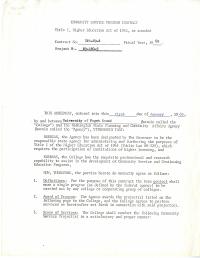
In 1969, the University of Puget Sound signed a Community Service Program Contract under the Title I Higher Education Act. They were proposing a project entitled “Community Development Through Business & Economic Systems.” Directed by Prof. Dan Kelleher, this project was an offshoot of VISTA, a volunteer domestic Peace Corps. (A Title I grant supplied $2,000 for the project, and VISTA provided the remaining $7,000 of the total salary). VISTA projects were led by a small group of 15 volunteers who went out “in the field” to facilitate efforts in “conflict management,” “personal financial assistance,” “awareness,” and “actions programs” (A&SC _).  The major problem identified by the project was the view of disadvantaged person as "inadequate" and the "unequal participation in the resources of his community,” which it planned to address “by initially focusing on increasing black business opportunity in the Tacoma area.” Overviews of various projects are described in the proposal, including the Urban Coalition, special education services in public schools, Hilltop Day Care Center, Model Cities, and ADC Mothers. One project that later helped to inspire the Now, Mr. Lincoln? campaign was the Black Business Opportunity Development project, which aimed to engage with the Black Businessmen's Association's needs for "capital, expertise and skills" (A&SC). In a letter to Prof. Robert Bock, Kelleher expresses that the projects would “serve to fill many community needs in the Tacoma area and thus contribute to a lessening of community tensions and conflicts” (A&SC _). He also stresses that the projects will "act as field situations" where students involved in the Urban Studies Program can work directly with and maintain constructive dialogue with the community surrounding UPS. 
However, little information was found on actual student involvement in the Community Development project beyond the plans outlined in the proposal. From the proposal alone, the writing of the grant of the project and the determination of the specific goals and activities seem to be entirely faculty-led. It would be interesting to investigate the extent to which the outlined projects were successful. Nevertheless, UPS students were engaged with community service in the black community in other ways. 
This page references: