Thanks for your patience during our recent outage at scalar.usc.edu. While Scalar content is loading normally now, saving is still slow, and Scalar's 'additional metadata' features have been disabled, which may interfere with features like timelines and maps that depend on metadata. This also means that saving a page or media item will remove its additional metadata. If this occurs, you can use the 'All versions' link at the bottom of the page to restore the earlier version. We are continuing to troubleshoot, and will provide further updates as needed. Note that this only affects Scalar projects at scalar.usc.edu, and not those hosted elsewhere.
Mobilities JournalMain MenuCourse ProjectPublic TransportationBuses, Trains, SubwaysWalkabilityBikeabilityAutomobilityAccessibilityBorders and MigrationsParks, Outdoors and GreenspaceClimate ChangeVirtual Worlds and Digital MobilitiesAlternate Mobilitiesdavid kim87de7bc2484fc682d989967c7b88823ef2ab67e3
Soryn 2 Bike and Charger
1media/Soryn-2-BikeAndCharger_thumb.jpg2024-05-14T15:00:51-07:00Soryn Sundleafdd640d4c28dc61495d649e0085b18c26ef402098445451A close-up photo of bike racks and an electric car charger inside a parking garageA close-up photo of bike racks and an electric car charger inside a parking garageplain2024-05-14T15:00:51-07:00Soryn Sundleafdd640d4c28dc61495d649e0085b18c26ef402098
This page is referenced by:
12024-05-15T11:52:43-07:00The New Claymont Transit Center8A summary of the features of the Claymont Transit Center compared to the previous one.plain2024-05-15T14:00:28-07:00 The new Claymont Transportation Center (officially called the Harris B. McDowell, III Transportation Center) was opened on December 3rd, 2023. It serves a dual purpose, as both a hub for SEPTA Regional Rail trains (on the Wilmington/Newark line) and multiple DART bus routes (at the time of writing, routes 13 and 61). All of these are features of the previous station, so it may seem like the update was unnecessary. However, the new station has several features that are valuable both for frequent and infrequent users of the Delaware or Southeast Pennsylvania public transit system.
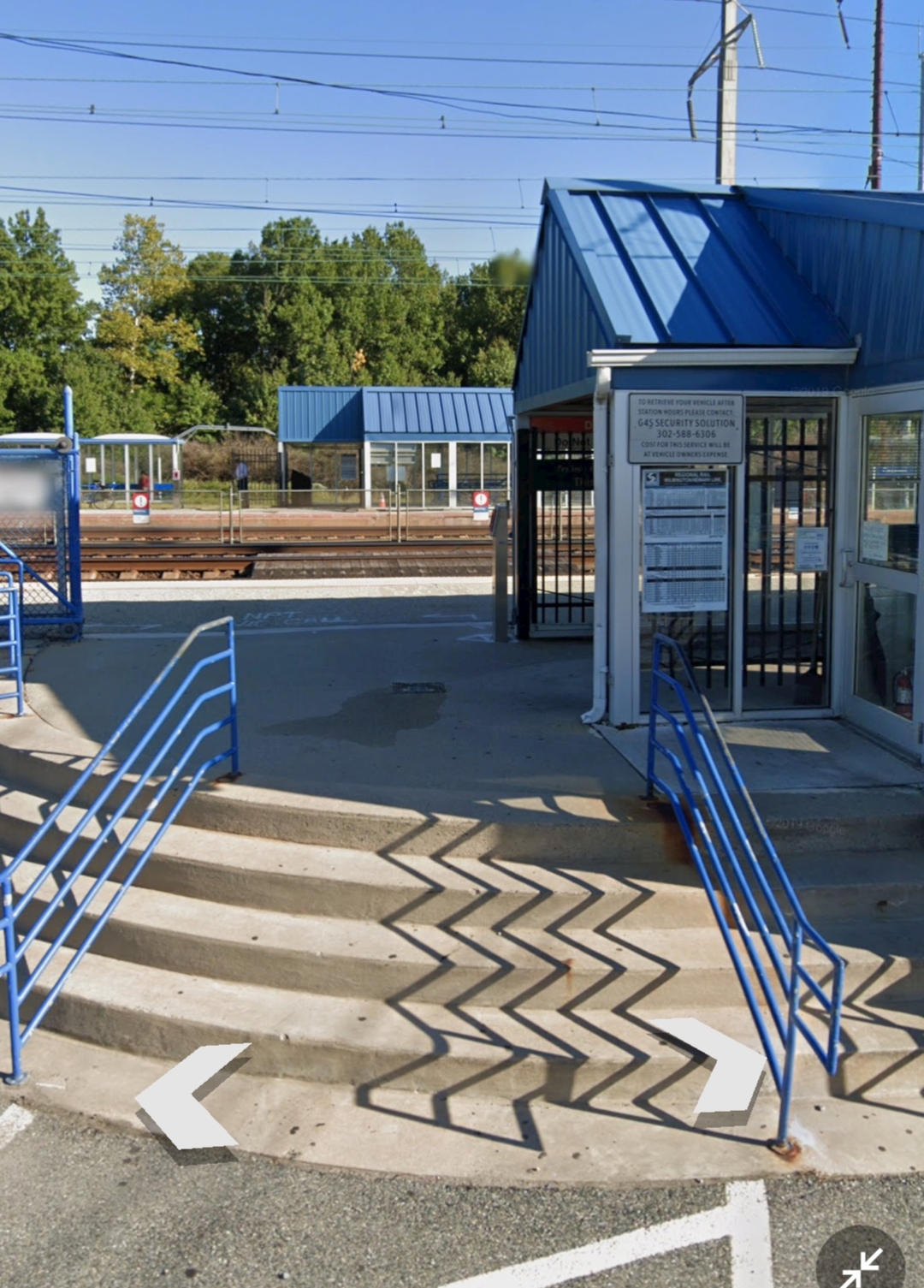
The old Claymont train station had multiple problems that affected the ability for certain people to utilize it properly, forcing them to use the often-crowded Wilmington station instead. First, due to the use of an underpass for accessing the platform across the rails, handicap accessibility was nonexistent. There used to be a lift, but it has been out of commission for at least the 2 years I have been using the station (and by appearances, had been out of order for much longer). The parking lot was also small, and even on days with average usage would often be nearly completely full. The new station has a parking garage with 3 levels, each as big as the prior lot had been, as well as elevators to the overpass (two on both sides!), motorcycle parking, bike racks, a walking path from the old station location, vending machines and electric car chargers, some of which are pictured to the left.
Additionally, there is a change to the rules of the station that allows many people who would not otherwise benefit from public transit to consider using it: You can now park overnight. At the previous station, the rules of which are pictured to the left, overnight parking was prohibited outright, meaning only day commuters could utilize the station. At the new station, overnight parking is permitted, and there remains no fees for parking whatsoever (a posting referencing this policy is depicted on the right).
Changes such as these are clearly made with the intention of drawing in new users of the public transit system, and increasing the capacity to handle those users, which is important for future expansions such as the rumored attempts to extend the Wilmington/Newark line to Baltimore. The maintenance and upkeep of public transportation is important, both to retain existing users and to draw in new ones. Upgrades such as this entirely new station allow for transit networks to compete with car infrastructure, especially with updates to the rail classes allowing trains to travel faster than 40mph (a number allegedly chosen so that highway drivers wouldn't see a train moving faster than them, and become discouraged to drive). The main thing public transportation needs is people to use it, as that affects how much funding it receives, as well as allowing it to utilize the #1 most effective form of advertising: Word of mouth. If people have a good experience on public transit, they are more likely to recommend it to others, and it becomes more efficient while also lowering road congestion (and reducing vehicle emissions as a consequence).