Thanks for your patience during our recent outage at scalar.usc.edu. While Scalar content is loading normally now, saving is still slow, and Scalar's 'additional metadata' features have been disabled, which may interfere with features like timelines and maps that depend on metadata. This also means that saving a page or media item will remove its additional metadata. If this occurs, you can use the 'All versions' link at the bottom of the page to restore the earlier version. We are continuing to troubleshoot, and will provide further updates as needed. Note that this only affects Scalar projects at scalar.usc.edu, and not those hosted elsewhere.
Mobilities JournalMain MenuCourse ProjectPublic TransportationBuses, Trains, SubwaysWalkabilityBikeabilityAutomobilityAccessibilityBorders and MigrationsParks, Outdoors and GreenspaceClimate ChangeVirtual Worlds and Digital MobilitiesAlternate Mobilitiesdavid kim87de7bc2484fc682d989967c7b88823ef2ab67e3
Central Park
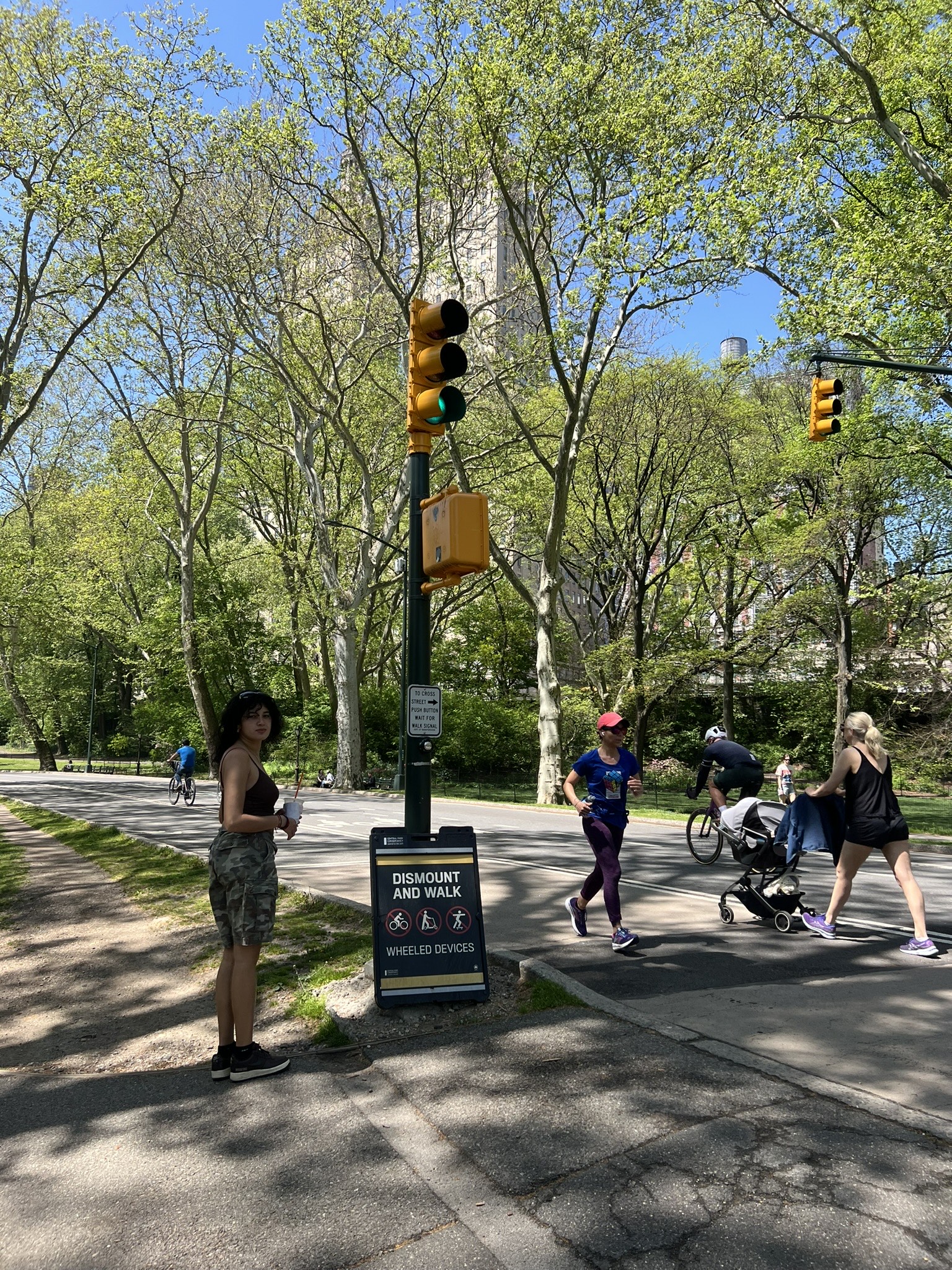
1media/CentralParkAN_thumb.jpeg2024-05-14T23:58:15-07:00Alexa Nunez-Alcocerd75492a44520f5a397ccd2076a0045355ac2693d445455Woman standing next to "Dismount and Walk" sign, 2 men riding bikes in bike lane, a woman pushing a stroller, and a woman jogging in central parkplain2024-05-15T00:19:23-07:00Alexa Nunez-Alcocerd75492a44520f5a397ccd2076a0045355ac2693d
Contents of this tag:
1media/nerea-marti-sesarino-_NpSkRaTy0A-unsplash.jpeg2024-03-01T06:31:22-08:00david kim87de7bc2484fc682d989967c7b88823ef2ab67e3Parks, Outdoors and Greenspace6image_header2024-05-08T10:14:04-07:00david kim87de7bc2484fc682d989967c7b88823ef2ab67e3
Central Park in Manhattan stands as a symbol of leisure and recreation, but its history is stained by the displacement of Seneca Village, a predominantly Black community forced out to make way for the park's construction in the 19th century. It is accessible in terms of bikeability, walkability, and automobility, but who are these spaces accessible to? While anyone can physically enter the park, its surroundings are dominated by some of the wealthiest communities in New York City. This raises a crucial question: who truly benefits from Central Park's accessibility? For the descendants of Seneca Village, who were forcibly removed from their homes to make room for this green space, the park's accessibility is a reminder of their ancestors' displacement and the ongoing generational economic disparities in the city. As we enjoy the tranquility of Central Park, it's essential to acknowledge and address the injustices of its past and ensure that accessibility extends to all, regardless of their background or socioeconomic status.