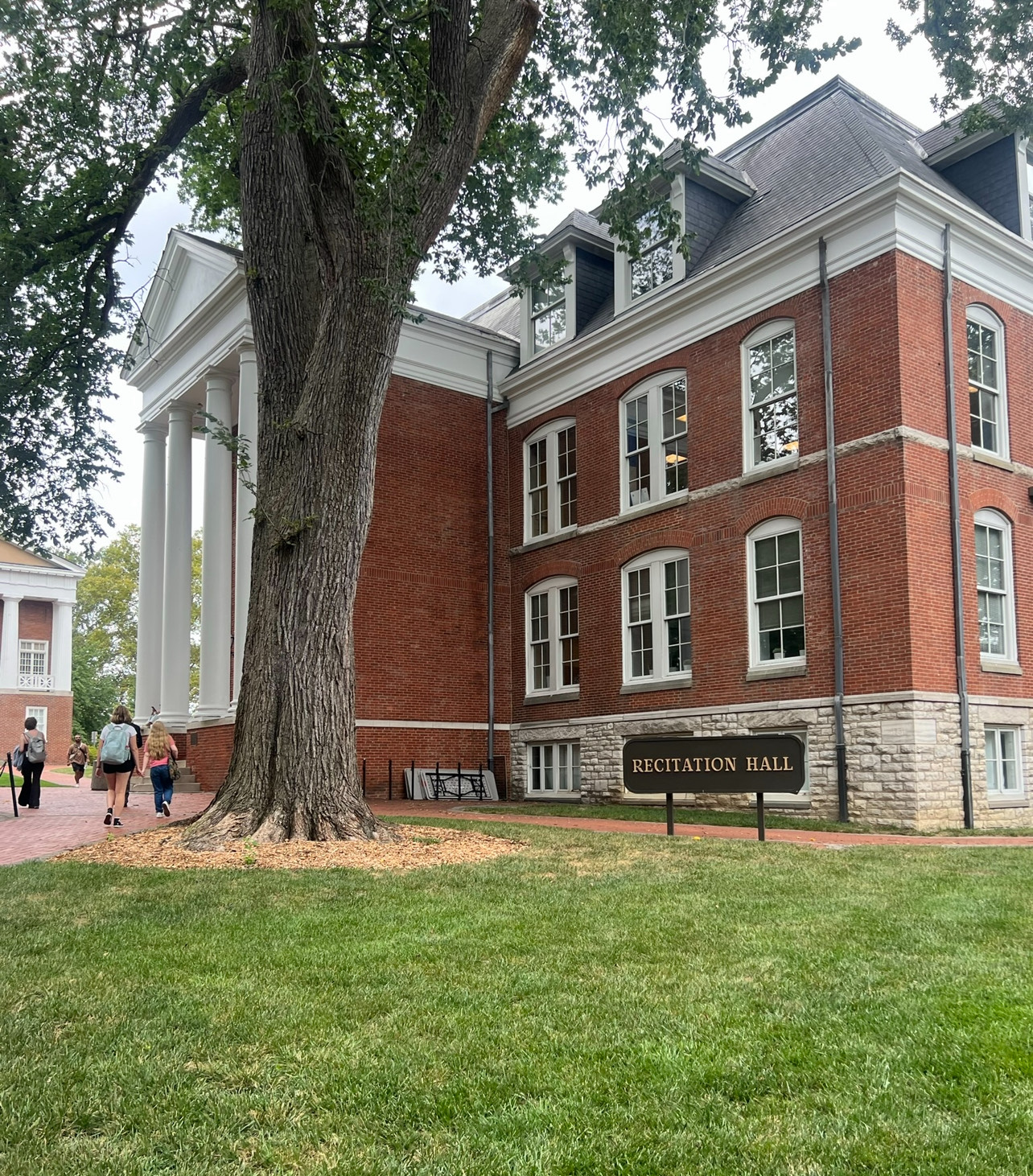
Accessibility issues to Class at Recitation Hall
Recently, I had a realization while passing by Recitation Hall at the University of Delaware. The grand appearance of Recitation Hall, filled with history, hid a big problem that I hadn't noticed before. As I recollected from last semester, approaching the entrance, I was confronted with a flight of stairs, and upon entering, I encountered two more staircases—one leading upstairs, the other descending to the basement. It was a simple architectural feature, yet its implications were profound. As someone who had never faced physical disabilities, I had never questioned the accessibility of buildings like Recitation Hall, but at that moment it became clear to me that this building, constructed in the 1800s, was not designed with everyone in mind. The realization struck me with a sense of indignation. How could it be that in today's age, a building at a respected institution of higher learning remained inaccessible to a significant portion of the student body? The lack of accessible entrances and pathways not only posed practical challenges but also served as a poignant reminder of the systemic barriers faced by individuals with disabilities. Recitation Hall is not an isolated case. Across the country, historic buildings stand as physical embodiments of exclusion, relics of a time when accessibility was an afterthought, if it was considered at all.
Alexa Nunez-Alcocer