Thanks for your patience during our recent outage at scalar.usc.edu. While Scalar content is loading normally now, saving is still slow, and Scalar's 'additional metadata' features have been disabled, which may interfere with features like timelines and maps that depend on metadata. This also means that saving a page or media item will remove its additional metadata. If this occurs, you can use the 'All versions' link at the bottom of the page to restore the earlier version. We are continuing to troubleshoot, and will provide further updates as needed. Note that this only affects Scalar projects at scalar.usc.edu, and not those hosted elsewhere.
1media/mirrors and masks header.png2017-03-15T15:47:51-07:00Bryn Mawr College383197083e2e957a4c01625eb8b832e0db85199c1615584plain2017-03-21T22:44:19-07:00Bryn Mawr College383197083e2e957a4c01625eb8b832e0db85199cLOOKING IN THE MIRROR
When we look into a mirror, what do we see? Gazing at our reflection transforms us into images. Only our external appearance is visible in the mirror, while all the complexities of human thought and interiority may remain beneath the surface.
Many artists, in their own self-portraits, make use of the mirror's flattening effect. Yet the mirror image is not static. It poses the challenge of drawing a dynamic, living self always in flux. In this interaction between artist and reflection, the artist negotiates between image and interiority.
The mirror bids us examine our defects by knowing ourselves.” - Cesare Ripa, Iconologia (1593)
As Ripa indicates, the mirror has been conceived as a tool for understanding the self. It sets the stage for introspection and self-reflection. But such uses of the mirror are culturally and historically specific. Mirrors are used across time and place for distinct purposes and to sometimes contradictory ends. What can we understand about ourselves by consulting our reflections?
How do we choose what to wear? Is this choice entirely free? Whether it is selecting what to wear in the morning or dancing a mask as part of a cultural rite of passage, we fashion ourselves in relation to our social world. Dressing up in costumes or masks might allow us to perform our sense of self differently, disrupting the assumption of a singular self and demonstrating the performative nature of selfhood.
Is your sense of self, your identity reducible to your appearance? Sometimes we assume we can know something about people based upon their appearance. Do we use appearances to gender or racialize bodies? These artists use masks or mirrors to resist the ease with which we might interpret appearances as gendered or racialized identities.
Contents of this path:
12017-03-15T15:21:55-07:00Bryn Mawr College383197083e2e957a4c01625eb8b832e0db85199cExhibition Checklist25structured_gallery2017-03-21T20:20:54-07:00Bryn Mawr College383197083e2e957a4c01625eb8b832e0db85199c
1media/mirrors and masks header.png2017-03-15T15:26:54-07:00Bryn Mawr College383197083e2e957a4c01625eb8b832e0db85199cCurators68image_header2017-03-19T08:59:22-07:00Bryn Mawr College383197083e2e957a4c01625eb8b832e0db85199c
1media/mirrors and masks header.png2017-03-15T15:27:28-07:00Bryn Mawr College383197083e2e957a4c01625eb8b832e0db85199cDonors15image_header2017-03-19T16:46:05-07:00Bryn Mawr College383197083e2e957a4c01625eb8b832e0db85199c
This page references:
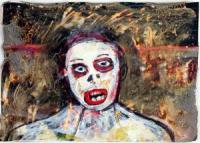
12017-03-17T20:35:59-07:00Rachel Bliss (born 1962), Self-portrait, 19911Mixed media on photographic paper; The William and Uytendale Scott Memorial Study Collection of Works by Women Artists, gift of Bill Scott; 2006.1.20
media/2006.1.20_BMC_f.jpgplain2017-03-17T20:35:59-07:00
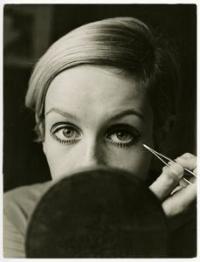
12017-03-17T14:05:19-07:00 Unknown photographer, Twiggy Putting on Eyelashes, 19661Gelatin silver print; Purchase through Fogel Photography Fund, October 2014; On loan from Haverford College, HC14-5416
media/HC14-5416.jpgplain2017-03-17T14:05:19-07:00