Thanks for your patience during our recent outage at scalar.usc.edu. While Scalar content is loading normally now, saving is still slow, and Scalar's 'additional metadata' features have been disabled, which may interfere with features like timelines and maps that depend on metadata. This also means that saving a page or media item will remove its additional metadata. If this occurs, you can use the 'All versions' link at the bottom of the page to restore the earlier version. We are continuing to troubleshoot, and will provide further updates as needed. Note that this only affects Scalar projects at scalar.usc.edu, and not those hosted elsewhere.
Micro-Landscapes of the AnthropoceneMain MenuMarginal WorldsPlant WorldsAnimal WorldsAmy Huang, Natasha Stavreski and Rose RzepaWatery WorldsInsect WorldsBird-Atmosphere WorldsContributed by Gemma and MerahExtinctionsMarginal WorldsSam, Zach and AlexE-ConceptsAn emergent vocabulary of eco-concepts for the late AnthropoceneSigi Jöttkandt4115726eb75e75e43252a5cbfc72a780d0304d7d
Seracs
1media/Screen Shot 2021-03-03 at 8.52.57 pm_thumb.jpg2021-03-03T02:34:30-08:00Sigi Jöttkandt4115726eb75e75e43252a5cbfc72a780d0304d7d309861Former life: crevassesplain2021-03-03T02:34:30-08:00Sigi Jöttkandt4115726eb75e75e43252a5cbfc72a780d0304d7d
This page has replies:
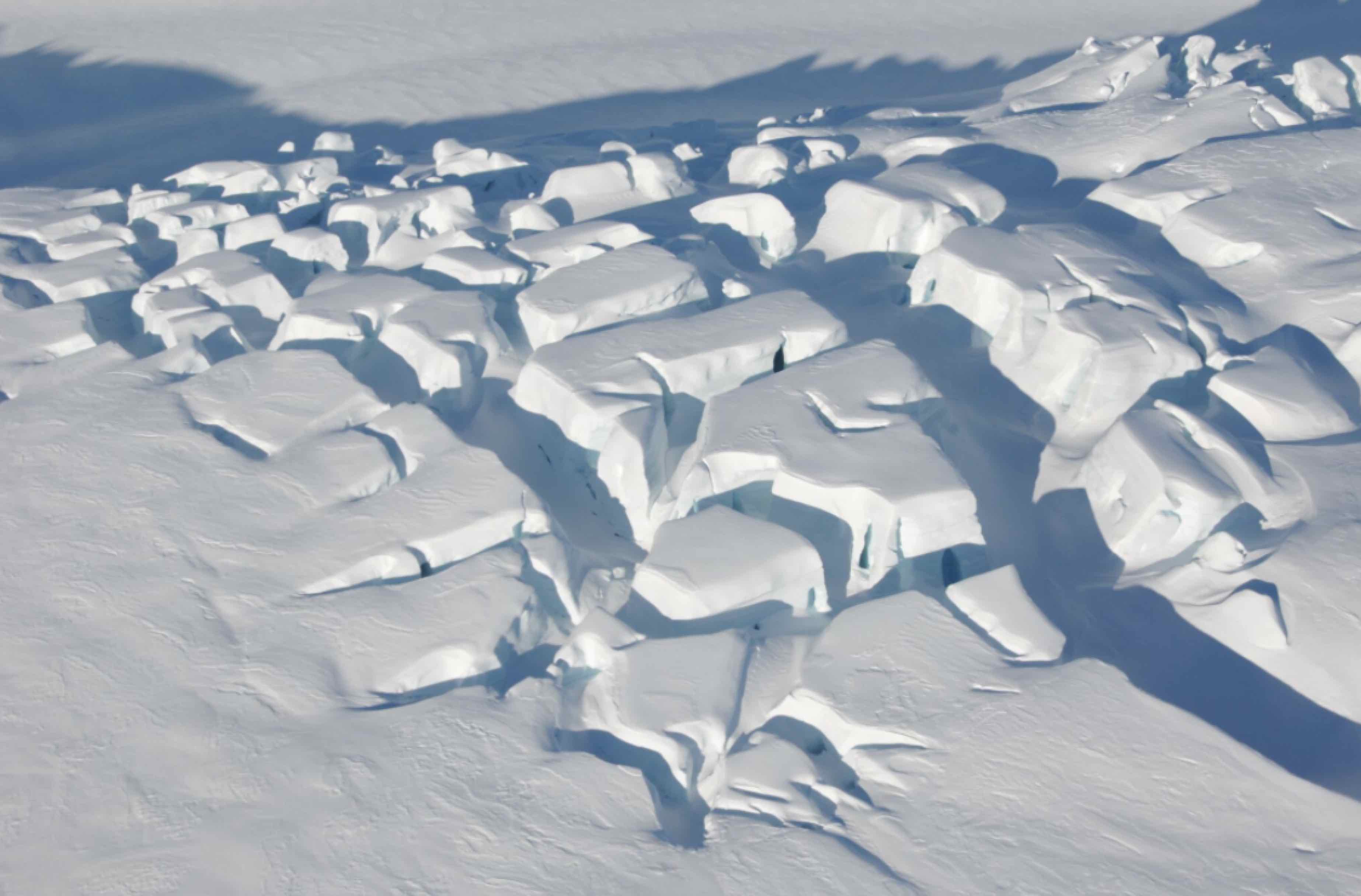
12021-03-03T03:20:48-08:00Sigi Jöttkandt4115726eb75e75e43252a5cbfc72a780d0304d7dSeracsSigi Jöttkandt2plain2021-04-03T01:57:22-07:00Should this picture be sandy brown instead of snowy white, one would be excused that he or she is on a plane flying over the ancient citadel of Aleppo instead of over the Tasman Glacier in NZ.
But these are seracs, house-size blocks of glacial ice, formed by intersecting and widening crevasses on the glacier.
Crevasses, in turn, are formed when glacial ice sheets fractured under shear stress when the glacier moves downstream. Sometimes, snow would bridge over the tops of seracs, turning them into "ice caves."Sigi Jöttkandt4115726eb75e75e43252a5cbfc72a780d0304d7d
Had this picture been coloured sandy brown instead of snowy white, one would be excused that he or she is on a plane looking down on the ancient citadel of Aleppo rather than the seracs on the Tasman Glacier in NZ near Mt. Cook (2015).
Seracs (from Swiss French sérac, originally the name of a compact white cheese) are house-size blocks of glacial ice, sometimes with their own 'entrances', 'windows' and 'rooms'. They are formed by intersecting and widening crevasses on the glacier.
Crevasses, in turn, are formed when glacial ice sheets are fractured by horizontal and vertical shearing forces when the glacier glides downstream. When these crevasses become wide enough, they form 'lanes' and 'streets'. Sometimes, snow would bridge over the tops of seracs, turning them into caves or tunnels. This is a village sculpted by nature's hands; and is capable of constant metamorphosis, despite not being organic and alive – the touchstone of new materialism.