Thanks for your patience during our recent outage at scalar.usc.edu. While Scalar content is loading normally now, saving is still slow, and Scalar's 'additional metadata' features have been disabled, which may interfere with features like timelines and maps that depend on metadata. This also means that saving a page or media item will remove its additional metadata. If this occurs, you can use the 'All versions' link at the bottom of the page to restore the earlier version. We are continuing to troubleshoot, and will provide further updates as needed. Note that this only affects Scalar projects at scalar.usc.edu, and not those hosted elsewhere.
Micro-Landscapes of the AnthropoceneMain MenuMarginal WorldsPlant WorldsAnimal WorldsAmy Huang, Natasha Stavreski and Rose RzepaWatery WorldsInsect WorldsBird-Atmosphere WorldsContributed by Gemma and MerahExtinctionsMarginal WorldsSam, Zach and AlexE-ConceptsAn emergent vocabulary of eco-concepts for the late AnthropoceneSigi Jöttkandt4115726eb75e75e43252a5cbfc72a780d0304d7d
12022-10-03T16:59:52-07:00Land Clearing in Australia7Sarah Laanani (Week 3)plain2022-11-14T19:10:48-08:00
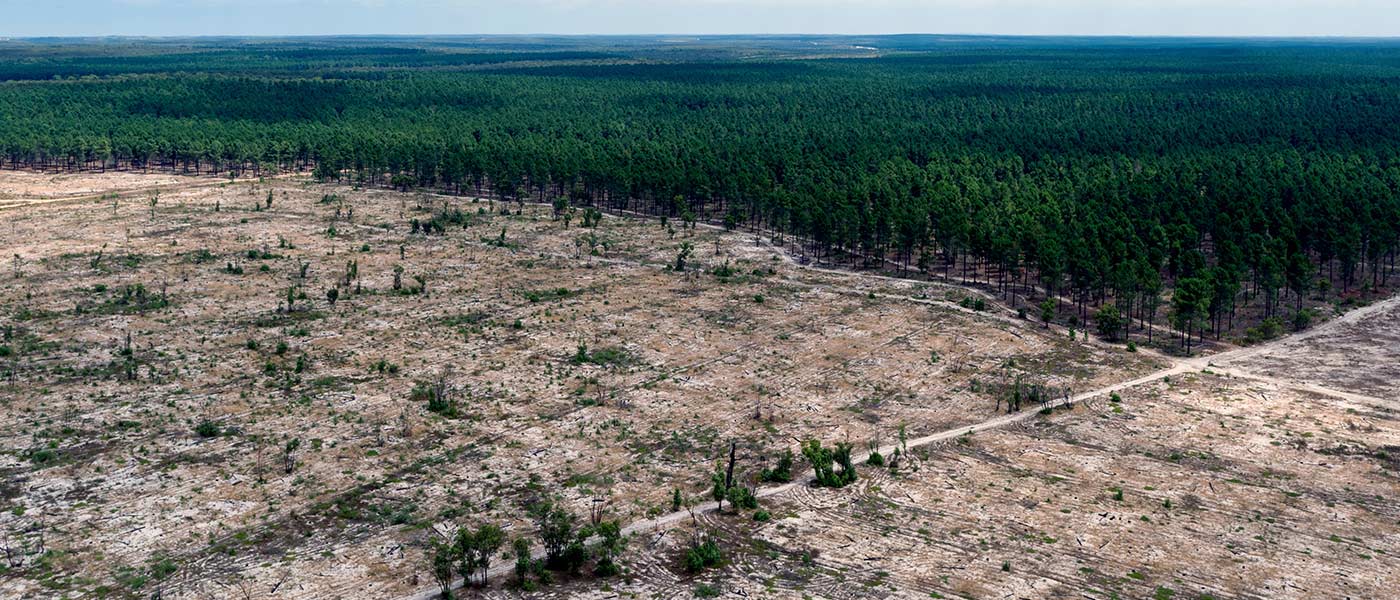
From an eco-critical lens, land clearing represents one of the key challenges of the Anthropocene, capturing the marginality between the human and nonhuman Worlds. Quintessentially, land clearing reflects an anthropocentric and highly androcentric society that refuses to acknowledge the symbiotic relationship between humans and plants. Land clearing has not only led to the loss of biodiversity and decline of species, but it has also contributed to pollution of rivers and oceans and thus exacerbating the issue of water scarcity. Evidently, this environmental issue illustrates the entanglement of the multiple micro-worlds amalgamated into a singular macro-world, intertwined in a Sonderweb.