HOW WE DO IT
Conception:
The original design of the Memio was based off the Google Glass. It was intended to be a small device that could clip on to the side of the patients’ glasses. However, Google Glass kept its information contained in a small corner of the user’s vision, and Memio was intended to cover the entire field of view. The product was described as “Alexa meets Google Glass” and would combine facial recognition software and other interactive features.The original draft of Memio also included a side attachment similar to a hearing aide. This would allow the device to speak directly into the patient’s ear.
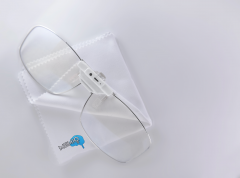
The design changed drastically from the original when the idea of covering the total field of view was implemented. Now the device projected from the center of the glasses instead of the side. It also clipped onto the center of the glasses with a spring clip instead of snapping.
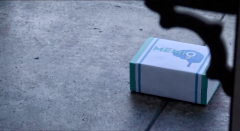
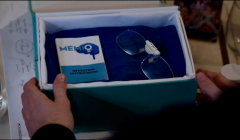
Since the device would arrive in the mail, it needed packaging. The packaging would feature a slip cover with space inside for the device and instructions. The design of the packaging evolved to include the logo and space for all the individual pieces.
Finally, the Memio was created using plastic and polymer clay attached to wire-framed glasses. The logo was designed to reflect the merging of technology with human memory, specifically the temporal lobe, which helps regulate and store memory. The package was created using paper, foam core, and cardstock, and it was a fold top box with a sleeve, inspired by wearable tech pieces such as google glass or the apple watch.
Pre-Production:
The pre-production process involved doing a great deal of research, including hearing individual testimonies. Interview with A, B, C, D, E, and F helped guide the project and inspire the script. Assembling the crew involved reaching out to friends.
Production
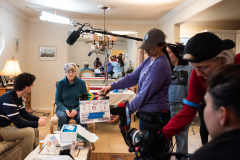
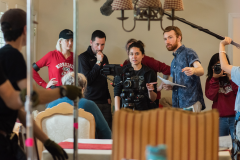
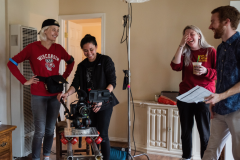
The film was shot on a Canon camera in a small home Pasadena. The team worked over 2 twelve-hour days to complete the project, and they had a lot of fun while doing it.Post
The film was edited in Adobe Premiere Pro over the course of a few weeks. After the editing was completed, the post-production process involved managing the score, sound design, visual effects, and color grading. The VFX were created in After Effects, the film was colored in DaVinci Resolve, and the sound was designed on ProTools.This page has paths:
- Table of Contents Matthew Hanisch
This page references:
- First Draft of Glasses
- First Draft of Side Attachment
- Second Draft of Glasses Side Attachment
- Behind the Scenes - Slate
- Second Draft of Packaging
- Final draft of glasses
- Final Draft of Logo
- Final Draft of Packaging - Outside
- Final Draft of Packaging - Inside
- Behind the Scenes - Group
- First Draft of Packaging
- Behind the Scenes - Having fun