Scalar's 'additional metadata' features have been disabled on this install. Learn more.
MEDIA AND THE ARCHIVE: Motions and TransformationsMain MenuIntroductionTheories of the ArchiveThe Everyday ArchiveThe Affective ArchiveThe Remixed ArchiveArchives of Trauma & TransformationONE ArchivesAuthorsViola Lasmanad509adf1c739fd232bbdaf367d2a43ab9c40356aHeather Duncan950652be48d0b8952933645d916c264d4b0c6d93Kelly Logana8c383c4096cdf9561e66870a2034cf5192b5ffbPatrick McDonnellbaceed1871fa95ac393de86ba2c945c57ae81a3cMichael O'Krentb1f1a02981ff6eeeab8a6ca6983aee3deda1ffabKevin Tian1e7d7fe44d1ee011681d14926cd8f29f4c29dfc2
1media/IMG_1050.JPG2016-05-31T23:29:54-07:00Theories of the Archive83image_header2017-11-30T14:03:55-08:00Embark on a journey with us as we discover the archives.
Throughout the course of this tutorial, we will work together to investigate meanings of the archive, and collaborate on creating an archive of archives. What does the archive mean to you?
Readings
We begin with an introduction to some theories of the archive via close readings of Diana Taylor and Jacques Derrida, as well as an overview of several major theorists and scholars (this is not, by any means, an exhaustive list):
Jacques Derrida, excerpt from Archive Fever (in-class handout and analysis)
Overview of various theories of the archive:
Ann L. Stoler, Along the Archival Grain (2009)
Colonial underpinnings of the archive; excesses and eruptions of the granular archive
Diana Taylor, The Archive and the Repertoire (2003)
Lived experience and the repertoire in relation to the archive
Ann Cvetkovich, The Archive of Feelings (2003)
Affective understandings of archives; the queer archive
Michel Foucault, The Archaeology of Knowledge (1969)
Technology of power; the archive as "the system of enunciability" and "the first law of things that can be said"
Wolfgang Ernst, Digital Memory and the Archive (2012)
Digital technology providing "a different economy of the archive as dynamic agency online"; from records to communication and transformations
Brainstorming "the archive"
In our first session, we also brainstormed and thought about the various definition(s) of the archive. Together, we came up with thoughts and questions that came to mind regarding our first encounters and ideas surrounding "the archive."
Themes
Access
The level of access that an archive has is determined by those who create, guard and maintain the archive.
Preservation
How are the ideas of archive and preservation connected? What steps need to be taken so that the archived is preserved for centuries to come?
Location/Architecture
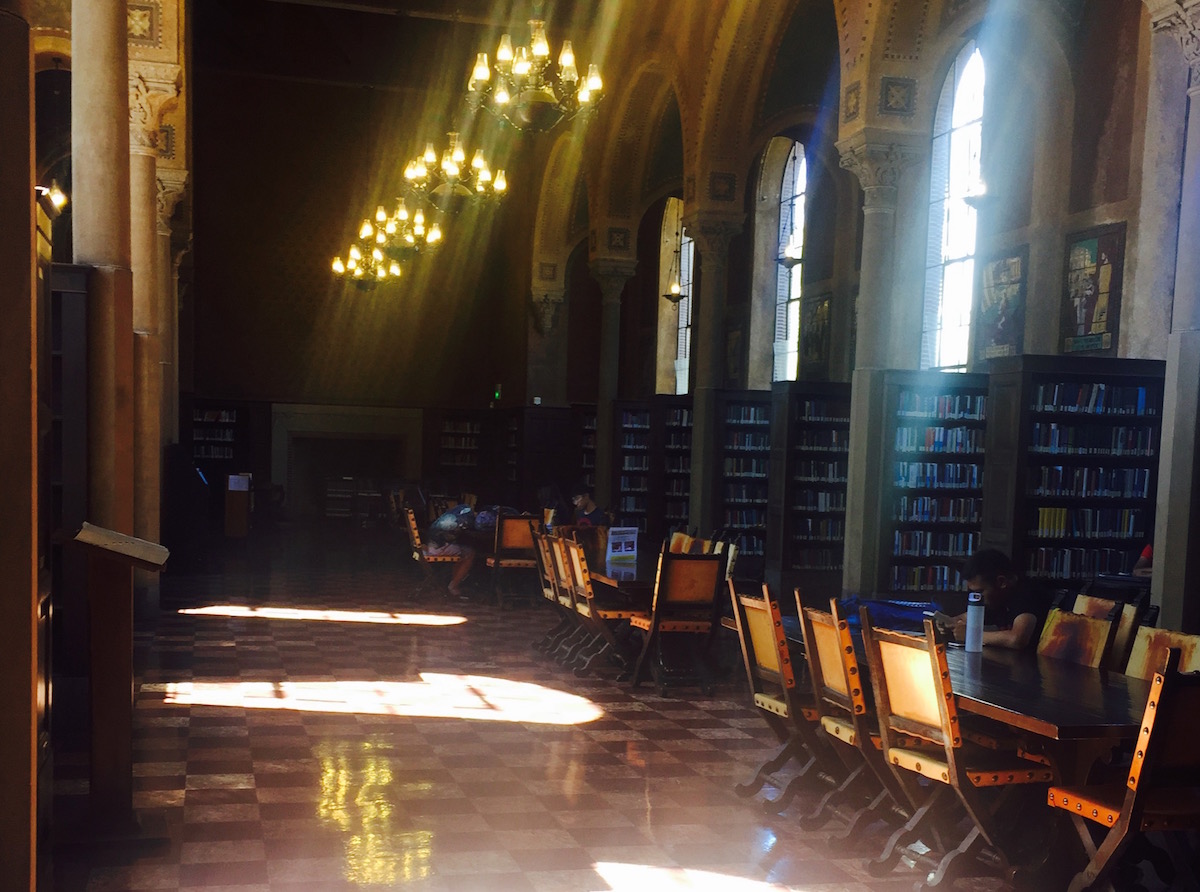
The location of the archive is also important. Does it have a physical location? If so, what does it look like? How does the physical location contribute to the archive?
Memory
How is memory archived? What role does the archive play in our interactions with the past, and with history itself?
Technology
In Archive Fever, Derrida writes, "what is no longer archived in the same way is no longer lived in the same way." How do different forms of technologies change archival meanings, productions, and circulations, as well how we access and use the archive?
Embodiment
What happens when live performances or recordings are archived? Are they, as Diana Taylor suggests, beyond the archivable?
Presence/Absence
What is the significance behind what we choose to include in the archive and what we choose to eliminate or not include? There is undoubtedly a great weight placed on what the presence of materials in the archive but what weight does the absence of materials hold? In the creation of the archive, we must be sensitive to the impact of what becomes archived and what does not, and how both of these affect the shape of the archive.
The concept of the archive shelters in itself, of course, this memory of the name arkhe. But it also shelters itself from this memory which it shelters: which comes down to saying also that it forgets it. - Jacques Derrida
Key Questions
What is an archive?
Why do we live in what Taylor calls "the so-called 'era of the archive'"?
Who are archives for?
What are some examples of different kinds of archives?
What are the limits to an archive, whether physical, or figurative?
What are the differences and similarities between institutional/historical/personal/community archives?
What responsibility is in the hands of those creating the archive? How can the archives serve the future?