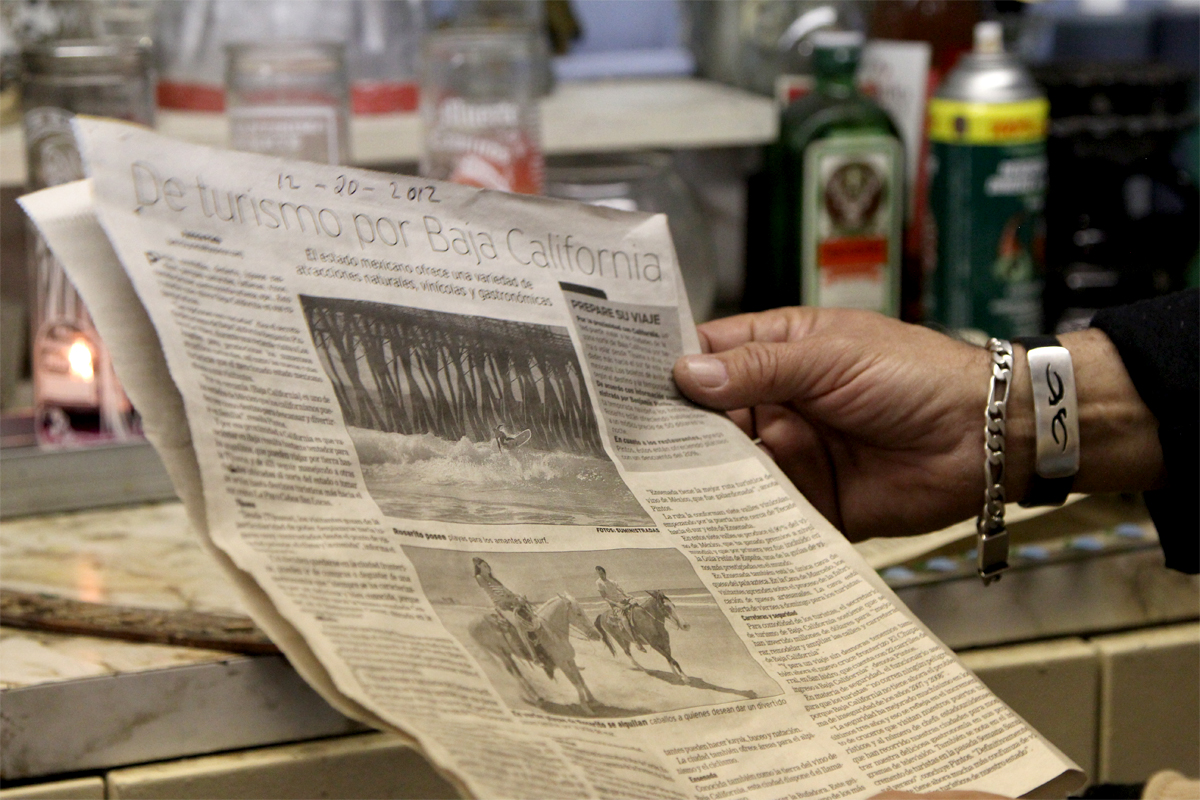
Pancho shares newspaper clipping (2013)
1 2015-06-02T23:24:34-07:00 Veronica Paredes f39d262eb7e9d13906fe972f3e5494dbae1896bc 3429 2 Pancho shares newspaper clipping about tourism in Baja California (2013) plain 2015-06-02T23:25:08-07:00 Veronica Paredes f39d262eb7e9d13906fe972f3e5494dbae1896bcThis page has tags:
- 1 2015-06-02T07:58:47-07:00 Veronica Paredes f39d262eb7e9d13906fe972f3e5494dbae1896bc Original Photos Veronica Paredes 10 Tag for original photos (Broadway as Background) gallery 2015-06-04T02:21:55-07:00 Veronica Paredes f39d262eb7e9d13906fe972f3e5494dbae1896bc
This page is referenced by:
-
1
media/bway-as-bg.jpg
2015-05-30T09:44:59-07:00
Mexico lindo y querido
54
Tag for Broadway as Background / Background as Broadway
structured_gallery
2015-07-19T10:09:28-07:00
porque no quiero olvidar me voy me voy
(the trumpet cries)
a Los Angeles porque no quiero olvidar
me voy a Los Angeles me voy
(the accordion moans)
a Los Angeles porque no quiero olvidar
mi México
(the trumpet wails)
This theme is named after a song “México lindo y querido” (Beautiful and Beloved Mexico), with a well known version coming from Mexican singer Jorge Negrete. The lyrics describe a deep sentiment of loyalty and love for the homeland of Mexico: “My beautiful and beloved Mexico/ should I die far from you/ let them say I'm asleep/ and bring me back to you.”These lyrics were prophetic as Jorge Negrete died in Los Angeles in 1953. Negrete’s travel to the city had been arranged by Frank Fouce, a movie theater impresario and owner who ran a major entertainment organization that catered to Mexican audiences in the city at the height of the Spanish-language cinema renaissance in Downtown Los Angeles.
For immigrant (primarily Mexican and Mexican American) film audiences that frequented South Broadway, well into the 1970s and early 80s, the movie theaters in Downtown Los Angeles provided an opportunity to be symbolically transported to “Mexico lindo y querido.” Gracefully demonstrating this diasporic sentiment in the epigraph above, poet Eduardo Corral mixes languages – Spanish, English, musical – on the space of the page to evoke a nostalgia and sense of transnational belonging particular to Los Angeles’ place in the diasporic cultural imaginary.
In interpreting these varying modes of nostalgia and sentimentality, it is useful to consider how transnational scenes of belonging are shaped by the processes of forming cultural and ethnic(-racialized) identities. These processes are relational, involving situated definitions of identity as they are formed in a specific city, as George Sánchez examines in Becoming Mexican American, focusing on Los Angeles in the first half of the 20th century, or between different generations, periods of migration, and shifting notions of citizenship as David Gutiérrez outlines in Walls and Mirrors. Identities are also shaped through and within media representations: for example, between film cultures, understandings of modernity, and media industries, as Laura Isabel Serna explains in Making Cinelandia, a work that complicates dominant understandings of how American films functioned in Mexican film culture on both sides of the border in the 1920s. The mediated formation is Chicano identity is addressed in Rosa Linda Fregoso’s landmark studies, The Bronze Screen and meXicana Encounters, which illustrate how canonical Chicano films center masculinity, heterosexuality and investment in the Chicano familia to build their cultural nationalist project.
The annotations listed here explore how themes of cultural citizenship, national belonging, and ethnic identity emerge in scenes from filmes that conjure nostalgia, feature return journeys, situate Broadway as a significant node for the production, circulation and exhibition of Mexican entertainment, or uncover Mexican culture as Los Angeles' repressed expression.
[i] For further exploration of “México Lindo,” see Arturo F. Rosales, “In Defense of México Lindo,” in Chicano! The History of the Mexican American Civil Rights Movement (Arte Publico Press, 1996), 55–71.Video annotations:
Canción Mixteca in MEXICO DE MI CORAZON
From Million Dollar to Broadway in YAKO, CAZADOR DE MALDITOS
Rally for workers rights in LA JAULA DE ORO
Opening of Jaripeo ("rodeo") and religious fireworks display in Puerta del Rio, San Luis Potosí, Mexico
Club Silencio in MULHOLLAND DRIVE
-
1
2015-06-29T11:48:28-07:00
"¿Sabe?" Learning about South Broadway
4
¿Sabe? Learning about South Broadway
plain
2015-06-29T11:56:02-07:00
Rafael Moreno has worked at record, video and now DVD stores on Broadway since the mid-1980s. He began working at a record shop next to the Million Dollar Theatre shortly after moving to the United States from Michoacán in 1983. He opened his own stall right before 2000 and called it Discoteca 2000 to commemorate this timing. We met in 2010, during a time when he shared his stall space in the Broadway-Spring Arcade with an especially gregarious woman named Samanta, who was fluent in English and Spanish. We continued to converse about movies and South Broadway even when Samanta moved to the Santee Alley area, and he eventually to the Broadway Trade Center. Here is the field note belonging to the above video clip, when he showed me where Million Dollar Theatre could be spotted in the film Yako.
Field note from Wednesday, February 27, 2013: Rafael and I started talking about Million Dollar Theatre and I mentioned the scene in México de mi corazón where Lola Beltran and Lucha Villa sing “Canción Mixteca.” He began reciting the first line, and we began to sing the song together for that line. Rafael shared that the song used to make him cry when he first arrived in Los Angeles. It made him think about how much he missed his ranch and his home in Michoacán. Then he remembered another movie that featured a scene at the Million Dollar, a movie called Yako. The DVD cover is not indicative of a film from the 1980s. Though it was released in 1986, the cover appears to make it look as though it was released more recently, with the main character’s head seemingly pasted over a more contemporary film poster, which also features a female character absent from the film altogether. Rafael had two customers while we talked, one was a man with a wife that would not enter the stall, staying in the arcade corridor. Why do the women never enter? Have I ever seen a woman in Rafa’s shop since Samanta moved out?
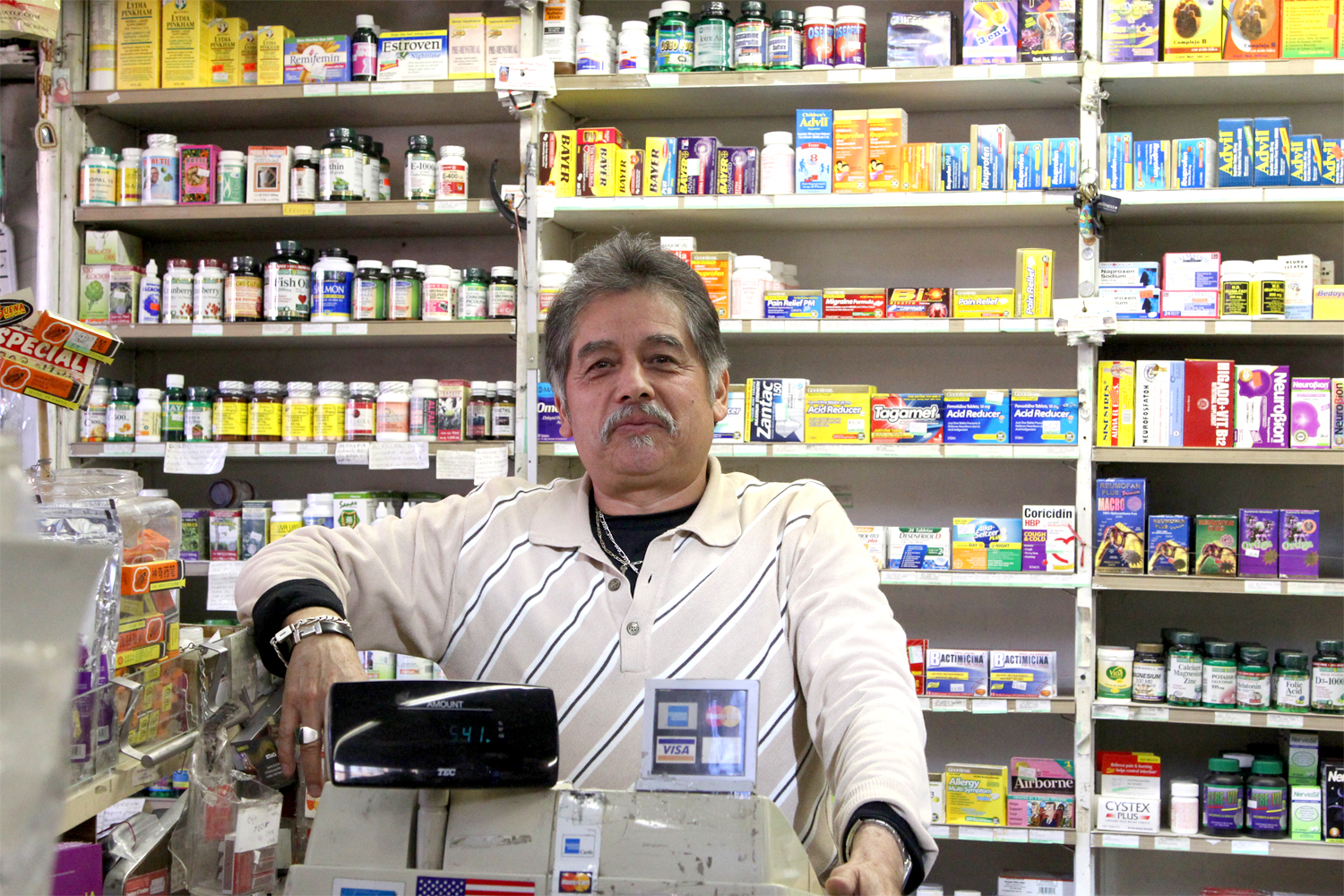
It is through Rafael that I met Francisco, who still works in the area he and Rafael at, at the Million Dollar Farmacia. The farmacia has been covered by the Los Angeles Times recently and Downtown News in the past. Francisco collects these stories and displays them in the store, his archives catalog the place history of Los Angeles and its diasporic nodes. He shows Adán (my partner in interviewing Rafael and Francisco) and me images of the ranch he aspires to return to in Mexico, mixed in with clippings of new stories promoting tourist destinations.