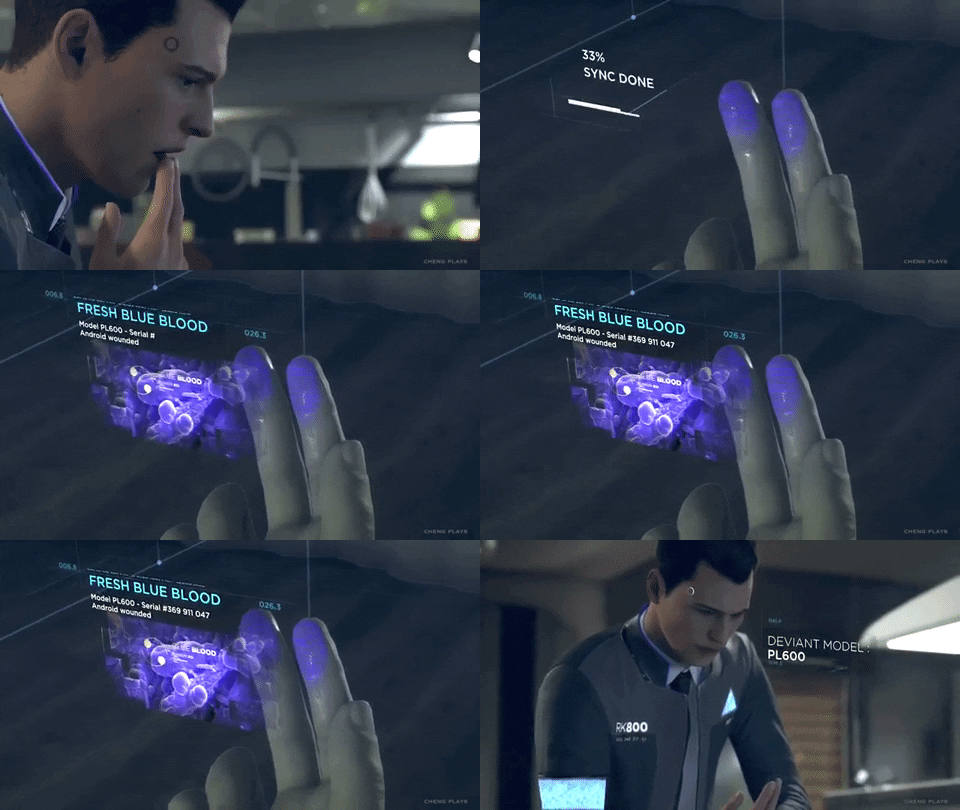
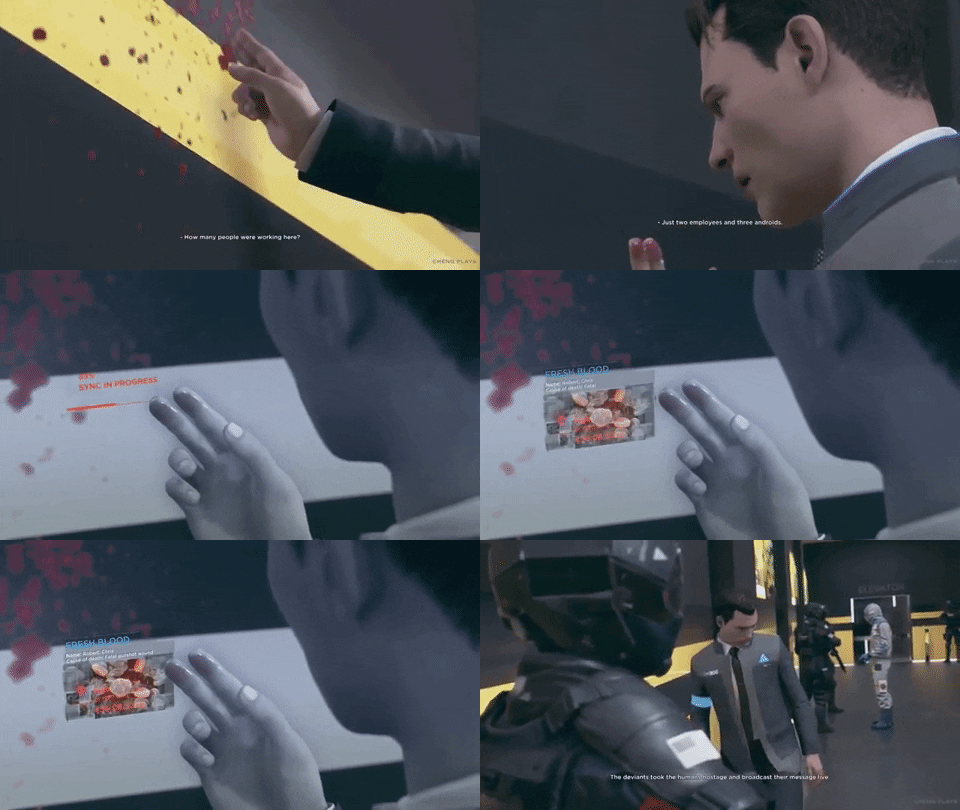
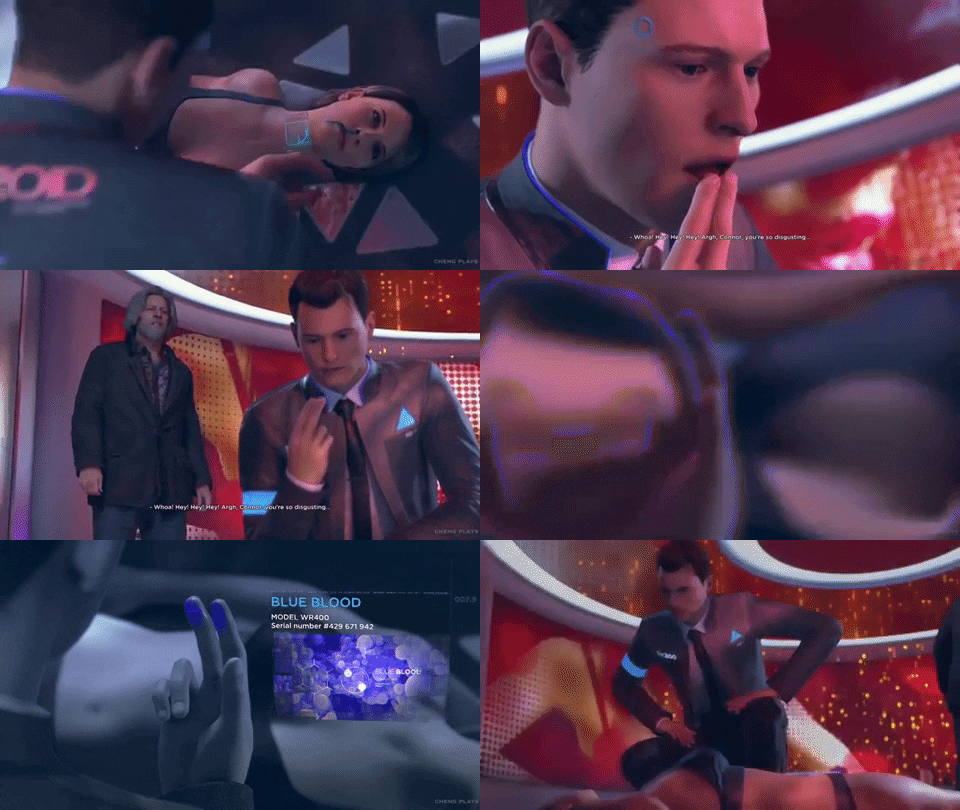
Connor Tasting Blood
1 2019-04-13T01:06:29-07:00 Erin Delaney 025b2f64f51a6f5572cf01fdd8fffd9be1dd2c19 32901 2 Connor scanning blood plain 2019-04-17T04:57:11-07:00 Erin Delaney 025b2f64f51a6f5572cf01fdd8fffd9be1dd2c19This page is referenced by:
-
1
2019-04-13T01:15:25-07:00
How can a failed external social robot become an internally social one?
15
plain
2019-04-17T19:24:12-07:00
What do I mean when I say "failed"? Well Hank puts it best.
I use fail here loosely, as that is determined by player choice. In this short clip we have a chance to see how the concept of external social robotics would be applied in the context of Cyberlife androids.Hank: Why did they make you so goofy and give you that weird voice?
Connor: Cyberlife androids are designed to work harmoniously with humans. Both my appearance and voice were specifically designed to facilitate my integration.This quote from the game, underlined emphasis by me, shows how the idea of external social robotics is to create the most efficient robot for human use via affective means. The goal here is to "fool" the user into believing the robot is giving the appropriate emotional responses so as to seem human or humanoid. This is opposite the internally oriented view that focuses on creating a robot that has "authentic" emotional responses, created by an internal structure.
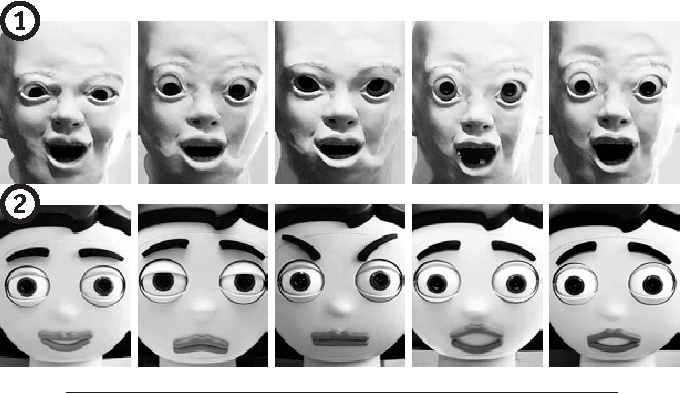
Originally this dichotomy came from Descartes philosophy that emotion and thought is internal, and therefore an individual has direct access to their own thoughts and emotions. Consequently this means that as internal processes, they can only be indirectly knowable via observable external signs aka watching the person for external emotinal signs. (Dumouchel, 96) Today in trying to merge the two, the goal is to create an "affective loop" whereby the assumption is that the robot can include the user in its process in a dynamic encompassing all of the interlocutors, the affective expression, and responses evoked by the expression and interaction. (Dumouchel, 127-132) This is a way to encompass the internal emotive process, with the emboddied external expression. There are already examples of these machines today, some humanoid some not, such as: BARTHOC Jr., Maggie, and Kismet
So how did deviants like Connor, or Markus, or Kara, go from being externally social to internally? The key to this question may be the fact that this dualism is being currently chipped away at in robotic sciences, especially those concerning social robots. Detroit Become Human may be a more accurate interpretetive expansion of todays scientific ventures into the near future. This is to say that currently, in practice this theoretical dichotomy of external/internal is blurred, and the seperation between robots made to "fool" people and robots made to have internal affective structures is not clear.(Dumouchel, 105-112)
The emphasis on empathy and emotion in the logic of internal social robotics is based in our concepts of human intelligence, not to say there are not also animal based social robots. But it is precisiley this lack of enthusiam at the chance to break down and challenge current western categories of how we define intelligence and sentience anthropocentrically and integrate the values of the non-human.
Seen from Connor's investigation, it is believed that intense situations, a trauma as Connor puts it, lead to somehow shocking the robots into "becoming human" and having an emotional response. This idea of the passive machine being enacted on and through that process becoming a thinking human is interesting, in that it takes almost a physics based aproach of kinetic and potential energy, yet it does not really question our relation to the machine as it is before trying to force a human-centric internal thought process upon them. It assumes the passivity of an object and although it does quesion our relations with machines in taking into account human tendency for anthropormorphizing non humans it does interrogate those relations much further.