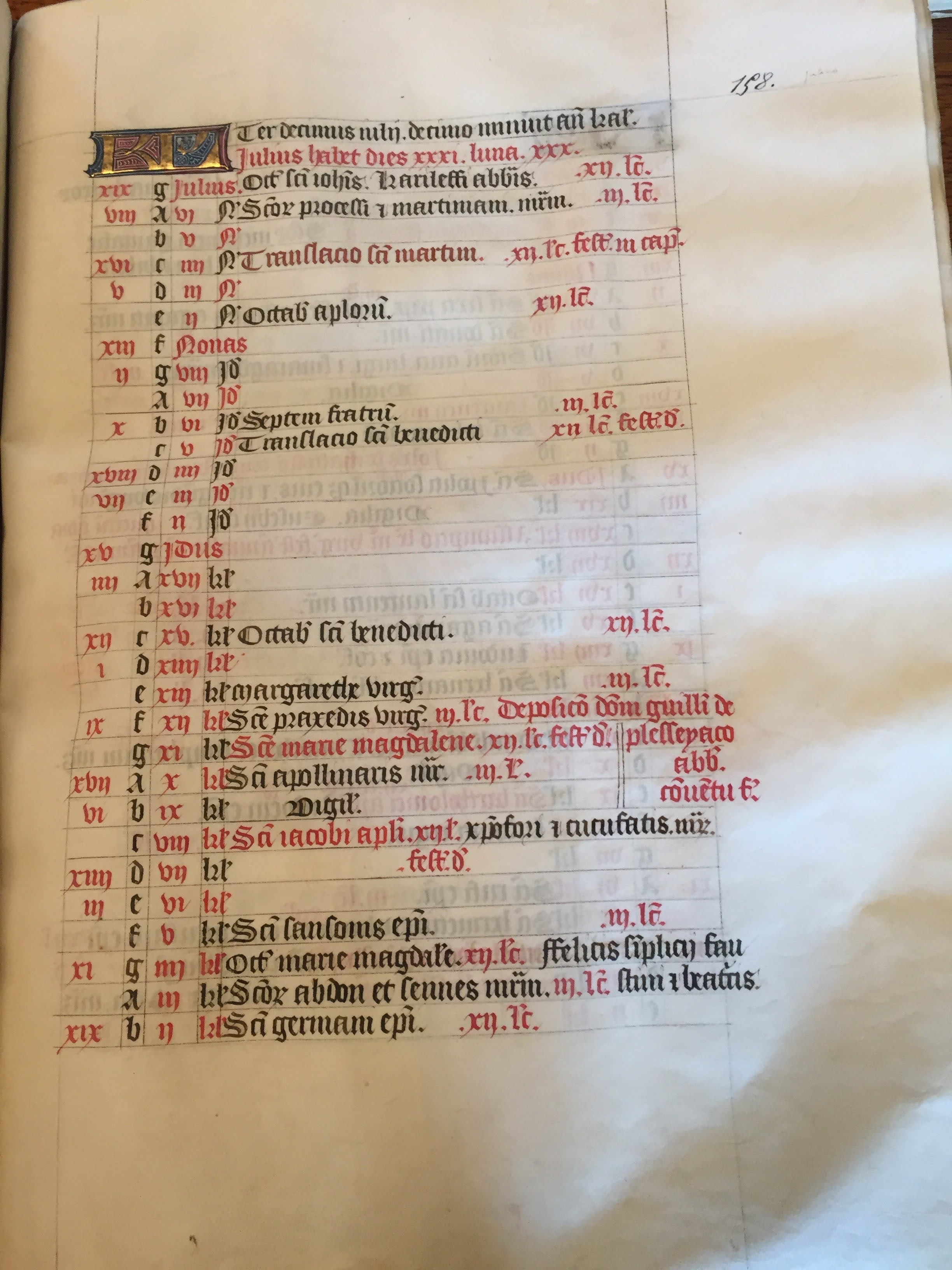
1media/MS 16 July_thumb.jpg2023-04-01T08:27:31-07:00Anne Heath09732d720ba4faf961eef7443cd7fb56ebae6841190964BMV MS 16, fol. 158r (15th c), July calendar page with feast of Mary Magdaleneplain2023-04-01T09:40:56-07:00Anne Heath09732d720ba4faf961eef7443cd7fb56ebae6841
This page is referenced by:
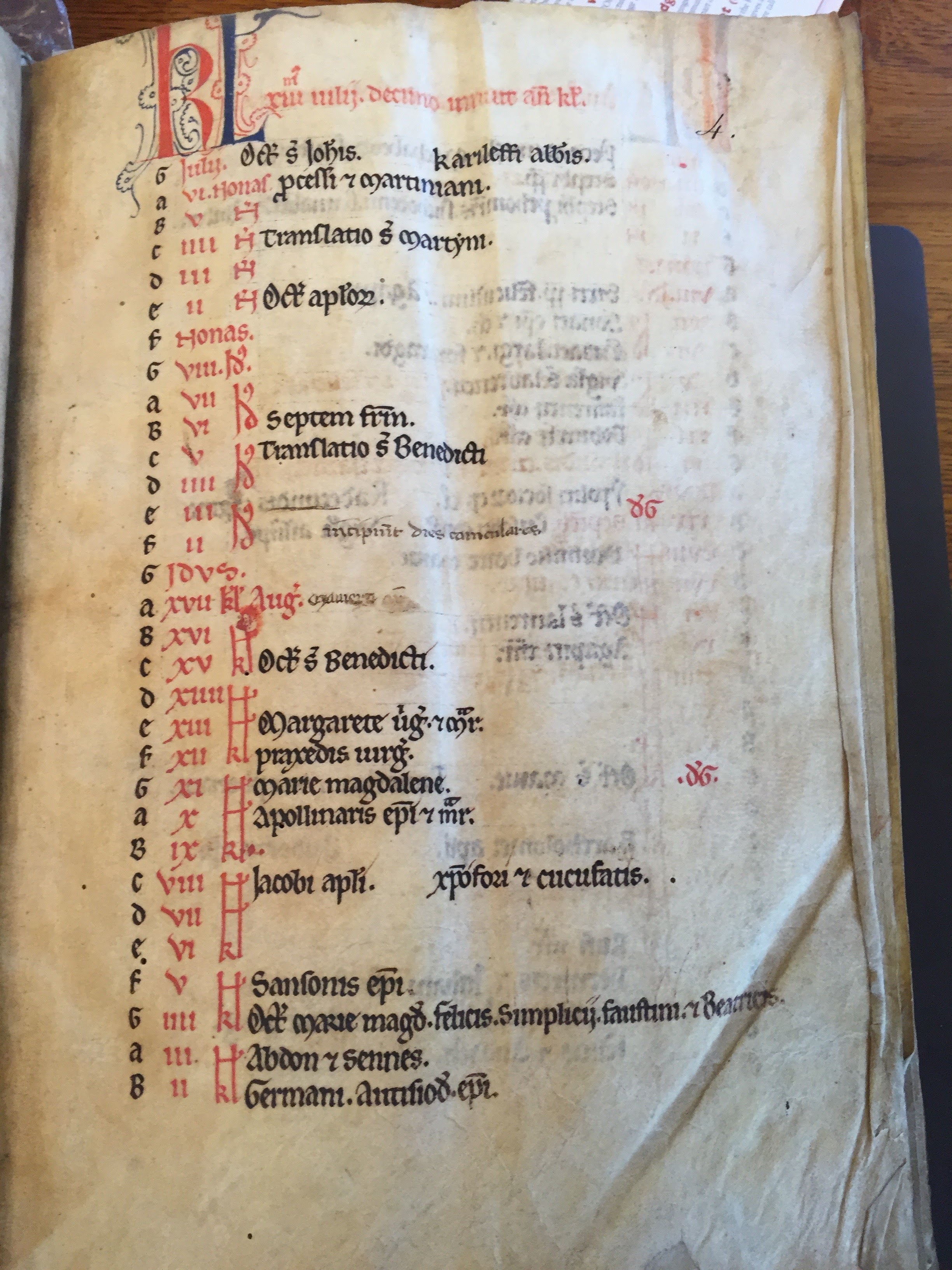
12023-04-01T08:33:56-07:00The Liturgical Calendars of La Trinité: Mary Magdalene12Chapter 2plain13399552024-08-06T18:26:29-07:00The feast day of Mary Magdalene appears in the earliest surviving calendar of Vendôme, from missal dating to the first quarter of the thirteenth century. Here, she is listed on her traditional day, July 22. Her name is in black, but the rubric in red, "Dx6," on the right margin indicates that her feast was a “duplex day,” with 6 readings.
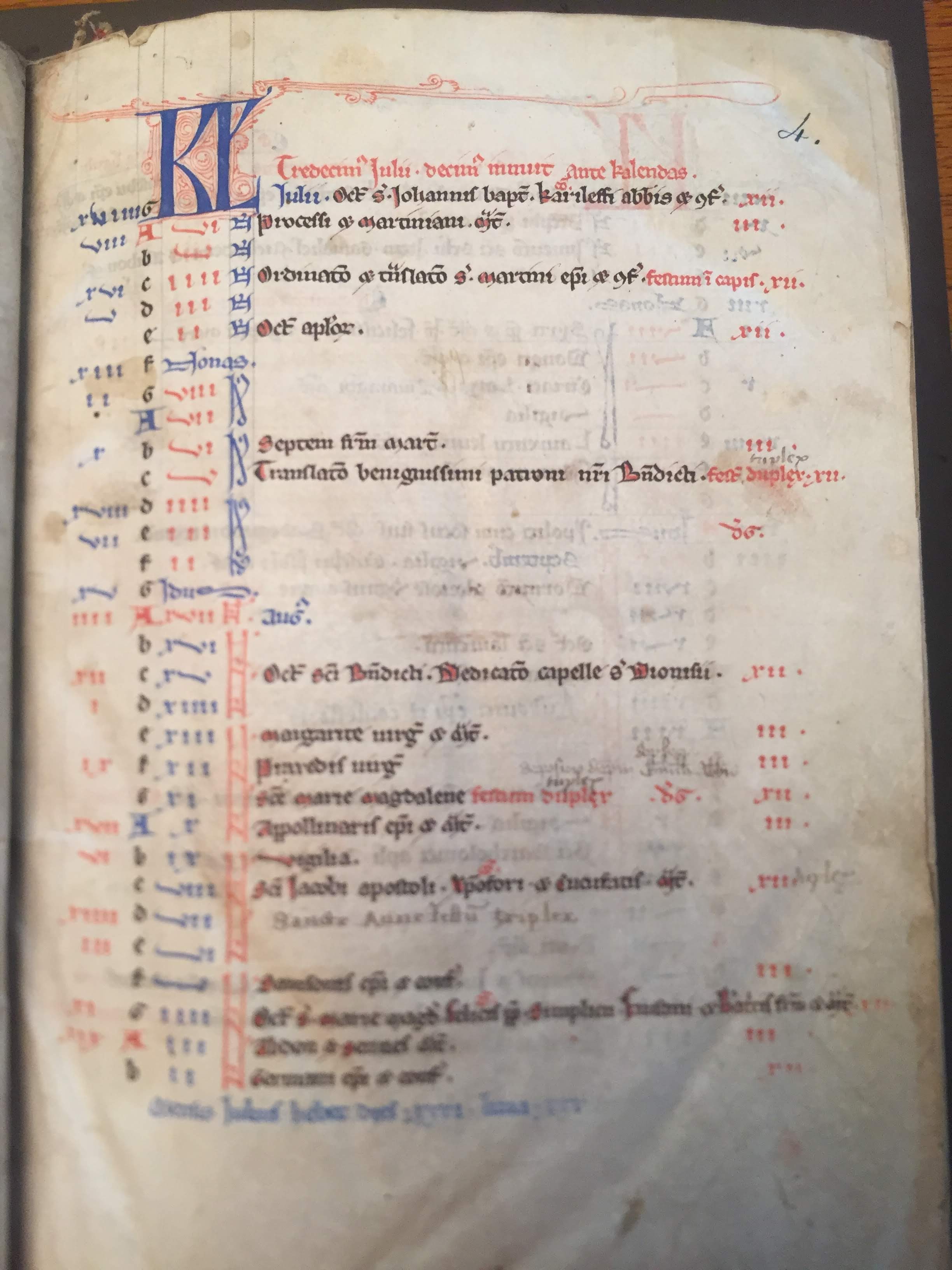
Mary Magdalene’s feast appears in the mid-thirteenth century calendar of the abbey’s breviary with a more specific indication of a duplex feast day.
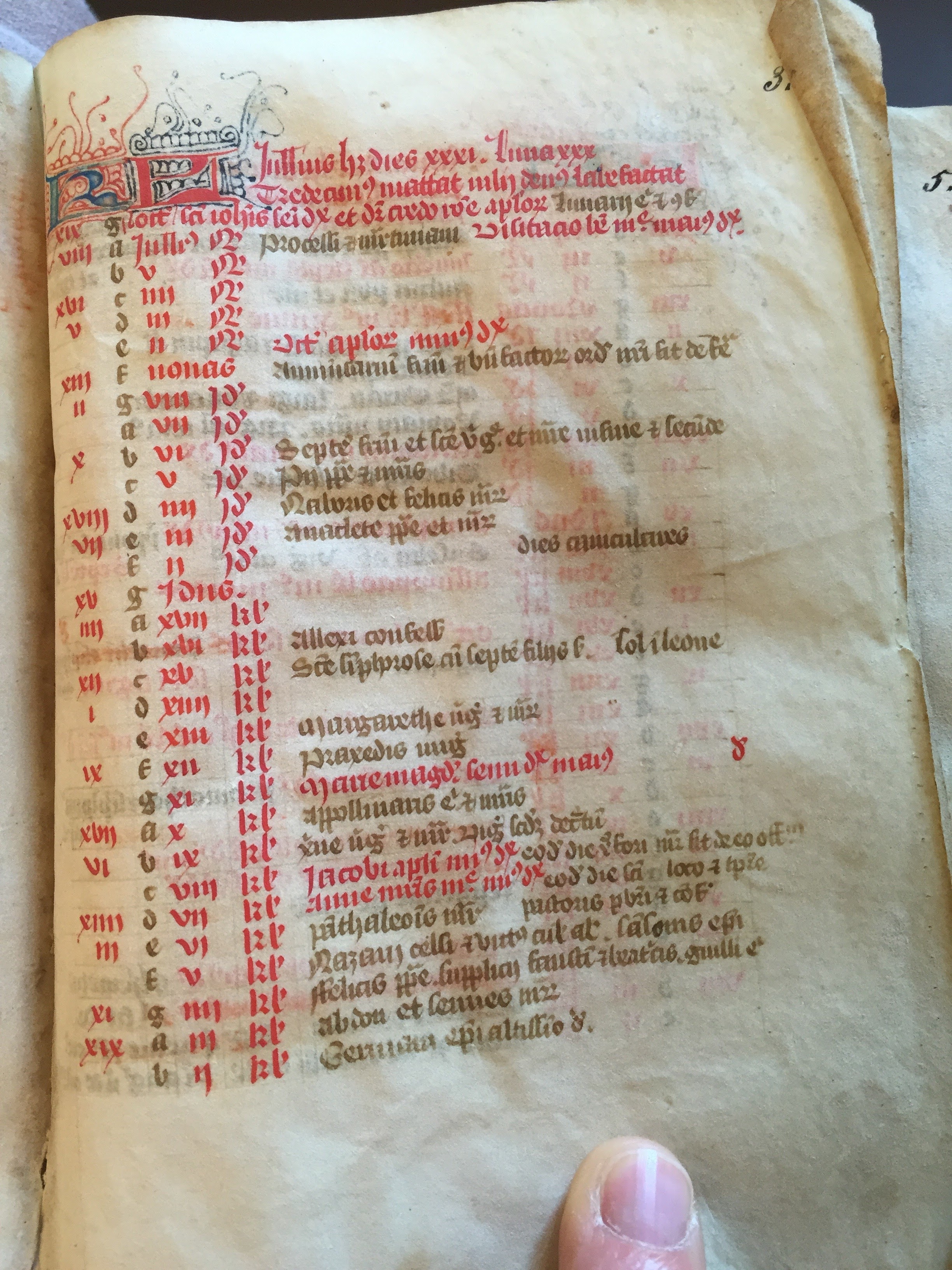
In the fifteenth-century calendars, Mary Magdalene's name appears in red to signify the importance of her feast day. It still is a feast day, but now the office includes twelve readings.