Scalar's 'additional metadata' features have been disabled on this install. Learn more.
Caricatures of ViolenceMain MenuIntroductionGender in 19th-Century FranceAllegorical WomenWomen in Contemporary CaricatureQuantitative DataSelected imagesFlip through this gallery to see relevant images that I have selected from the volumes I examined. Click on an image to enlarge it and see more detailed information.BibliographyAbout the AuthorClaire Staceyeb668707c8100c902b771750627b294c13257276
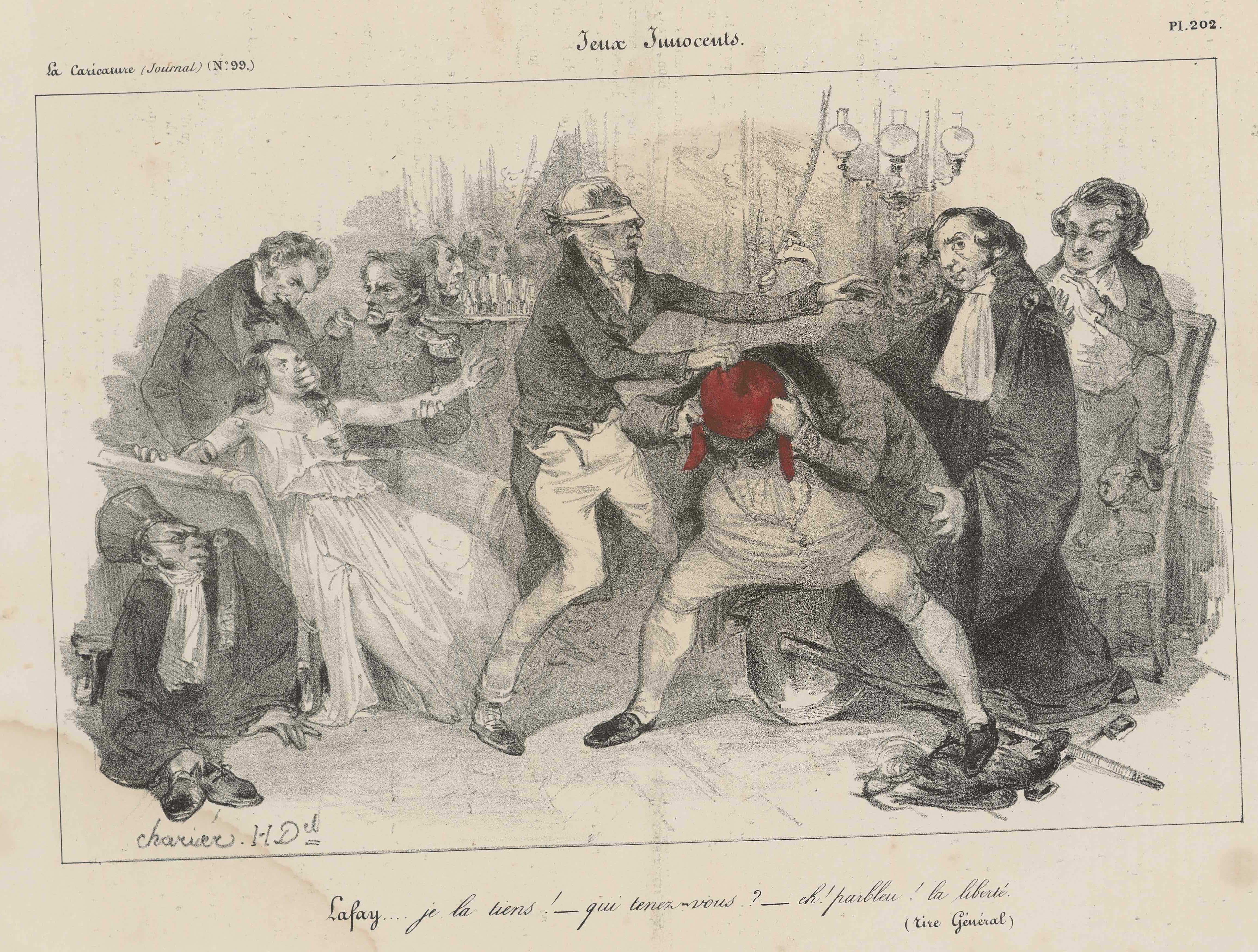
Plate 202: Jeux innocens. Lafayette, en colin-maillard, croit prendre la Liberté et prend...
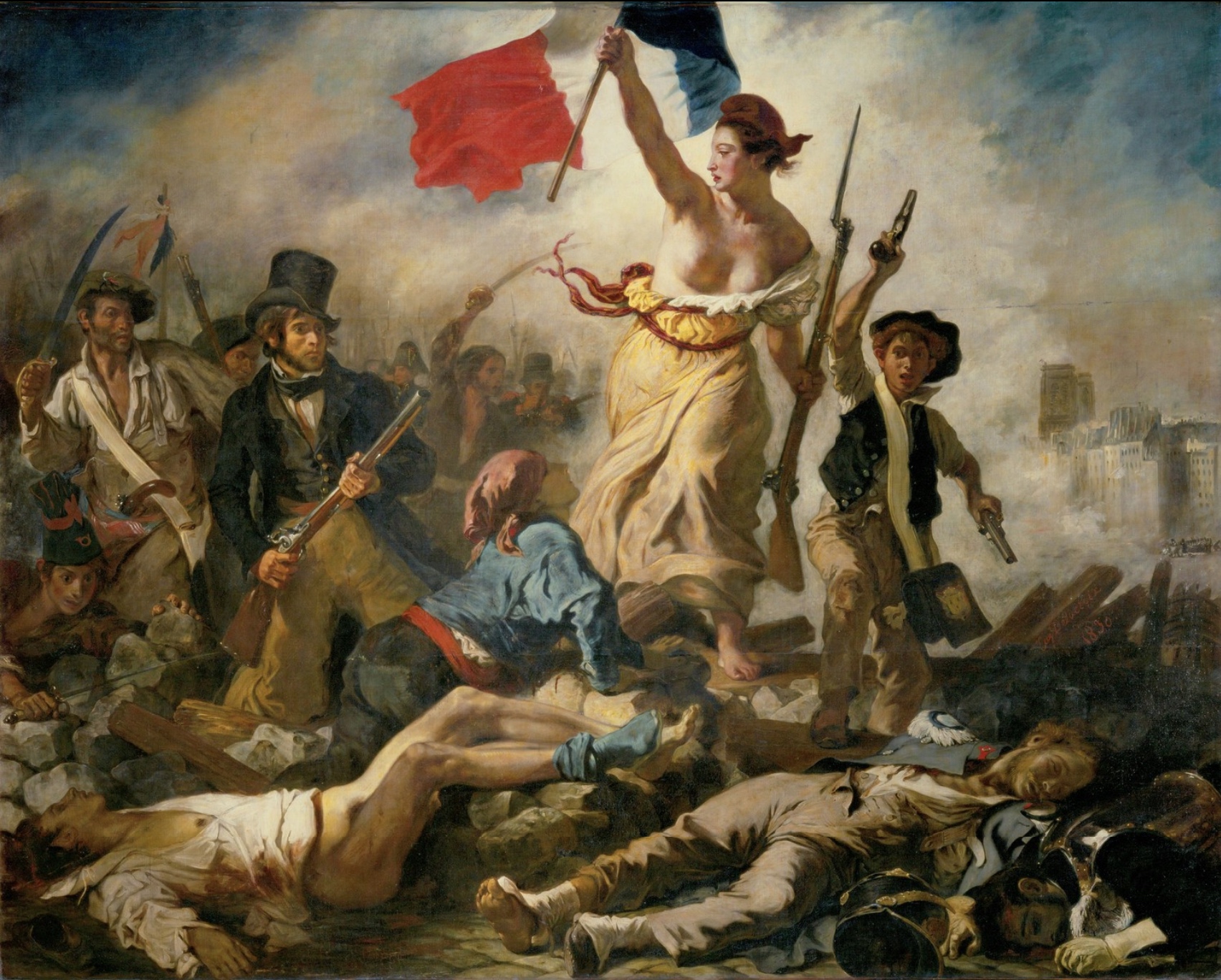
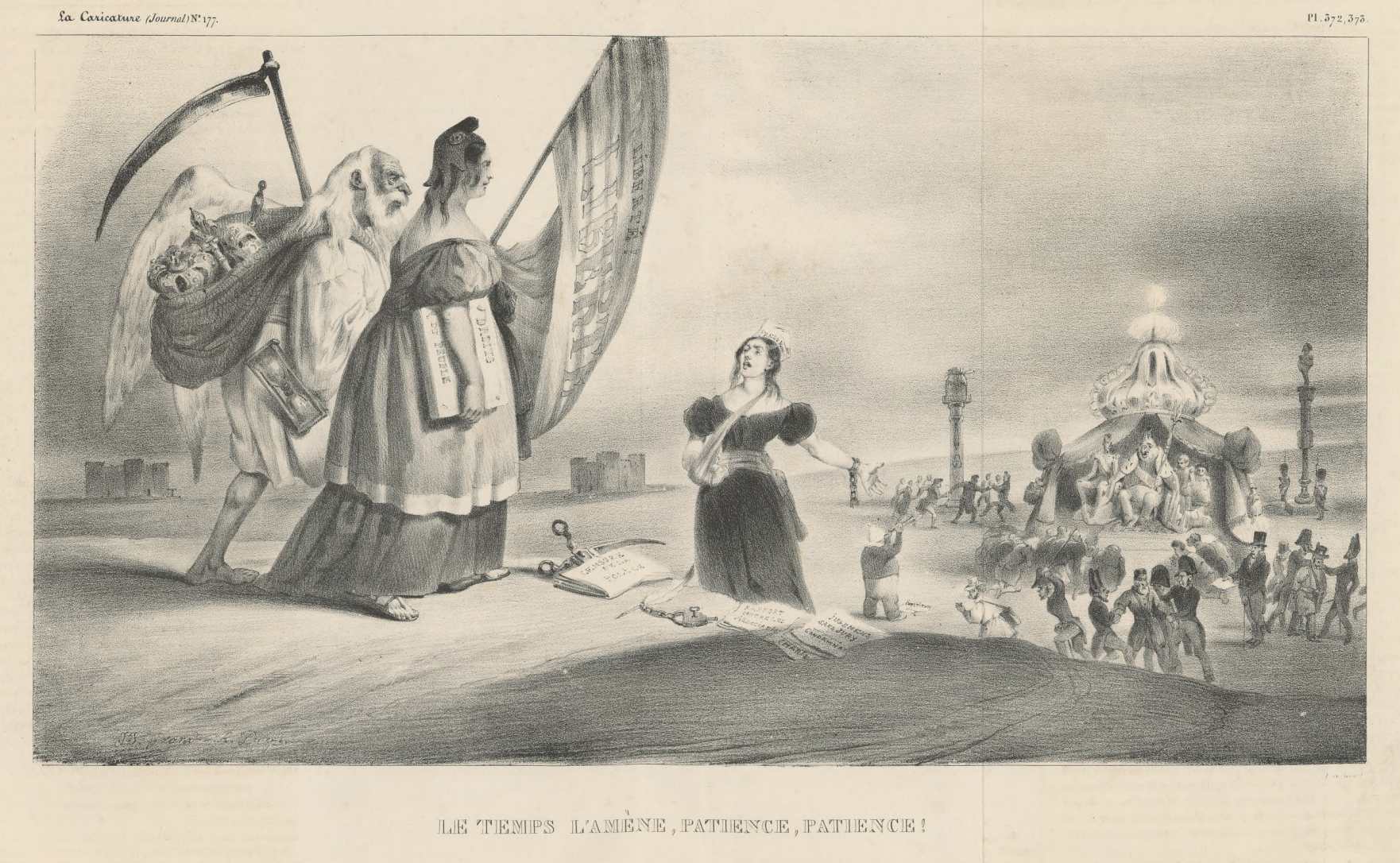
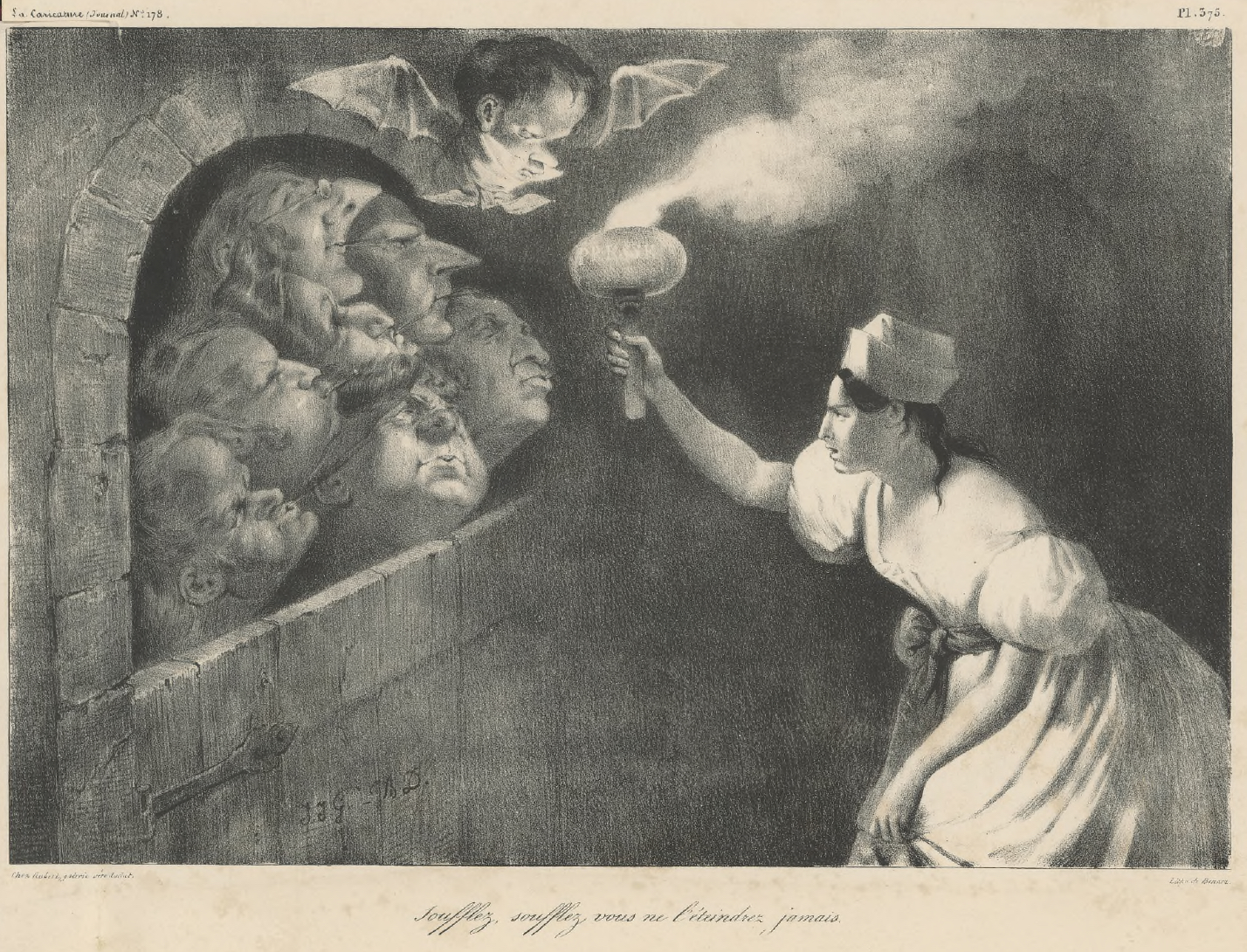
12020-03-25T15:13:38-07:00Marianne14plain2022-01-25T01:51:52-08:00 If you do not know Marianne by name, you may recognize her as Liberty from Delacroix’s famous Liberty Leading the People (1830). Marianne is an allegorical figure who has been used to represent the French Republic and Liberty since the 18th century (Winter). Her image still commonly appears in contemporary caricature and art.
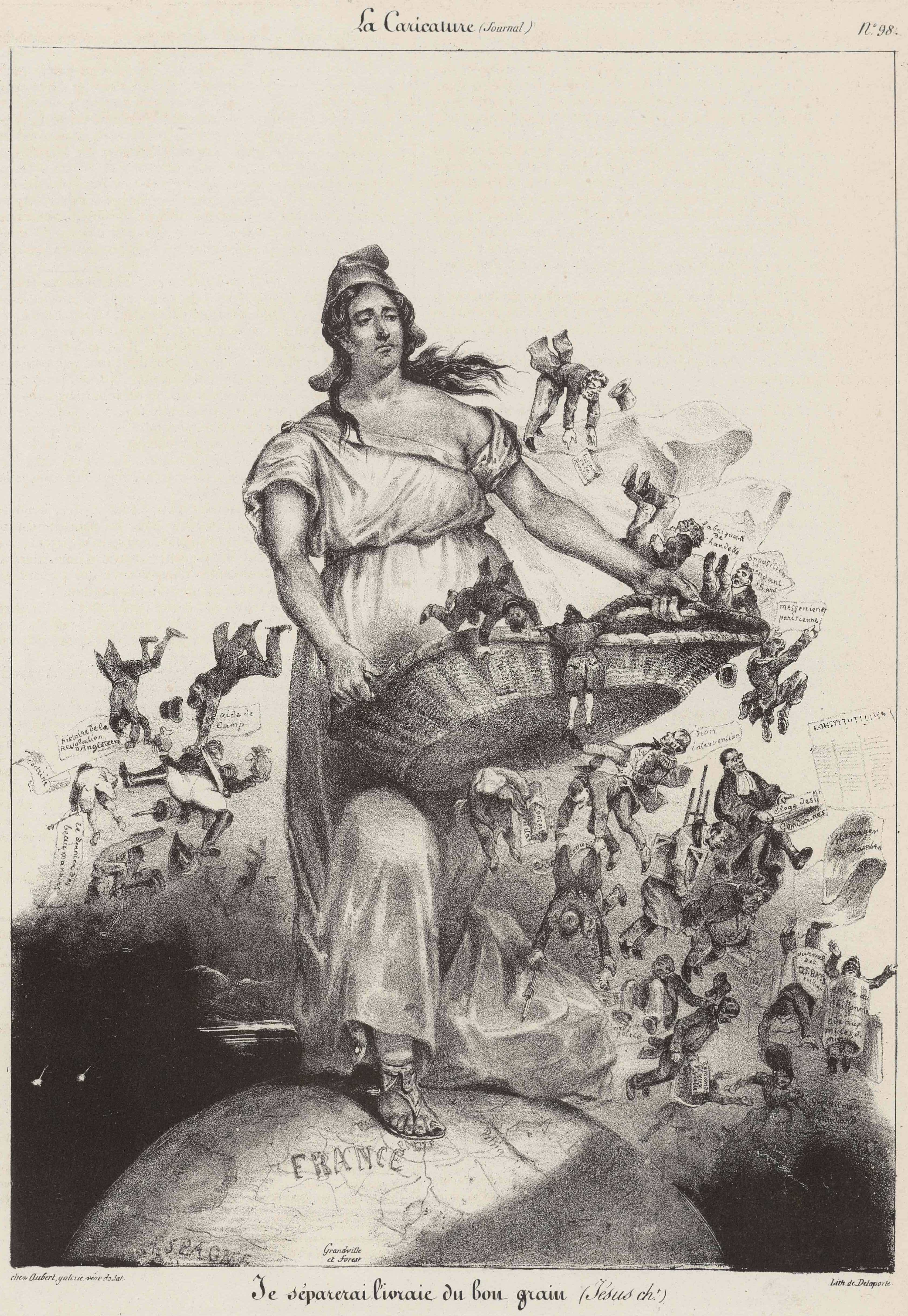
Marianne’s most recognizable characteristic is her red bonnet phrygien, a cap that is symbolic of the Revolution (Childs). Beyond her cap, she often looks different from the way that women are typically represented in Philipon’s journal. Representations of Marianne vary significantly throughout La Caricature. While many women are slender with delicate features, Marianne is often statuesque or even muscular. Some of the more feminine representations of Marianne depict her in traditional, domestic roles of wife and mother.
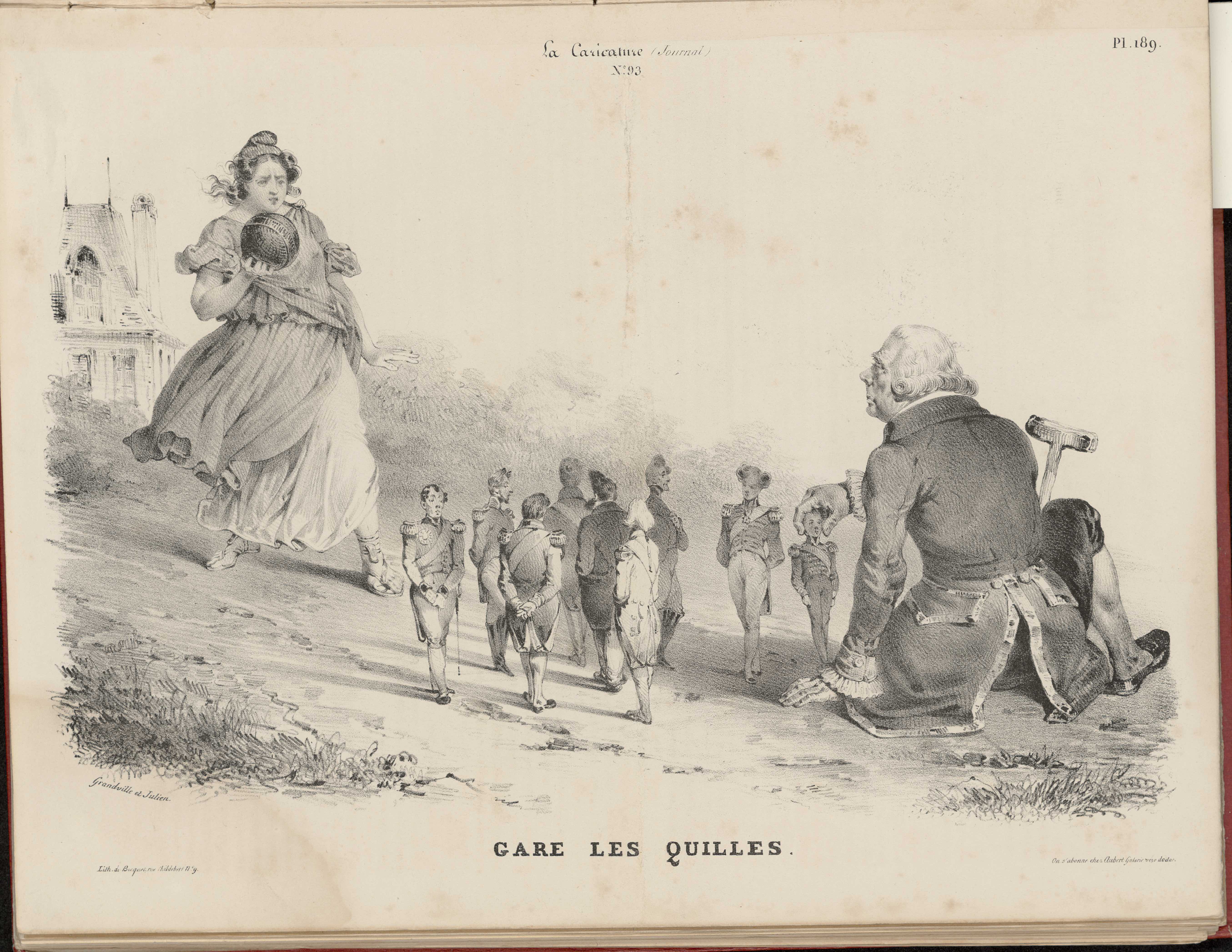
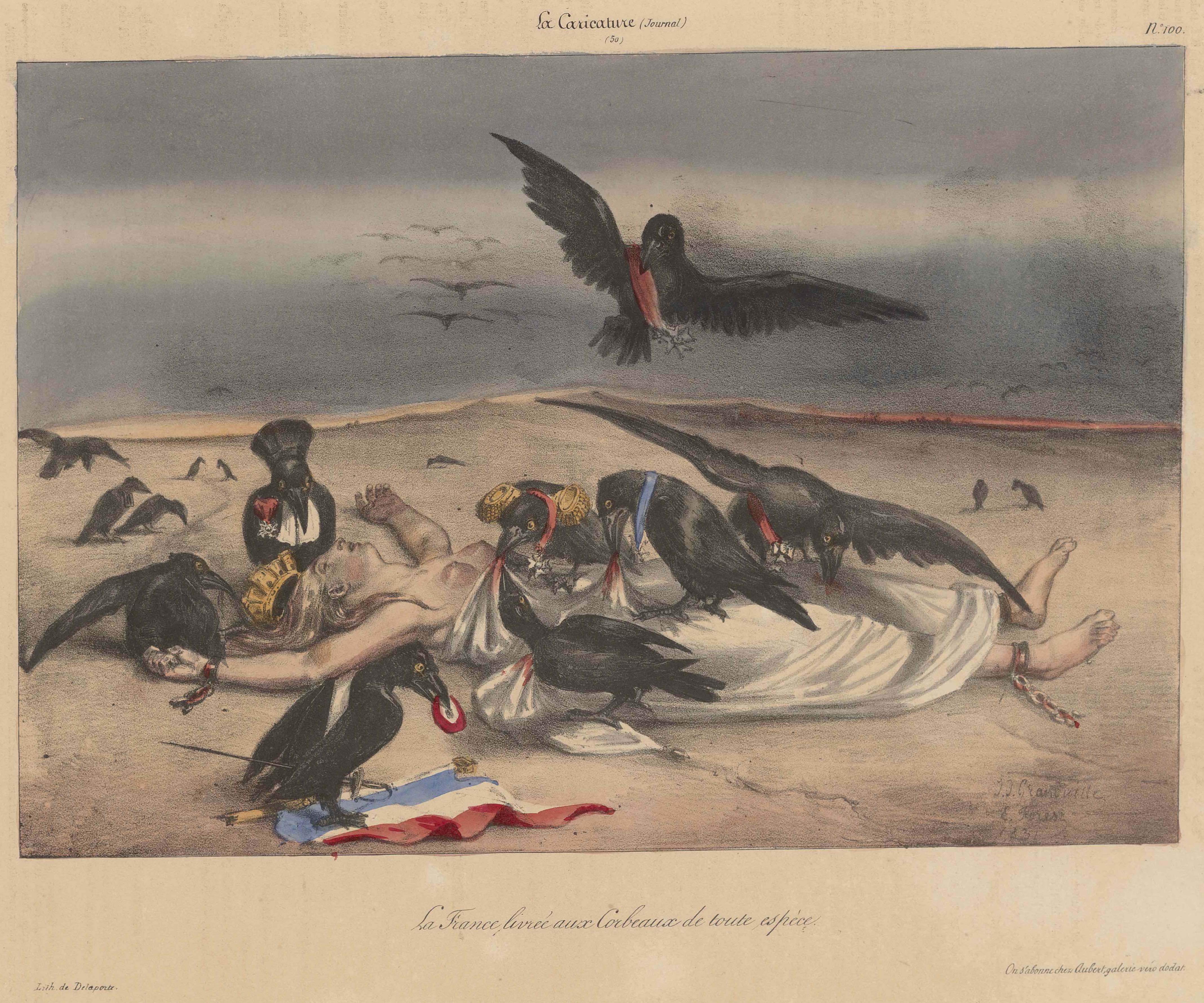
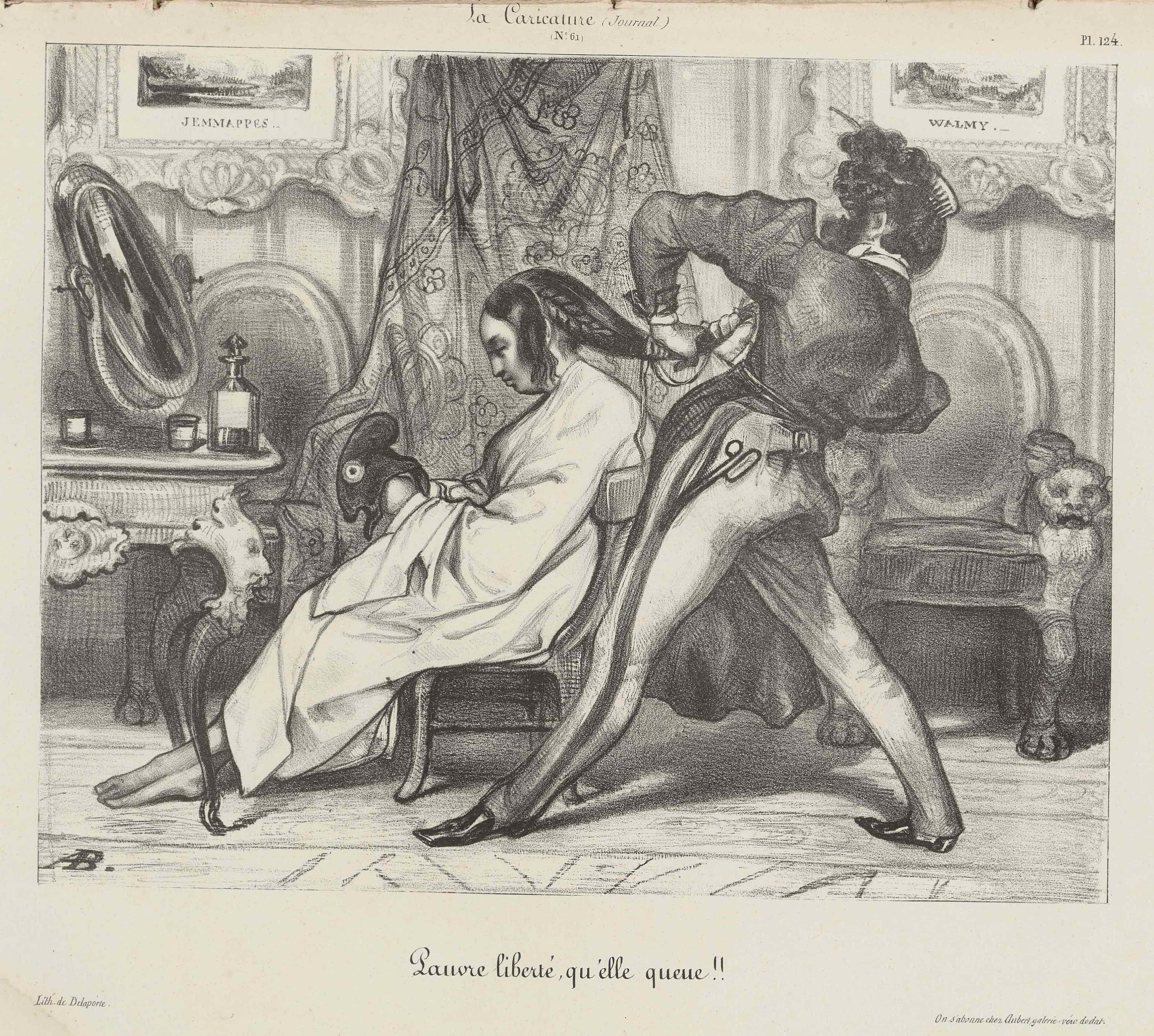
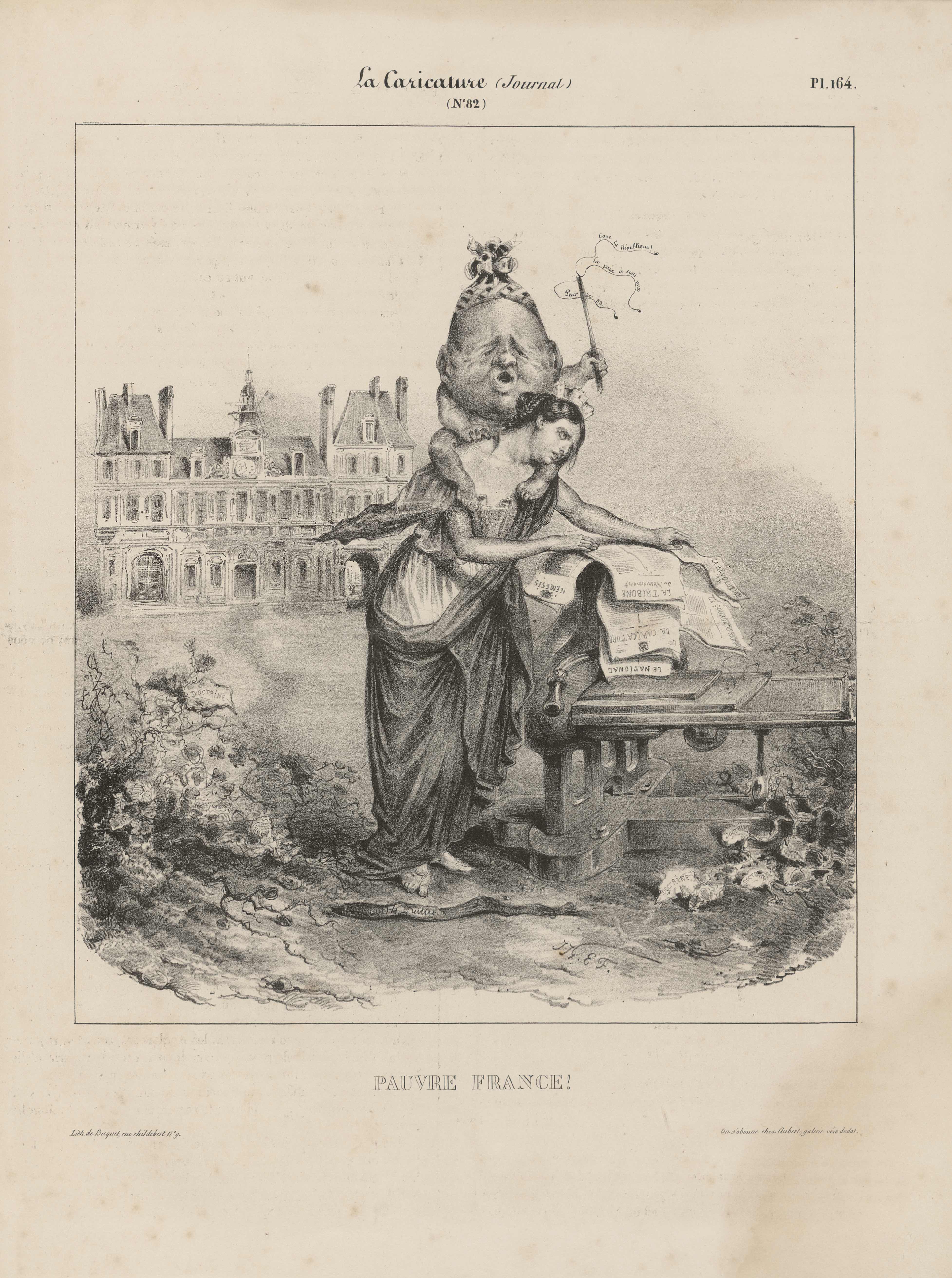
Marianne appears frequently in La Caricature. With 26 appearances in the first eight volumes, she accounts for slightly less than half of the allegorical women and about one-fifth of all of women represented in the journal. In 16 of these 26 images (over 61%), violence is being enacted upon Marianne. See this page for a look at more quantitative data on representation in La Caricature.
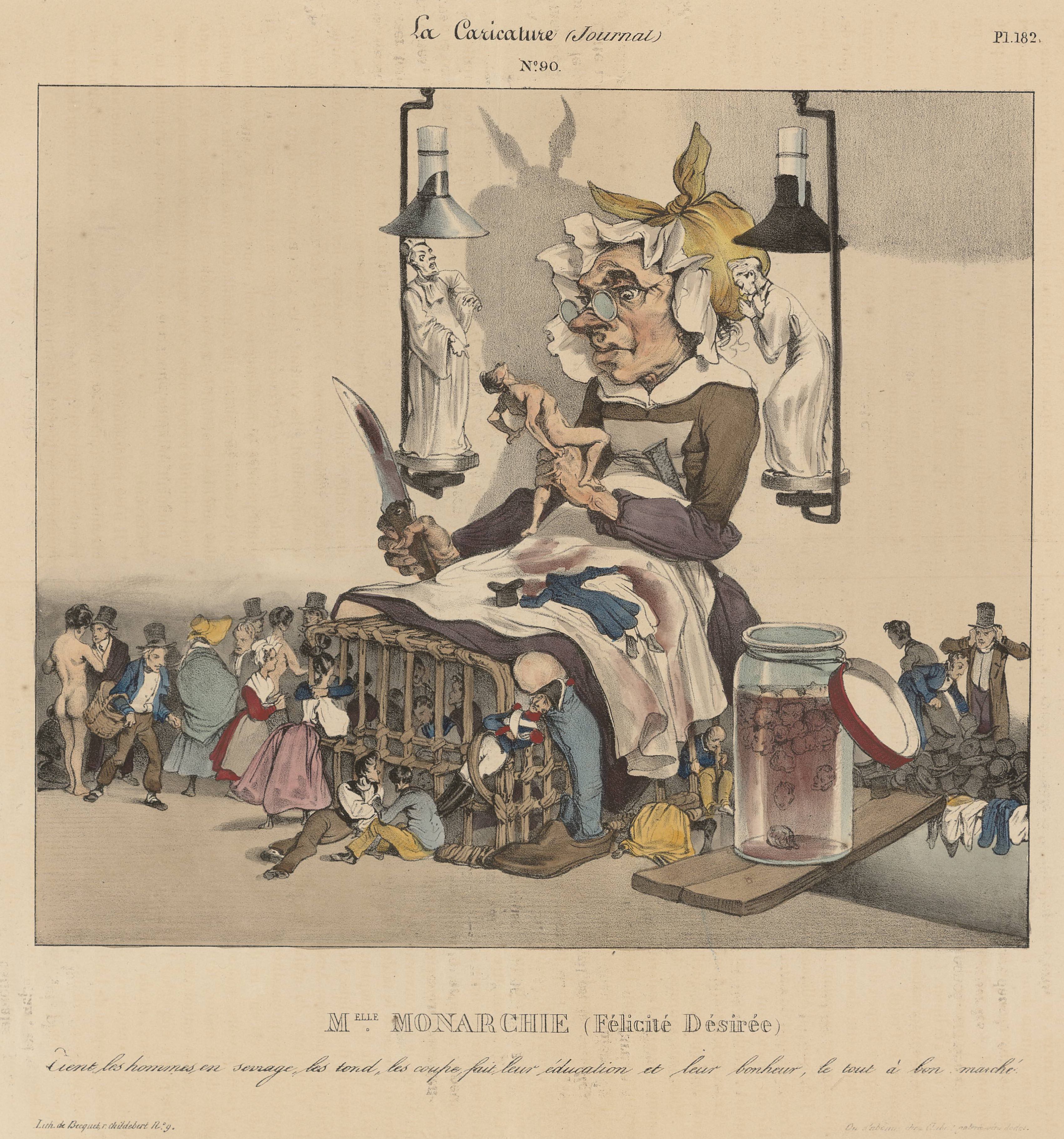
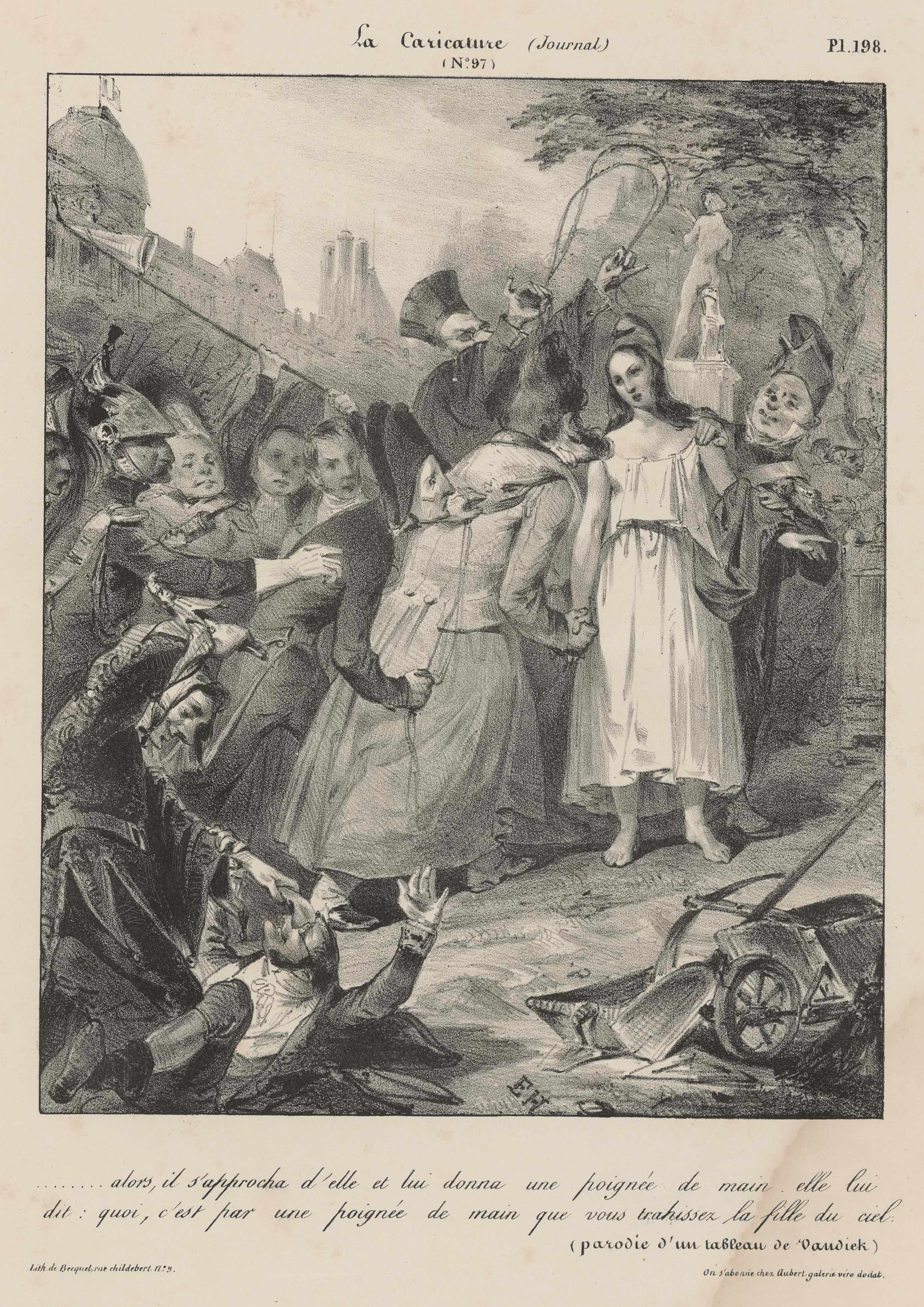
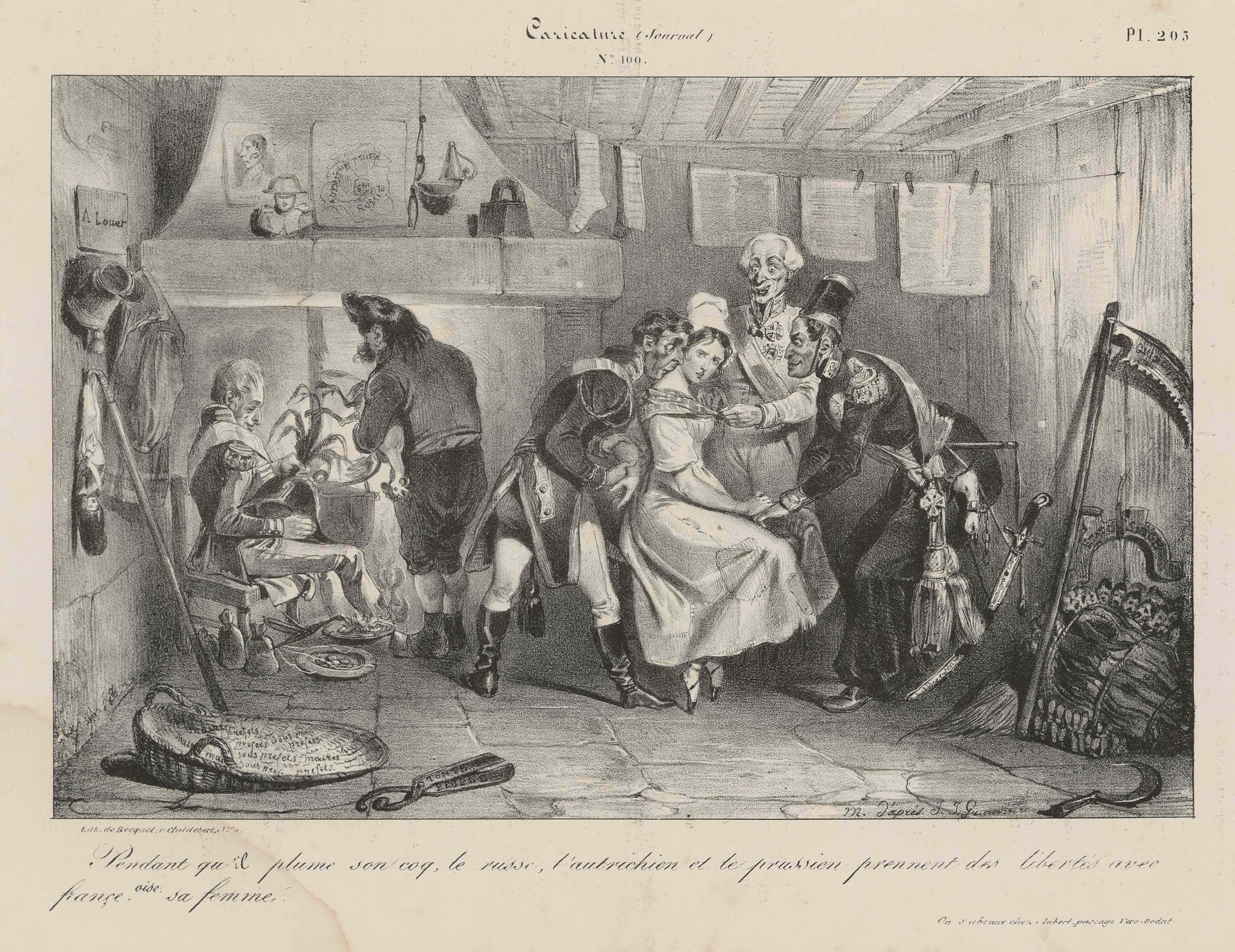
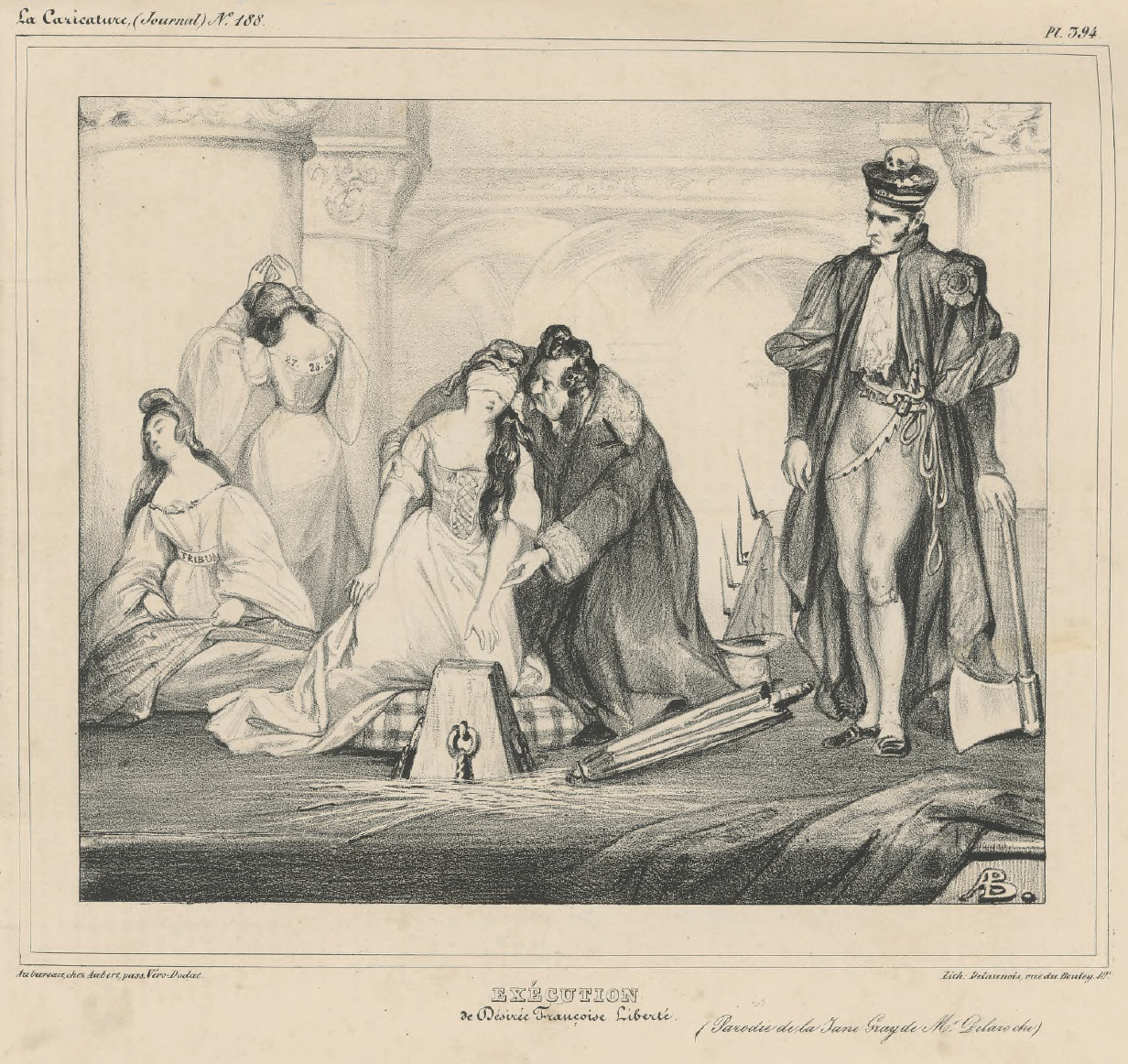
Violence against Marianne implies an act of violence that is being committed against the French Republic or against Liberty (often at the hands of King Louis-Philippe). In these caricatures of violence, Marianne is not the grand and statuesque figure that appears on some pages of the journal. Instead, she embodies a domestic femininity that Philipon praises throughout the journal. When artists use Marianne to emphasize the strength of the French Republic, she no longer resembles the delicate, feminine figures seen elsewhere in the journal. Instead, she is drawn as a broad-shouldered, statuesque figure reminiscent of the goddesses of antiquity. In the images below, she embodies a form of femininity that is distinct from that of contemporary French women. These representations of Marianne are not necessarily less feminine than those of her as a wife and mother. However, artists clearly distinguish two different forms of femininity. By drawing Marianne as statuesque and reminiscent of Grecoroman goddesses in images that emphasize her power and agency, caricaturists distance this power from contemporary French women. In doing so, they ensure that readers of La Caricature will not interpret an image of Marianne bowling over male politicians as a feminist call to action. If anything, her womanhood signals the satirical nature of these images. Depictions Marianne as a worthy opponent of Louis-Philippe, such as the plate above that shows a chess game between the two, may put the king's masculinity in question more than they depict feminine power.
12020-03-25T15:11:01-07:00Selected images7Flip through this gallery to see relevant images that I have selected from the volumes I examined. Click on an image to enlarge it and see more detailed information.gallery2020-04-24T15:40:06-07:00