Scalar's 'additional metadata' features have been disabled on this install. Learn more.
Jambalaya, Apple Pie, Chante Quelque Chose Oh Yé Yaille: A History of Cajun Culture through Music from the Early 1920s to the Late 1980sMain MenuJambalaya, Apple Pie, Chante Quelque Chose Oh Yé YailleThe Online ExhibitAcknowledgmentsMany people were a part of the process of this exhibit!IntroductionWhat is this exhibit about?Defining TermsThe Twentieth Century for LouisianaA century of change and growthDiscovery of Commercial Cajun Music: The BeginningsThe introducing of Cajun traditional music to record companies in the later 1920sDiscovery of Commercial Cajun Music: New StylesThe 1930s was a time of changes in music styles as many imitated what was popularDiscovery of Commercial Cajun Music: The ComebackWorld War II halted music production until victory led to a revival of folk music in the later half of the 1940sThe Revival in the Second Half of the CenturyAn era of “Renaissance” for Cajun musicThe Acts of Revival for Cajun Music: The Dance Hall Sounds of ZydecoThe rise of Zydeco in South Louisiana and its influence to Cajun MusicThe Acts of Revival for Cajun Music: The Dance Hall Sounds of Swamp PopThe creation of Swamp Pop as a sub-genre of Cajun MusicThe Acts of Revival for Cajun Music: The Cajun Culture and MusicsThe struggle between American mainstream culture and a growing countercultureThe Acts of Revival: CODOFIL and Cajun MusicThe Acts of Revival for Cajun Music: The Contemporary EraConclusionThe Twenty-First Century EraEndnotesList of SongsThe songs featured in the exhibit in order of chaptersFurther ResearchRachel Blomquist4ce9784a4c3c343338fba92002964a449052c7cdRachel Blomquist
Cleveland Chenier
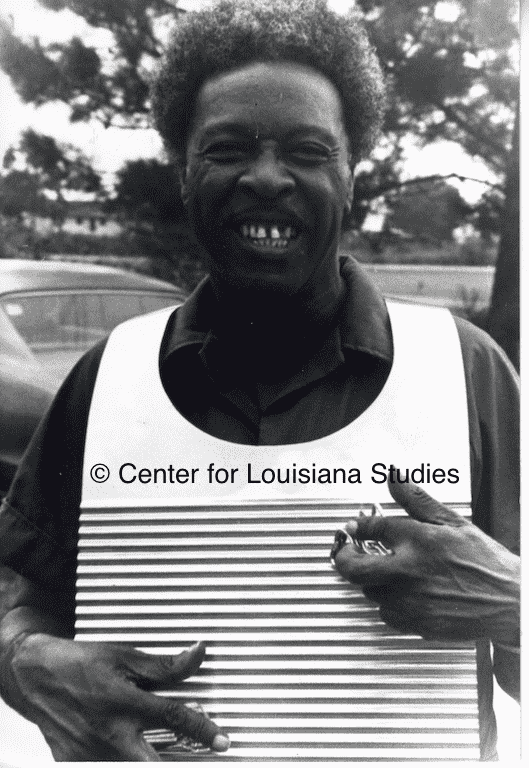
12019-06-24T02:15:17-07:00Rachel Blomquist4ce9784a4c3c343338fba92002964a449052c7cd344192Chenier posing with a frottiorplain2019-06-26T17:50:35-07:00Rachel Blomquist4ce9784a4c3c343338fba92002964a449052c7cd
This page is referenced by:
12019-06-21T22:25:43-07:00The Acts of Revival for Cajun Music: The Dance Hall Sounds of Zydeco13The rise of Zydeco in South Louisiana and its influence to Cajun Musicplain8845942019-11-17T21:09:51-08:00Another musical form that had started to become popular even before World War II was la musiqueCreole, otherwise known as “La La,” which was played at country dances and later dance clubs. The origins of “La La” however were not Cajun but Afro-creole/Creole, which featured a more Caribbean rhythm and blues-like style.[i] Amédé Ardoin was a pioneer in the “La La” style that become popular around South Louisiana and consequently integrated into the Cajun music repertoire.
After the war, though, the name of this style changed as it integrated music from the rhythm and blues scene, and it came to called “zydeco.” Zydeco is considered a hybrid music style that incorporates Afro-Caribbean rhythms, blues, and Cajun and Creole folk music. Zydeco, held a similar line up of Cajun instruments in its beginning, like the accordion and fiddle in Amédé Ardoin’s music, but this too changed with the replacing of a fiddle by a saxophone and a piano accordion instead of the smaller Cajun diatonic accordion.[ii] Other instruments that made up a Zydeco band were the drums, electric guitars, and the frottoir (rub board). However, the language for Zydeco music depends on the singers as they sang some songs in French and others in Creole-French or English.
LISTEN: The musician that brought zydeco to the radios’ and record labels’ attention was Clarence Garlow with his hit song “Bon Ton Roula (Let the Good Times Roll)” in 1949.[iii] While the song had themes of the rocking style of rhythm and blues (R&B), Garlow’s style influenced many Zydeco artists such as Boozoo Chavis and Clifton Chenier.
You see me there well I ain't no fool I'm one smart Frenchman, never been to school Wanna get somewhere in the creole town To Start let me show you, your way around You let your bon ton roulie You let the mule-e pull-e Now don't you be no bully You let the bon ton roulet I've got a creole gal, she's one fine dish But she's got ways like the Opera fish She done do nothing but raise sand all night But when it come to loving she's a macho right We let the bon ton roulet We let the mule-e pull-e Now don't you be no bully We let the bon ton roulet You want to have yourself some real fine time Go down in Louisiana and you'll get you one You find and cut the cain all down the line I've got a cotton picker cause she's really fine We let your bon ton roulet We let the mule-e pull-e Now don't you be no bully We let the bon ton roulet At the church bazaar or the baseball game At the Frenchtown now, It's all the same You wanna have fun now, you got to go Way out the country to the Zydeco We let your bon ton roulet We let the mule-e pull-e Now don't you be no bully You let the bon ton roulet Also check out another version Garlow did, which acts like a sequel or a second part to his "Bon Ton Roulay."
Clifton Chenier also did a cover of this famous song.
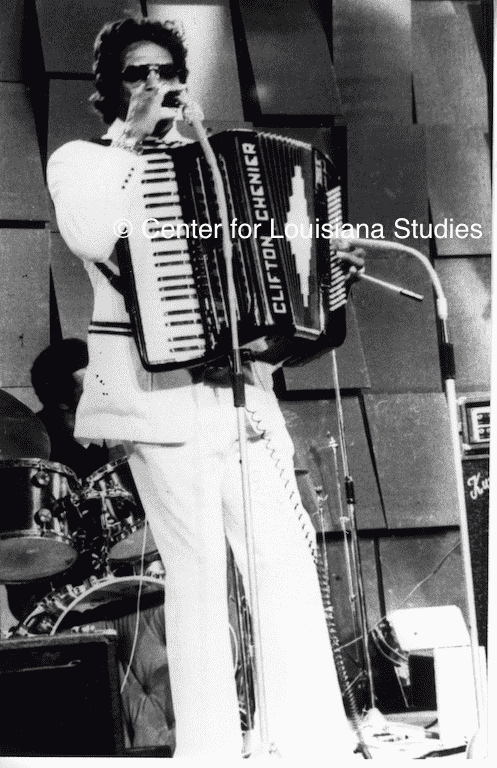
Influenced by Amédé Ardoin and Garlow, Clifton Chenier, known as the "King of Zydeco," first made his mark in the early 1950s playing R&B mainly in Texas, Oklahoma, and Louisiana.[iv] Chenier is credited for bringing the Zydeco style to record companies’ attention as a must-have genre. It was not until 1960 that Chenier appeared on the Zydeco scene through the Arhoolie label, which produced his album Louisiana Blues and Zydeco. The album featured R&B, blues and French two-steps and waltzes.
LISTEN: A now favorite Zydeco song from this album is “Zydeco Sont Pas Salés,” that pays ode to the French metaphor that the word zydeco is derived from, “les haricots sont pas sales” (the snap beans are not salty) as well as other French phrases. The song is backed with Chenier on his accordion, a washboard and drums. FRENCH TRANSLATION: ENGLISH TRANSLATIONS: Eh, maman, Hey, mom Eh, maman, Hey, mom Les haricots sont pas salés, The snap beans are not salty, Les haricots sont pas salés. The snap beans are not salty. T'au volé mon traîneau, You stole my sled, T'au volé mon traîneau, You stole my sled, Garde hip et taïaut, Les haricots sont pas salés. The snap beans are not salty. T'as volé mon gilet, You stole my vest, T'as volé mon chapeau, You stole my hat, Garde hip et taïaut, Les haricots sont pas salés. The snap beans are not salty.