The Problems
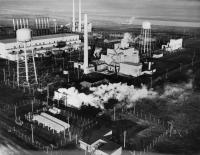
The Hanford Site sits on 586-square-miles of shrub-steppe desert in southeastern Washington State. Beginning in 1943, the site was used to produce plutonium for the bomb that brought an end to World War II. After a short lull, production was ramped up in 1947 to meet the challenges of the “Cold War” and continued until 1987 when the last reactor ceased operation. In 1989, the U. S. Department of Energy (DOE), Environmental Protection Agency (EPA), and Washington State Department of Ecology entered into a legally binding accord, the Tri-Party Agreement (TPA), to clean up the Hanford Site.
Post World War II tensions between the U.S. and Russia brought about the “Cold War” and drove continued atomic weapons production and Hanford’s plutonium production mission. Additional reactors were constructed next to the Columbia River as the two nations began to develop and stockpile nuclear weapons. In 1959, construction began on the last Hanford reactor, dubbed “N.” N Reactor was a dual-purpose facility which produced plutonium for atomic weapons as well as steam for generating electricity. It was the only dual-purpose reactor in the United States and was so advanced that President John F. Kennedy came to Hanford in September of 1963 for its dedication. Starting in the mid 60’s through 1971, the older reactors were shut down leaving only N Reactor operating on the Site. N Reactor continued its mission of producing plutonium and electricity until 1987. Since that time Hanford’s mission has been to clean up the site after decades of weapons production activities.
During its 40 years of production, Hanford produced plutonium for approximately two-thirds of the United States defense nuclear arsenal. Such intense production left behind a toxic legacy that includes:
- 56 million gallons of radioactive waste are contained in Hanford’s Tank Farms, threatening the nearby Columbia River.
- 450 billion gallons of liquids discharged directly to soil disposal sites from Hanford’s plutonium production facilities during the Cold War, which necessitate the cleanup of about 65 square miles of ground water.
- 740,000 curies of radioiodine released to the atmosphere between 1944 and 1957.