Thanks for your patience during our recent outage at scalar.usc.edu. While Scalar content is loading normally now, saving is still slow, and Scalar's 'additional metadata' features have been disabled, which may interfere with features like timelines and maps that depend on metadata. This also means that saving a page or media item will remove its additional metadata. If this occurs, you can use the 'All versions' link at the bottom of the page to restore the earlier version. We are continuing to troubleshoot, and will provide further updates as needed. Note that this only affects Scalar projects at scalar.usc.edu, and not those hosted elsewhere.
Losing My WingsMain MenuYagharek Longs to FlyYagharek, from China Mieville's, _Perdido Street Station_, gives up the dream of flightDiptera: Insects with two wingsFlies and humansFallen Angels: Loss as TransformationDavid Bowie explores themes of space existence in his songs from the 1970s through 1980sFrom Sensory Bristles to the Spots on a Butterfly's WingEvolution through co-optionGothic BiologyLimb Development in the Human EmbryoA description of early human limb developmentPopular Culture and Extraordinary BodiesPhillip Thurtle75117b2c56254effc6e95b77740d511c504ffe21
Wilhelm Worringer's analysis of the Gothic
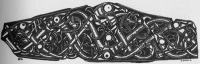
12018-09-22T21:54:18-07:00Phillip Thurtle75117b2c56254effc6e95b77740d511c504ffe2154866Identifying a "Gothic will to form"plain2019-01-04T00:10:46-08:00Phillip Thurtle75117b2c56254effc6e95b77740d511c504ffe21One of the reasons that Worringer’s analysis of the gothic has been so influential is that he doesn’t provide a systematic categorization of the Gothic; rather he attempts to define a “Gothic will to form” that characterizes Gothic art. This will to form appears earlier than the Gothic period, in Northern Europe ornamental art, and extends “to the present day” (38). Consequently, Worringer's analysis isn't what characters comprised art of a specific time period, but how certain forms Gothic art operated at a psychological or affective level to creative a specific style of expression throughout history. This strategy allowed him to counter predominant scholarship that primarily focused on renaissance art as the most influential form of art in European art history by identifying how Gothic art worked and why it still remains important to understand. Worringer worried that an emphasis on Renaissance as pinnacle of Western art might provide a constrictive normative judgment about aesthetics effectively precluding art from other periods and other cultures. Worringer’s identification of a Gothic will to form begins with an analysis of lines found in Northern European ornamentation which offer the visual equivalent of a “ceaseless melody” (55). He begins this analysis by contrasting patterns found in Northern European and Classical ornamental art. Classical ornament, Worringer claimed, structures lines through the use of symmetry in order to create a sense of organic unity. Northern ornament, however, used repetition to create a sense of unbridled change, what Worringer called an “uninterrupted, accelerating, mechanical movement” (56). This asymmetric line, then, found vitality by breaking the organic unity of the forms found in classical ornament.
12018-09-22T21:59:53-07:00The line of Northern ornament1A bronze clasp from Gotland, Sweden as reproduced in Wilhelm Worringer's Plate 1 of Form in Gothicmedia/3246-9836-1-PB.jpgplain2018-09-22T21:59:53-07:00