Thanks for your patience during our recent outage at scalar.usc.edu. While Scalar content is loading normally now, saving is still slow, and Scalar's 'additional metadata' features have been disabled, which may interfere with features like timelines and maps that depend on metadata. This also means that saving a page or media item will remove its additional metadata. If this occurs, you can use the 'All versions' link at the bottom of the page to restore the earlier version. We are continuing to troubleshoot, and will provide further updates as needed. Note that this only affects Scalar projects at scalar.usc.edu, and not those hosted elsewhere.
Losing My WingsMain MenuYagharek Longs to FlyYagharek, from China Mieville's, _Perdido Street Station_, gives up the dream of flightDiptera: Insects with two wingsFlies and humansFallen Angels: Loss as TransformationDavid Bowie explores themes of space existence in his songs from the 1970s through 1980sFrom Sensory Bristles to the Spots on a Butterfly's WingEvolution through co-optionGothic BiologyLimb Development in the Human EmbryoA description of early human limb developmentPopular Culture and Extraordinary BodiesPhillip Thurtle75117b2c56254effc6e95b77740d511c504ffe21
Fallen Angels: Loss as Transformation
12015-09-27T19:34:52-07:00Phillip Thurtle75117b2c56254effc6e95b77740d511c504ffe2154866plain2018-07-23T20:52:44-07:00Phillip Thurtle75117b2c56254effc6e95b77740d511c504ffe21Why do those cultures that believe in angles have special stories about fallen angels? Why create a being like an angel if it is only going to fail? Do we tell these stories because they remind us that all humans are fallen creatures? That humans must live with earth and water as well as air? Is it a persistent belief in some type of perfection, where, like with Plato's forms, we see each humanoid as a degenerate reflection of a possibly divine, even perfect creature?
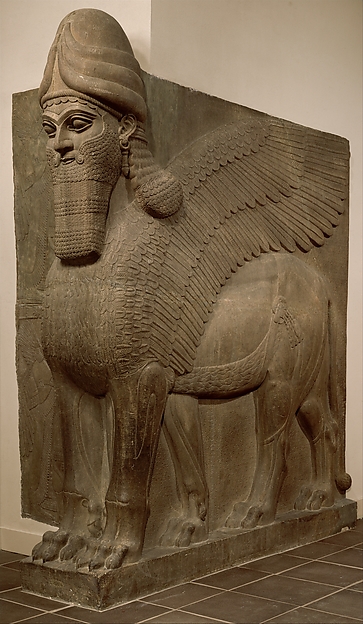
In his book, Angels: A Modern Myth, Michel Serres suggests that the myth of the angel is so persistent as angels are a type of message bearing system, a means for communication. Humans in the 21st century, then, surround themselves with angels. Transportation and communication devices are powered by angels, as well as the air and water currents or the energy fluxes of the earth. In Serres' mythology, there are special types of angels called cherubim that bridge two worlds, these are messengers that we are about to enter another world. An Assyrian winged bull, or kerub, possess wings as well as four legs, and provides guidance to those who must enter the underworld (Serres 1995, 161-174). These are the creatures that pass between, they are the impulse between "the bird wings and the bull backbone" (Serres, 1995, 165). These agents of change possess the power of transformation and thus allow for thinking about plasticity and change in a world too often cut up into identities and objects.
This is one reason why the fallen angel is so powerful. It is an angel of change. In some cases this change is a punishment (as with Yagharek) and in some cases this change is a choice (as with the angel Damien in Wings of Desire), either way the loss of wings suggests that there is something that holds winged and non-winged creatures together somehow. There is something that connects the binary distinction between wings and non-wings. A cherub.
Maybe this is why we need those who have lost their wings, those that have moved from air to earth. We need to be reminded that the power of change between these two states means that there is something else that connects them. The fallen angel reminds us that in losing our wings, we traverse a pathway of potentials of all types of transformations.