Scalar's 'additional metadata' features have been disabled on this install. Learn more.
Gordon Parks's The Learning Tree
Main Menu
The Learning Tree
A Gordon Parks Archive Project
About
Learn more about us
Katherine Karlin
1234b48fe05616667f3c981465d19cd208018544
Cameron Leader-Picone
65f60e5aae6950eddd4f328f10cea63335cfd00a
The Digital Humanities Center at Kansas State University
The Learning Tree Novel Cover
1 2014-11-05T12:24:02-08:00 Alex Stinson 5c04b0534a167c70bbffa03c74f2cba2e14aaced 3503 2 The cover for the most recent edition of the novel, published in 1987 plain 2014-11-05T12:26:19-08:00 Alex Stinson 5c04b0534a167c70bbffa03c74f2cba2e14aacedThis page is referenced by:
-
1
media/GP_Celebration_002.jpg
media/GP_Celebration_001.jpg
2014-11-05T12:13:29-08:00
The Learning Tree
33
A Gordon Parks Archive Project
image_header
2016-04-10T20:53:29-07:00
Welcome! This is an in-development Scalar project designed to help the public, students and scholars explore Gordon Parks’s The Learning Tree, as both a novel and film.We are in the early stages of developing the project.Our first publication as part of the project is now available: an interview with The Learning Tree actress Karole Graham.We also have begun collecting teaching assignments related to our materials and the The Learning Tree: see this page for all the resources tagged as teaching materials.Want to know why we created this project? Explore our editorial decisions!If you are interested in helping the The Learning Tree process please contact the editors Katherine Karlin and Cameron Leader-Picone.
-
1
2015-05-06T08:38:11-07:00
Digitization Process and Archival Assignment
9
A Sample Assignment taught by Cameron Leader-Picone
text
2015-05-12T14:58:05-07:00
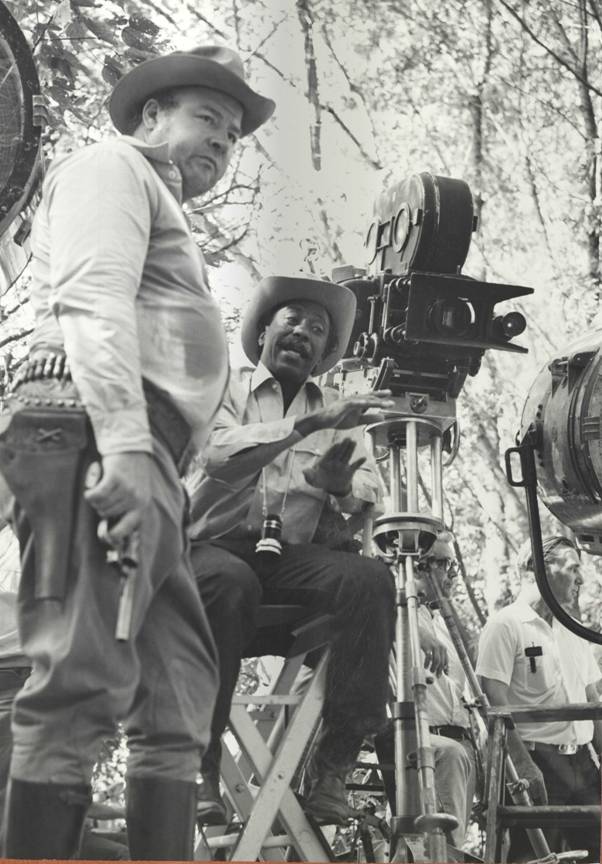
The assignment below is an example assignment we used for developing understanding of our own Gordon Parks Collection at K-State Libraries, while also teaching students about the larger processes that help curate archival and humanities content more generally. Though the assignment declares that we were going to publish the student work as part of the project, we opted not to fully integrate student work: the quality wasn't high enough to be useful as new publication, because the students didn't have enough prior knowledge about the film. However, we found the assignment to be very constructive for the students, creating examples like this which explores a picture of Parks with Dana Elcar. Below we have included the assignment guidelines as well as a sample of student workStudent level: Undergraduate, Humanities MajorsLearning objectives:The following learning objectives were used to create this assignment:
- Familiarize students with archival practices for creating humanities content
- Introduce students to scholarly processes used for interpreting primary source materials
Timeframe: 4 weeksResources needed:- An archival collection not already described
- Digitization equipment (even rudimentary equipment)
- Research materials to help students explore the context of the media
Original teaching professor: Cameron Leader-PiconeInterpreting the Gordon Parks Collection Assignment
Gordon Parks was a prototypical renaissance person. After growing up in Fort Scott, Kansas, Parks, like so many African Americans experiencing Jim Crow segregation, fled to Chicago. Parks gained his greatest fame as a photographer, both in the form of documentary realism and high fashion. Like many artists, he found financial support during the New Deal through the federal government, specifically the Farm Security Administration (FSA). You are likely familiar with the famous FSA photos by Walker Evans and Dorothea Lange (for example, Lange's Destitute pea pickers in California); Parks began his career documenting many of the same forms of poverty in the United States. He became the first black staff photographer at Life. While it is easy to forget now just how important Life magazine was in the past, it was the dominant documentary magazine, part of Henry Luce’s publishing empire, and published many of the most iconic images of the twentieth century. While serving as a writer and photographer with Life, Parks write The Learning Tree, based on his childhood in Kansas, and became the first African American director in Hollywood when he directed the adaptation of his novel. (To be clear, there had been many black directors prior to Parks, but they worked almost entirely outside the studio system). As a director, Parks is most famous for directing the iconic blaxsploitation film Shaft. To engage with Parks’ work, we must examine his texts across genres and media. In this case, we will be discussing fiction, film, and photography. For this assignment, we are privileged to work with documents housed in Kansas State University Library’s Special Collections. As a native Kansan, Parks donated some of his documents to the University, including photographs taken during the process of filming The Learning Tree. The University is currently in the process of digitizing and cataloguing those images. I mentioned Parks’ various artistic endeavors because part of that effort involves making connections between the various mediums Parks used: literature, film, music, and photography. For this assignment, you will work in pairs. Each pair will develop the metadata and a caption for four images. You will scan the images as .tiff files. We will practice using the special scanner found in the Special Collections office during our visit to the library. I will give each pair a flash drive on which to store the images. Make sure that you know where your flash drive is, otherwise we will lose the scans that you make. The metadata for an image includes the following:- the catalog number the Special Collections team assigns the image
- the file name used on the image they create
- a meaningful title for the image, that would identify it as unique when compared to other items in the collection (less than 40 characters)
- a longer non-interpretive description in full sentences of the image itself, identifying main elements in the image (2 sentences minimum). These descriptions can help for searching for images online, and allow better access for individuals with disabilities to the images (machine readers read the description to the listener). This description should include:
- A description, non-interpretative, of the items in the image (i.e. A Tree at the center of the image, surrounded by a fence, with three people, two white, one black standing in the image.")
- A description of any identifiable people, images, elements from the film.
- Name of student scanning
- Date of scan creation
- Your caption for the image will take the form of two or three short paragraphs that provide a web surfer with enough image to understand the context of the image in the novel and the film. To do this, you should include the following:
- What does the image capture? Who/what is present?
- If the photograph captures the filming of a scene, what scene are they filming? How do you know? What aspect of the book is this adapting? What does the reader need to know about the book to understand the image? How does this scene relate to the broader themes of the novel and the film? What is the importance of this scene to understanding the work as a whole?
- If the photograph captures Parks himself, what biographical information would help the reader understand the film in the context of this part of his life? For photographs of Parks, you will write shorter captions, with briefer biographical information.
- If the photograph captures a film set, how is this set used in the film? What aspect of the film does it relate to? What aspect of the novel does the set represent? How does the set fit within the broader themes of the novel and the film?
Student examples
- Gordon Parks Directing Dana Elcar on the set of the Learning Tree By Tanisha Crump and Rachel Wrobel