Thanks for your patience during our recent outage at scalar.usc.edu. While Scalar content is loading normally now, saving is still slow, and Scalar's 'additional metadata' features have been disabled, which may interfere with features like timelines and maps that depend on metadata. This also means that saving a page or media item will remove its additional metadata. If this occurs, you can use the 'All versions' link at the bottom of the page to restore the earlier version. We are continuing to troubleshoot, and will provide further updates as needed. Note that this only affects Scalar projects at scalar.usc.edu, and not those hosted elsewhere.
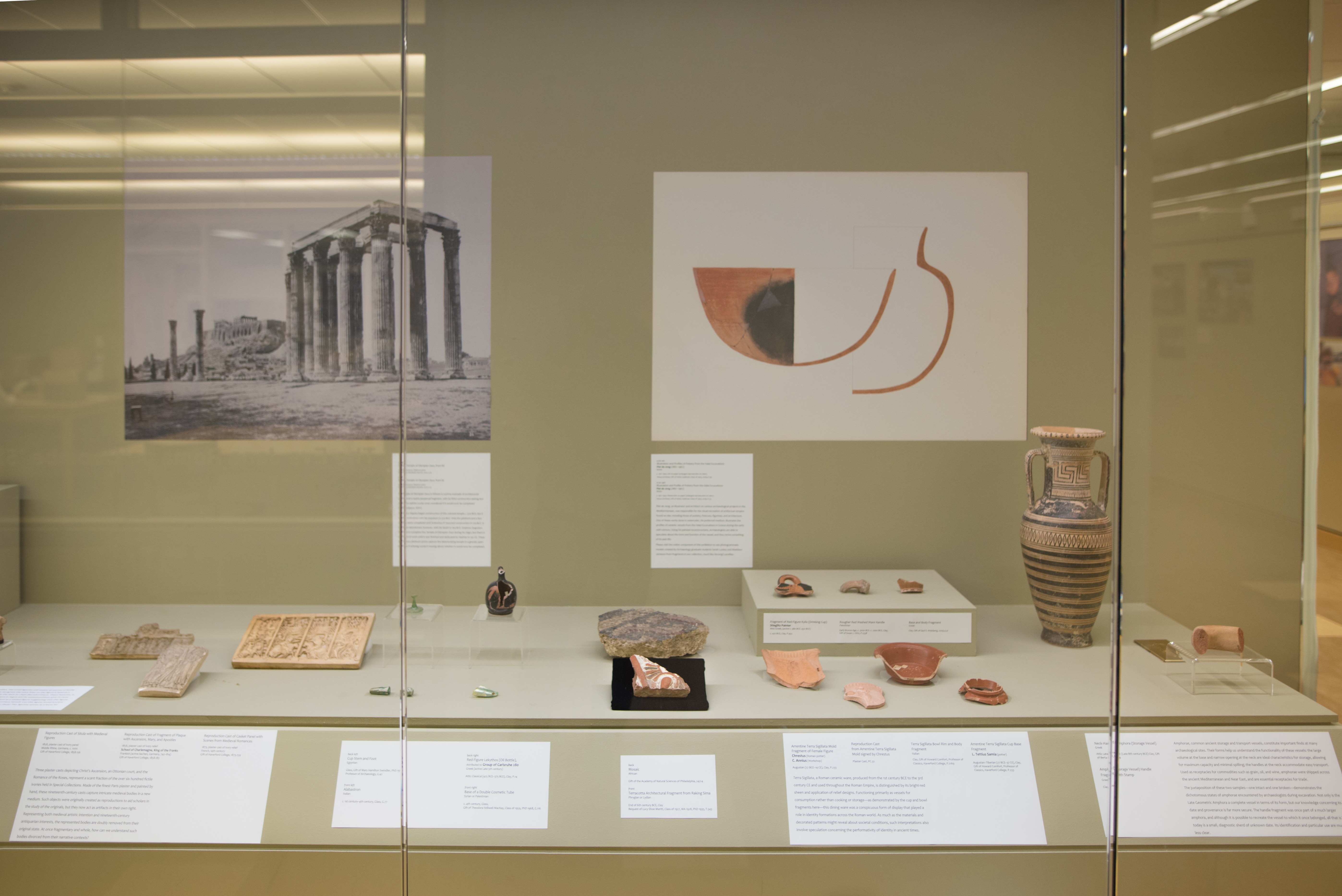
"Receptacle" refers to vessels and architecture, both of which are frequently encountered during archaeological excavations. The often fragmentary states of these artifacts, both monumental and miniature, hint at what was once there and enable reconstructions that shed light on the ways objects were used and how spaces were inhabited in the lives of past peoples. Fragments of two types of containers – architecture and vessels – are displayed in this section. Whether evidence of domestic or public buildings, cups or bowls, these fragments bear witness to numerous possibilities for using space as a container. Remnants exhibited here in stone, ceramic, glass, and metal can be used to reconstruct both entire buildings or vessels through archaeological analysis. This display also juxtaposes the remains as they came out of the ground with some potential reconstructions.