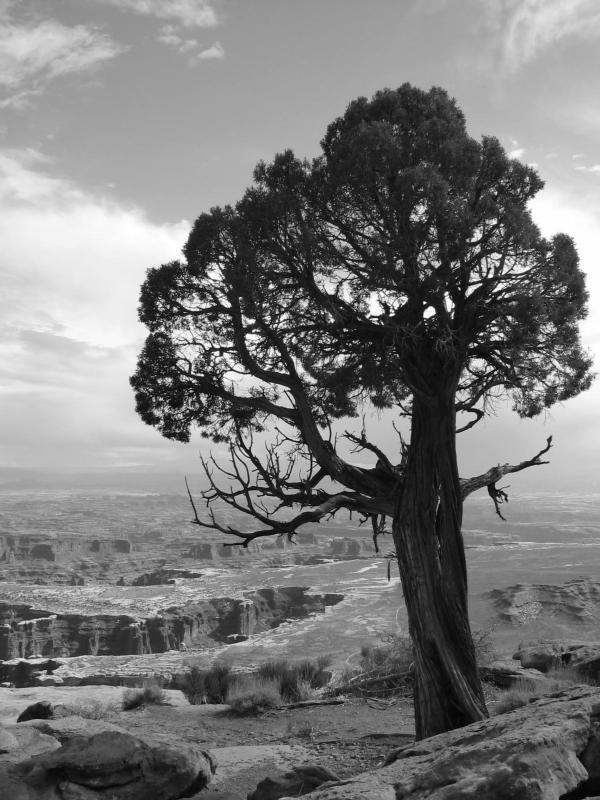
Paolo Bacigalupi by Peyton Byrne
Paolo Bacigalupi: A Man From Simple Roots
Paolo Bacigalupi was born in Paoina, Colorado in 1972. Along with his self-identified "hippie parents", he was raised in Western Colorado on a 15 acre farm of apple orchards, juniper trees, and hay fields. Bacigalupi decided to attend college at Oberline College in Oberlin, Ohio. It was here that Paolo decided to major in Chinese because he felt that "an educated person should speak more than one language". After his time at Oberlin, Paolo traveled for several years on the other side of the Pacific Ocean, spending most of his time in China.As a writer, Paolo is generally associated with being a science-fiction/dystopian novelist. But according to Paolo, that is not necessarily the case. For him, being labeled as a science fiction writer creates a wall between him and the reader since his writing does not fall under traditional science fiction. In terms of being a dystopian writer, Paolo prefers to be known as a writer of broken futures. If he uses the word dystopia, Paolo would be signifying the creation of an ideal world that is actually disastrous for the people that live in it. As a broken futures writer, the characters in his stories agree that they are in a terrible place, and nobody intended for it to be this way. The characters are forced to live with the consequences of humanity's decisions; they are living inside the broken future that was created for them. These doomed futures are often created by unexpected and dismissed dangers.
In his writing, Paolo focuses intensely on the relationships and social dynamic of humanity in times of strife. More specifically, he examines the increased self-interest experienced by any given individual when scarcity intersects with their social interactions. In an interview with NPR, Paolo touched on the fact that he views humanity as inherent reactors. By this, he means that people solely worry about the initial problem at hand rather than the long term effects that can arise from the problem. There is always a "quick fix", but humanity continually avoids the overlooking problems. People focus on how to help themselves in the short term rather than to collaborate together on a solution for the long term. As these larger issues are overlooked by a lack of action, humanity's world continues to spiral downward. In terms of humanity's future, Paolo is not particularly optimistic. Time and time again, humanity chooses what is convenient and profitable over anything else. People are convinced that technology and science will bail out any problems that are faced by society. However, Paolo points out that in everything humanity does, they choose the short term over the long term. Society will always choose the simple over the complex. In the video attached, Paolo further talks about this moral dilemma between whether his characters should act or not in his work.
The Anthropocene: Ruins of Selfish Action
Often viewed as the direct effects that society has had on the natural world, The Anthropocene is a term polarized by America today. Originally introduced in 1999 during a conference regarding the Holocene, the word "Anthropocene" continued to grow in popularity. Fifteen years later, the word was added to the official dictionary and has become more prominent since. Some of the biggest examples of The Anthropocene include the Industrial Revolution, deforestation, and major droughts among others. Generally, the human impact on the environment comes from a very negative lens, and rightfully so. The state of our environment is at the fault of society, and it is therefore society's responsibility to create a positive impact. However, the state of the Anthropocene is not as well known as it needs to be. Increased awareness is a necessary first step.Artists across the world have taken initiative in regards to increasing awareness about the Anthropocene. These "Artists of the Anthropocene" shape our understanding in unique ways. However, I argue that art of the Anthropocene shows and accepts the negative effects that selfish human activity has had on our environment while also inviting humanity to act upon their mistakes. The artist accomplishes this by examining the negative social interactions such as
This page has paths:
- dark literature for a dark time? literature of the anthropocene students at Xavier University