Scalar's 'additional metadata' features have been disabled on this install. Learn more.
Early Indigenous Literatures
Main Menu
The Child Who Would be Sovereign: Settler Colonial Frustrations and the Figure of the Child in Gertrude Simmons Bonnin's American Indian Stories
By: Kai Chase
Illicit Relations: The Challenges and Possibilities of Black and Indigenous Relations
soumya rachel shailendra
Legibility and Ambivalence in 19th Century Indigenous Women's Writing
An exhibit on E. Pauline Johnson and Sarah Winnemucca by Emma Cohen
Lyric Histories: An Investigation of Early Black (and) Native America through Poetic Vignettes
by Kira Tucker
Marriage and Empire in 19th Century Native American Women's Literature
by Angad Singh
Not-not blood quantum: the Dawes Act and ambivalent Indigeneity
by Yasmin Yoon
Reading Indigenous Authorial Presence in 18th- and 19th-century Paratexts
Title Page for Isabel Griffith-Gorgati's Exhibit
Resistance on and off the Page: A Collaborative Conversation between Black and Indigenous Literary Contributors
Featuring James Printer, Katherine Garret, Phillis Wheatley, and John Marrant (17th-18th Century Early Print Culture Participants)- By Lauren Johnson
Spiritual Armies, Resurrected Bones, and “Boundless” Continents: How Indigenous Activists in Early New England Reconfigured Puritan Millennialist Narratives
Featuring texts of Samson Occom, William Apess, and the Wampanoag Bible. By Surya Milner
Sovereignty or Removal: The Conflicting Indigenous Policies of 1835 in the Continental United States
Julia Gilman
What Does Water Do For Indigenous Peoples of the Great Lakes Region?
Featuring Heid E. Erdrich, Simon Pokagon, Black Hawk, and Simon Kofe by Sarah Nisenson
(Re)introducing Black Hawk and The Life (1833)
BHR 1-Intro
Yasmin Yoon
f7f231e474bf43796f973cd0ee560919050f7427
Lydia Abedeen
321b94302eca10e499769fd0179e64cd33bc4cd5
Kira Tucker
acf97d948460e98cd439646cc2db7ae17c5ebd9d
sarah nisenson
7cb5d2c1682fbd145e76716f3924f03bf25c616a
Kai Chase
d7cab5968a3a916efd1a14a48cc4832d5d5514ae
Soumya Shailendra
86c246fcc4aea83787381bffd2b839885bef5096
Bennett Herson-Roeser
c8289125445a56c819045a0091daf0402b3e0875
Surya Milner
077f837f3d662fd5ef9055f8258e5c47bb11f714
Julia Gilman
b860a8277eea484f91a1a9e0423cab4b52bae522
Lauren Johnson
98dac03e7c9c1ad41e1c0a8583704e55802f98ba
Angad Singh
d2b8d1d68ec374981c9e99b7cb400803bc678231
Emma Cohen
146e757b9fc3b3b416edecbf79592e8d743d4ba1
Charlotte Goddu
2d4c020870148128c7824ece179e04cffe180d95
Isabel Griffith-Gorgati
985a05928a67a856791fffac3dbba8acc85f6f37
Layered Maps
1 media/Maps_thumb.png 2022-12-06T08:02:27-08:00 sarah nisenson 7cb5d2c1682fbd145e76716f3924f03bf25c616a 41696 1 plain 2022-12-06T08:02:27-08:00 sarah nisenson 7cb5d2c1682fbd145e76716f3924f03bf25c616aThis page is referenced by:
-
1
media/mississippi river.jpeg
media/Screenshot 2022-12-02 at 4.34.02 PM.png
2022-12-01T11:41:19-08:00
"Pre-Occupied" Technological Production
18
plain
2022-12-06T12:32:41-08:00
“Pre-Occupied” exists in a few iterations, including the printed poem that acts as the voice-over in the multimedia video with the same title. Importantly though, Erdrich explains the necessity of the visuals to convey the message contained within the poetry. In an email to Bernardin, she explains that “[she] couldn’t get to the heart of what [she] was doing unless people could see the [Superman] film” (43). While the poem exists as a published piece of writing on its own, the poemeo is the iteration that conveys the fuller meaning of the work.
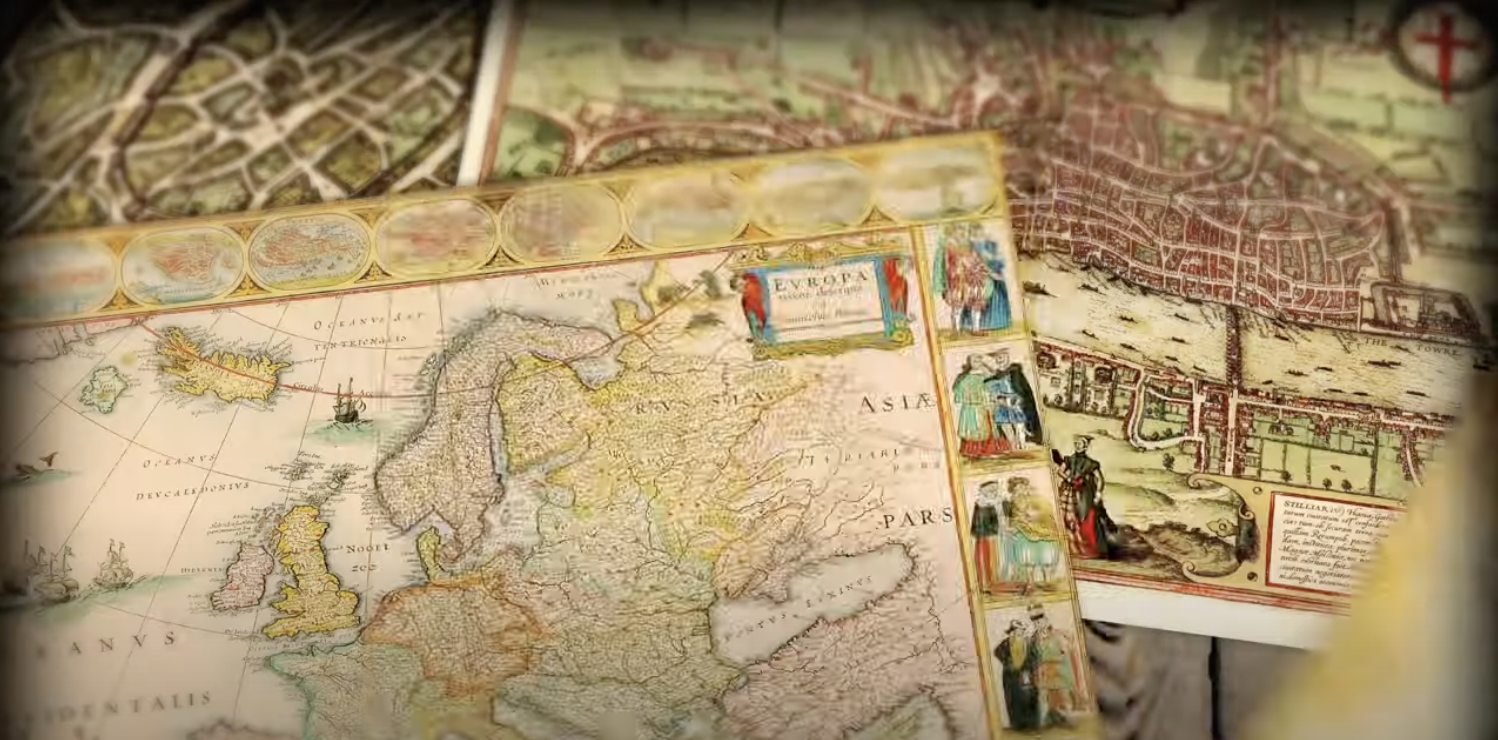
Layering sound, photographs, animations, historical maps, and other forms, the temporal simultaneity Erdrich insists upon is further explicated and complicated. Opening with triumphant music typical of superhero media, the titular “Pre-Occupied” graces the screen against a blue backdrop populated with white flecks, evocative of stars in a vast galaxy. Erdrich immediately primes her viewer for a superhero film, one in which there is a distinct good/evil binary where good ultimately triumphs. But Erdrich’s mobilization of Superman immediately troubles this expectation. Channette Romero explains how Erdrich’s inclusion of this particular animation “recontextualize[es] the Superman short [Electric Earthquake] within an Indigenous perspective… [and] calls attention to and resists the ways in which mainstream animation historically has been used to legitimize and help continue cultural and material imperialism” (Bernardin 43). With the inclusion and recursion of this animation, Erdrich demands her viewers consider who constitutes a hero in a space of overlapping occupations. She situates the willfully ignorant, feigned impotent Superman (“Possibly but just what/ do you expect us to do about it?” in answer to the Indigenous Mad Scientist claiming “Manhattan/ rightfully belongs to my people”) as the villain in response to the heroic persistence of Indigeneity in spite of colonial occupation (3:06- 3:10).
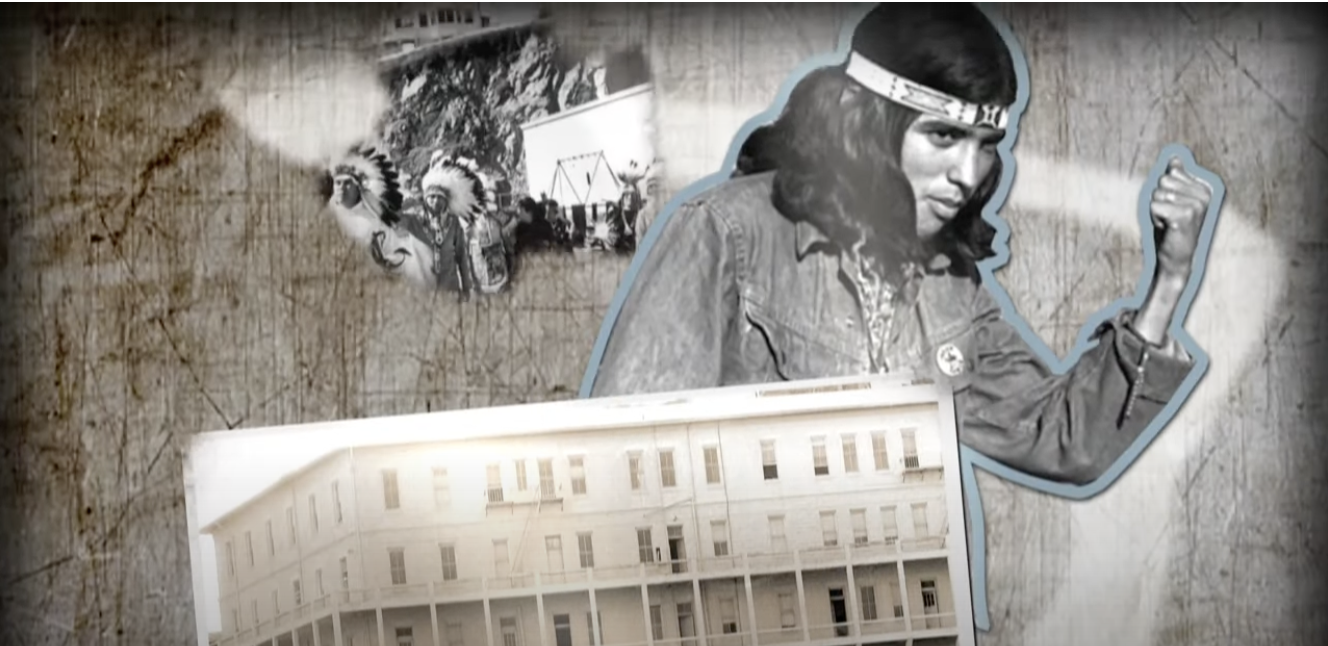
On a formal level, the incessant layering of media forms and fast-paced movement of the poemeo speaks to the distractions and pre-occupations that are a central facet of Erdrich’s work. Using digital technology allows Erdrich to “read rhizomically ‘across time’” so that the “reflection of stars/ whence all life commenced” can be situated next to Max Fleischer’s 1942 Superman cartoon, and both of these speak to and with the Occupy Movement, “Alcatraz and Wounded Knee” (Berliner 83; Erdrich 2:22, 3:19). Reading rhizomically is simply a different term for what Erdrich calls “digressions.”
Labeling some moments as digressions that must be excused, Erdrich forces the question about what constitutes distraction in this media and in the world. In an age of oversaturation, with boundless information available and oftentimes unavoidable, Erdrich conveys the dangers of distraction while also positioning their utility. Moving from a planetary scope to one highly localized in the Twin Cities, moving between precontact America to the contemporary moment, Erdrich compiles digressions and distractions. Her viewers must categorize this collage on their own terms, deciding what remains digression and what constitutes its integral components. Erdrich compiles historical allusions, popular culture references, cartoon animations, poetry, Indigenous art, and much more to “yield a broader recognition of how national mythologies and histories of gendered colonialism thrive today” (Bernardin 47). And while Bernardin positions these formally diverse, temporally and geographic disparate allusions as that which allows audiences to understand the persistent violence of settler colonialism, Erdrich’s collage also gives audiences license to make these connections across time and space for themselves, relying on the associations viewers bring to her poemeo to assign meaning and re-assign signification according to Indigenous ideas of temporal simultaneity and place-making.