Thanks for your patience during our recent outage at scalar.usc.edu. While Scalar content is loading normally now, saving is still slow, and Scalar's 'additional metadata' features have been disabled, which may interfere with features like timelines and maps that depend on metadata. This also means that saving a page or media item will remove its additional metadata. If this occurs, you can use the 'All versions' link at the bottom of the page to restore the earlier version. We are continuing to troubleshoot, and will provide further updates as needed. Note that this only affects Scalar projects at scalar.usc.edu, and not those hosted elsewhere.
Early Indigenous Literatures
Main Menu
The Child Who Would be Sovereign: Settler Colonial Frustrations and the Figure of the Child in Gertrude Simmons Bonnin's American Indian Stories
By: Kai Chase
Illicit Relations: The Challenges and Possibilities of Black and Indigenous Relations
soumya rachel shailendra
Legibility and Ambivalence in 19th Century Indigenous Women's Writing
An exhibit on E. Pauline Johnson and Sarah Winnemucca by Emma Cohen
Lyric Histories: An Investigation of Early Black (and) Native America through Poetic Vignettes
by Kira Tucker
Marriage and Empire in 19th Century Native American Women's Literature
by Angad Singh
Not-not blood quantum: the Dawes Act and ambivalent Indigeneity
by Yasmin Yoon
Reading Indigenous Authorial Presence in 18th- and 19th-century Paratexts
Title Page for Isabel Griffith-Gorgati's Exhibit
Resistance on and off the Page: A Collaborative Conversation between Black and Indigenous Literary Contributors
Featuring James Printer, Katherine Garret, Phillis Wheatley, and John Marrant (17th-18th Century Early Print Culture Participants)- By Lauren Johnson
Spiritual Armies, Resurrected Bones, and “Boundless” Continents: How Indigenous Activists in Early New England Reconfigured Puritan Millennialist Narratives
Featuring texts of Samson Occom, William Apess, and the Wampanoag Bible. By Surya Milner
Sovereignty or Removal: The Conflicting Indigenous Policies of 1835 in the Continental United States
Julia Gilman
What Does Water Do For Indigenous Peoples of the Great Lakes Region?
Featuring Heid E. Erdrich, Simon Pokagon, Black Hawk, and Simon Kofe by Sarah Nisenson
(Re)introducing Black Hawk and The Life (1833)
BHR 1-Intro
Yasmin Yoon
f7f231e474bf43796f973cd0ee560919050f7427
Lydia Abedeen
321b94302eca10e499769fd0179e64cd33bc4cd5
Kira Tucker
acf97d948460e98cd439646cc2db7ae17c5ebd9d
sarah nisenson
7cb5d2c1682fbd145e76716f3924f03bf25c616a
Kai Chase
d7cab5968a3a916efd1a14a48cc4832d5d5514ae
Soumya Shailendra
86c246fcc4aea83787381bffd2b839885bef5096
Bennett Herson-Roeser
c8289125445a56c819045a0091daf0402b3e0875
Surya Milner
077f837f3d662fd5ef9055f8258e5c47bb11f714
Julia Gilman
b860a8277eea484f91a1a9e0423cab4b52bae522
Lauren Johnson
98dac03e7c9c1ad41e1c0a8583704e55802f98ba
Angad Singh
d2b8d1d68ec374981c9e99b7cb400803bc678231
Emma Cohen
146e757b9fc3b3b416edecbf79592e8d743d4ba1
Charlotte Goddu
2d4c020870148128c7824ece179e04cffe180d95
Isabel Griffith-Gorgati
985a05928a67a856791fffac3dbba8acc85f6f37
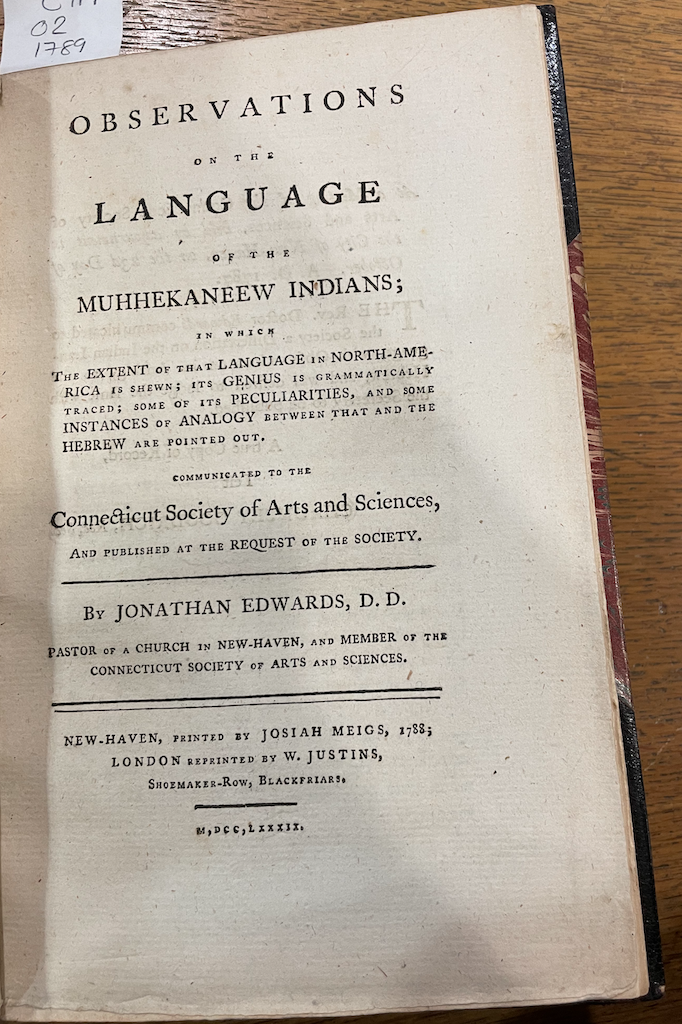
Title Page for Jonathan Edwards' "Observations on the Language of the Muhhekaneew Indians"
1 media/Screen Shot 2022-12-05 at 1.22.10 PM_thumb.png 2022-12-05T11:22:56-08:00 Isabel Griffith-Gorgati 985a05928a67a856791fffac3dbba8acc85f6f37 41696 1 Title page of Edwards' "Observations" plain 2022-12-05T11:22:57-08:00 Lauren Johnson 98dac03e7c9c1ad41e1c0a8583704e55802f98baThis page is referenced by:
-
1
2022-12-04T20:52:02-08:00
Samson Occom’s Paratexts
8
Isabel's Page 4
plain
2022-12-05T20:47:11-08:00
Samson Occom is often considered the “first Native American who wrote deliberately for print.”[1] Occom held far more power over his authorial output than did Garret or Paul. Yet, as a Mohegan writer in the pre-copyright era, his authority was limited: Occom did approve of and receive compensation for the first edition of his execution sermon published in 1772, however, he had no control over or remuneration from later editions.[2] Weyler also invites us to consider that while Occom was the “sole author” of the execution sermon for Moses Paul, he spoke on behalf of multiple communities: in addition to representing the Church, he spoke as a Mohegan and as an “ethnic Indian.”[3]
In his writing and life Occom exercised agency in navigating his liminal positionality as a Native American minister;[4] however, publishers came to structure the paratexts of Occom’s works in order to position him more firmly within settler Christian narratives. While Occom’s writing did not quite become paratext for the works of white settler authors, the paratexts for his sermons worked to decenter his authorial voice over time.
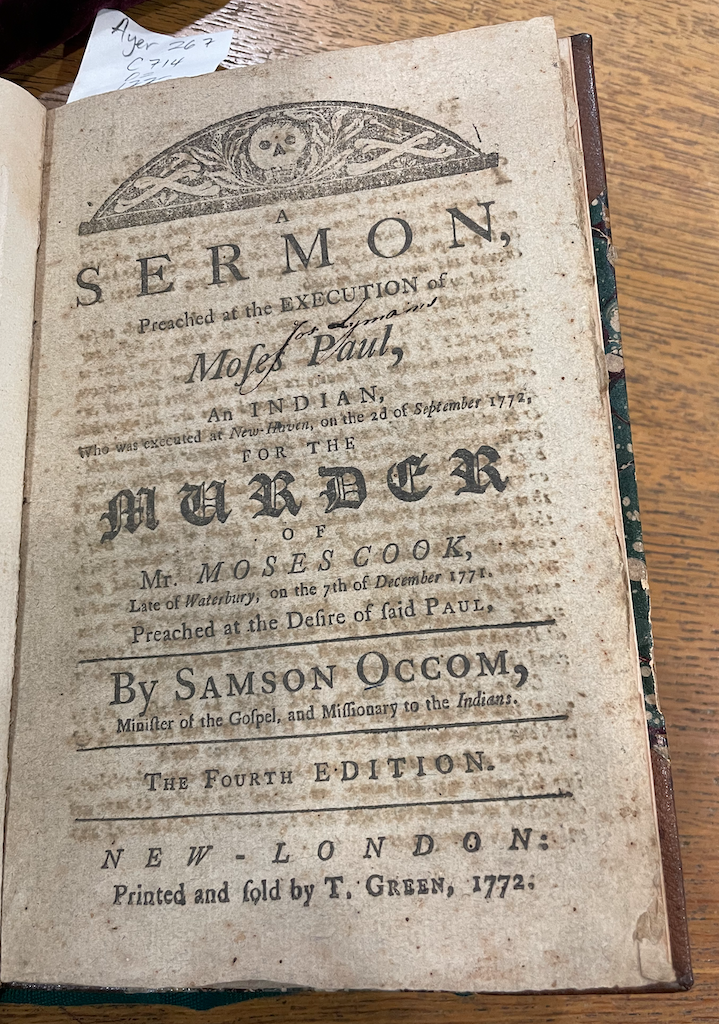
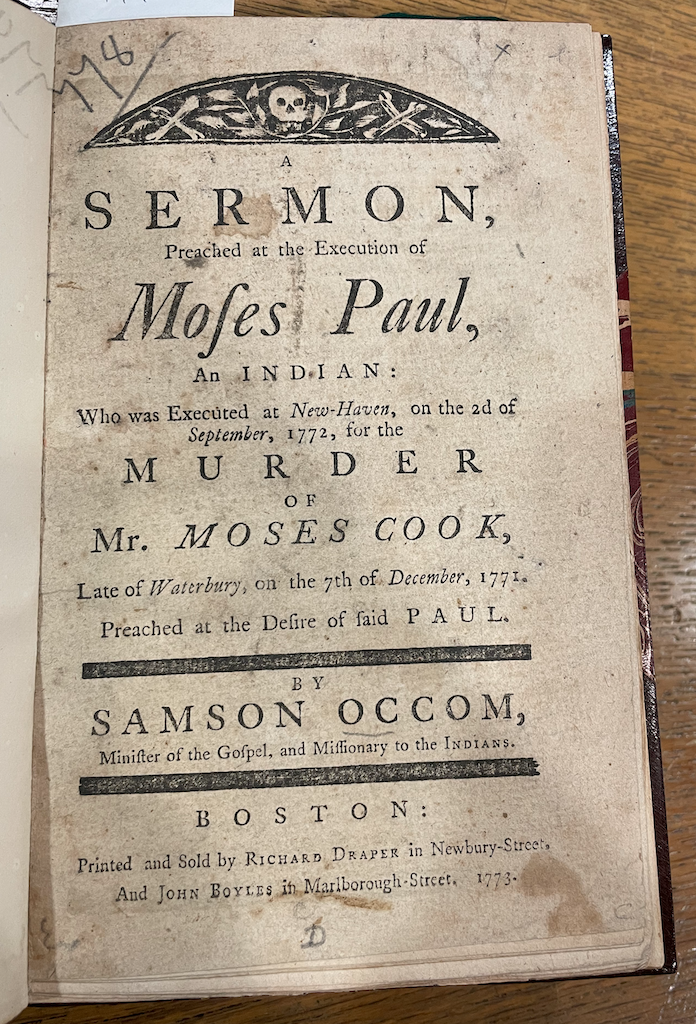
Early editions of Occom’s execution sermon did give pride of place to the sermon, with a preface and an introduction written by Occom and the appended "Sketch" of Paul’s life. Consider the title pages for these 1772 and 1773 editions, in which Occom is the only author listed:
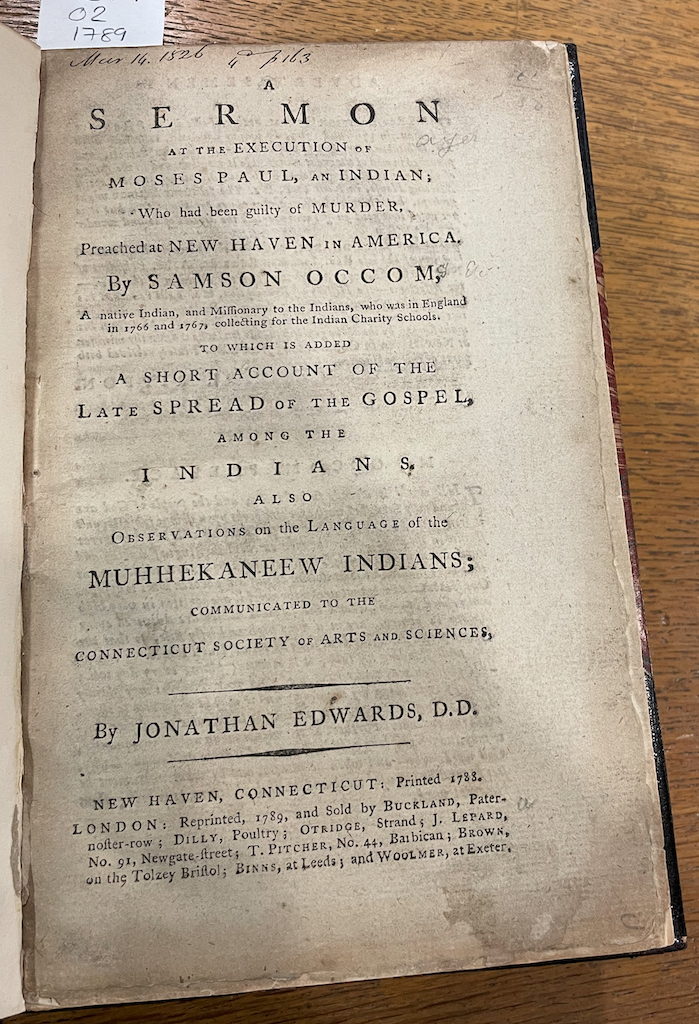
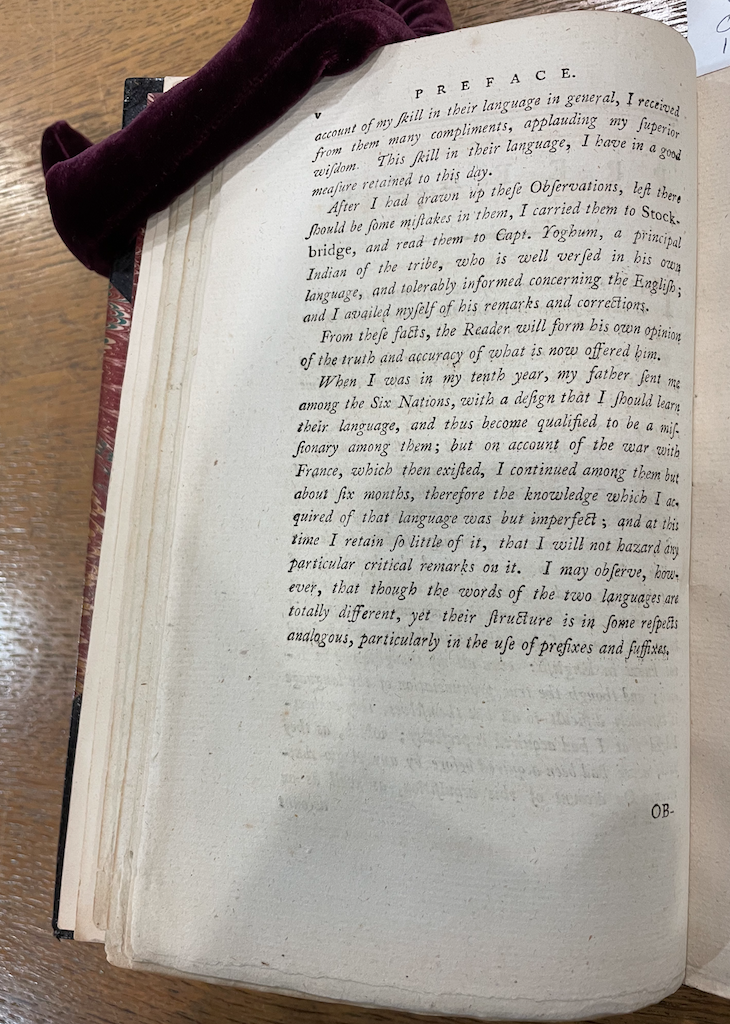
A later edition of the sermon, published in 1788 in New Haven and reprinted in 1789 in London, frames Occom’s sermon in a different way. Occom’s sermon is compiled together with a “SHORT ACCOUNT OF THE LATE SPREAD OF THE GOSPEL AMONG THE INDIANS” as well as a text entitled “OBSERVATIONS on the LANGUAGE of the MUHHEKANEEW INDIANS,”[5] written by Jonathan Edwards, a white settler minister of greater stature than Occom. The title page does not frame Edwards’ text as an appendix to Occom’s sermon; instead, the format of the title page gives Edwards pride of place as an author.
By pairing Occom's sermon with these settler-authored texts about Indigenous peoples, this edition serves to defang Occom as a critic of the settler Christian community’s attitudes toward Native Americans. This edition is a “composite”[6] text, but one in which Occom’s writing is appropriated for settler narratives without his consent.
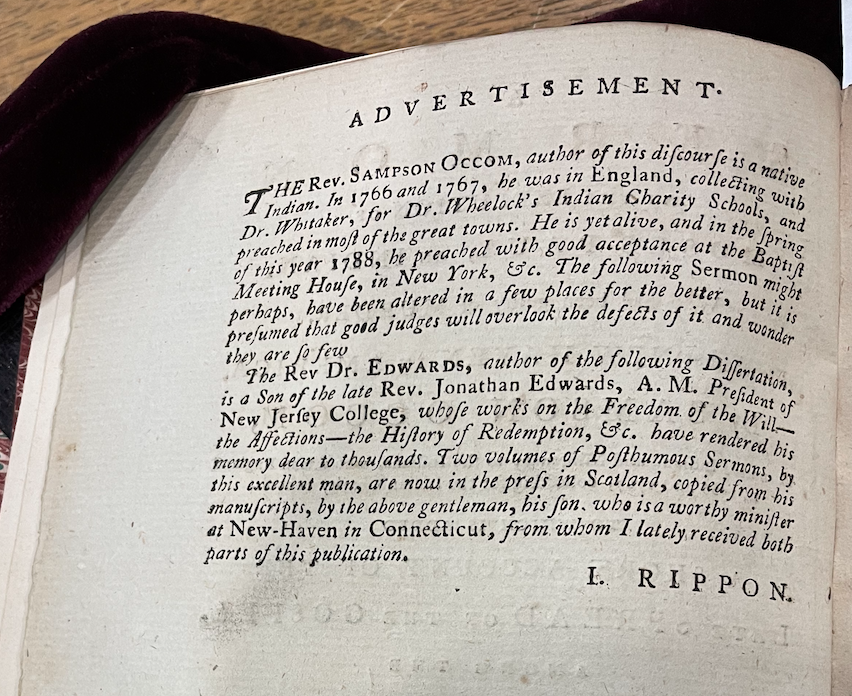
This edition opens not with Occom’s preface, as did the earlier editions shown above, but with an “Advertisement” by I. Rippon. The advertisement clearly favors Edwards’ writing over Occom’s, stating, “The following Sermon might perhaps, have been altered in a few places for the better, but it is presumed that good judges will overlook the defects of it and wonder they are so few.”[7] Jonathan Edwards receives nothing but praise as a “worthy minister,” in contrast.[8]
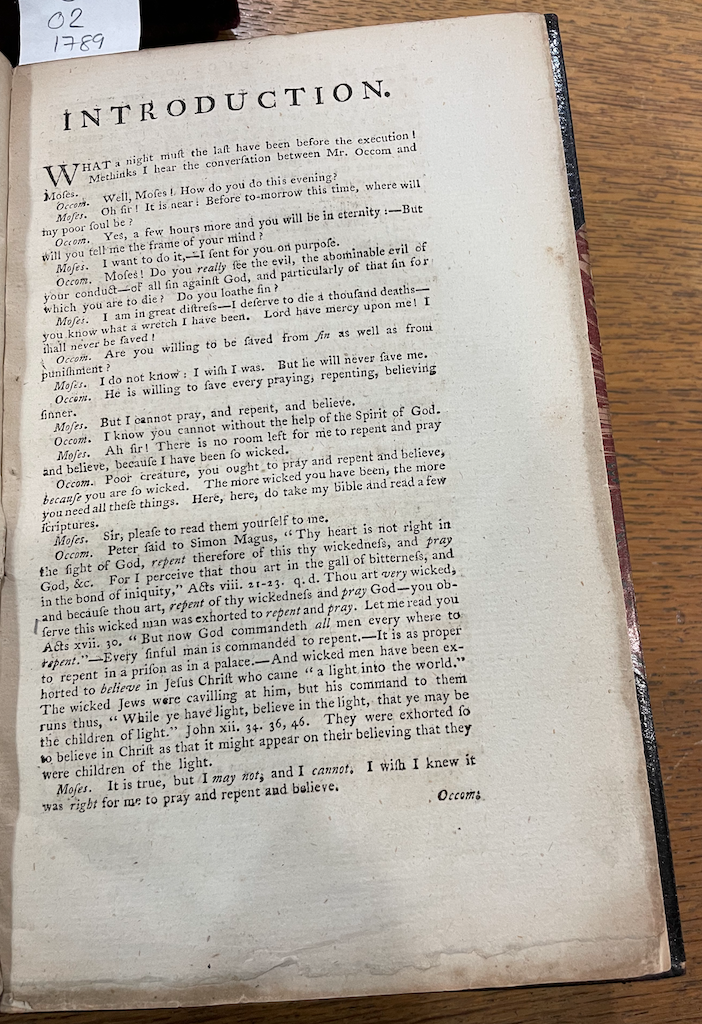
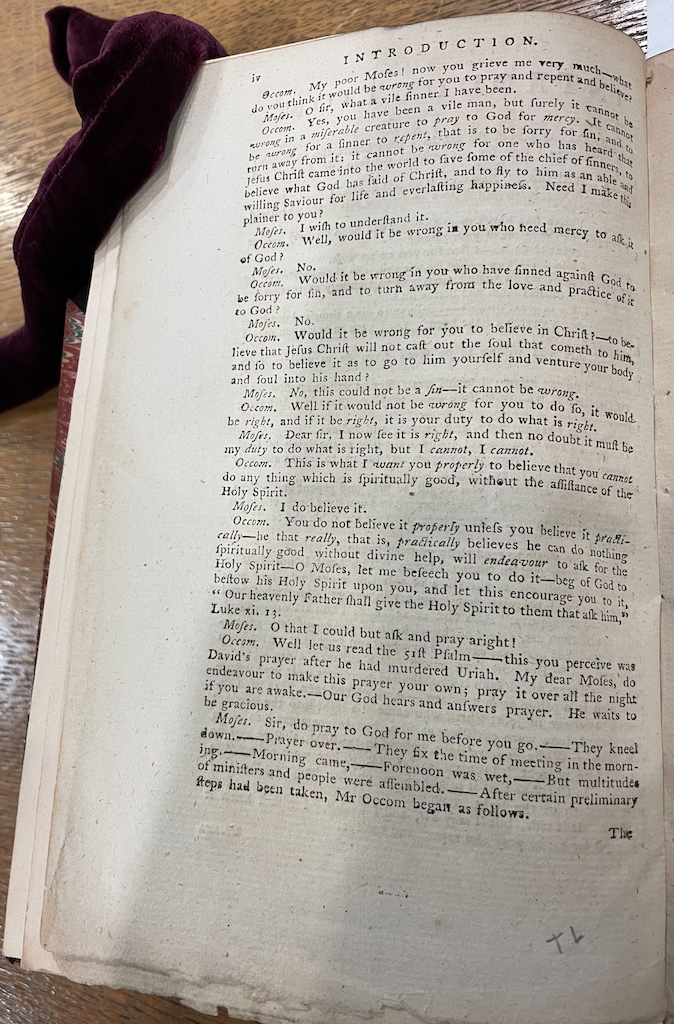
Following Occom’s preface is an “Introduction,” which features a fictional conversation between Occom and Paul on the night prior to Paul’s execution.[9] This text blatantly and falsely appropriates Occom’s and Moses’ voices in service of a settler-authored narrative. The dialogue portrays Paul as a wretched figure, fearing his earthly and divine punishment yet unable to muster the conviction to “pray aright.”[10] Not only does the act of appropriating Occom’s and Paul’s voices strip them of their authorial agency, but the imagined dialogue itself depicts Paul as a figure who fails to grasp any agency in his own salvation and Occom as thus an ineffective minister to Paul.[11]
Following the execution sermon, Jonathan Edwards’ text receives its own title page:
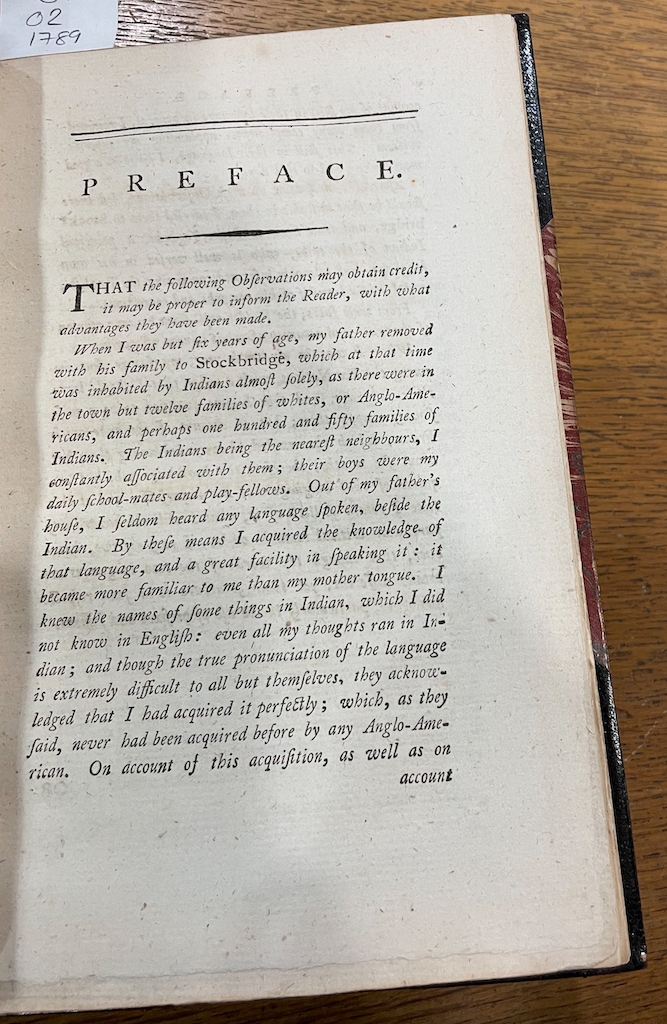
This text by Edwards is notable as a precursor to the settler-authored ethnographic work about Indigenous peoples that would become prominent in the 19th century. Edwards presents himself as an authority on the Muhhekaneew language, and claims that the text was authorized by members of the tribe.[12] He thus positions the text as a collaborative one, but with himself as the ultimate authoritative and authorial figure.
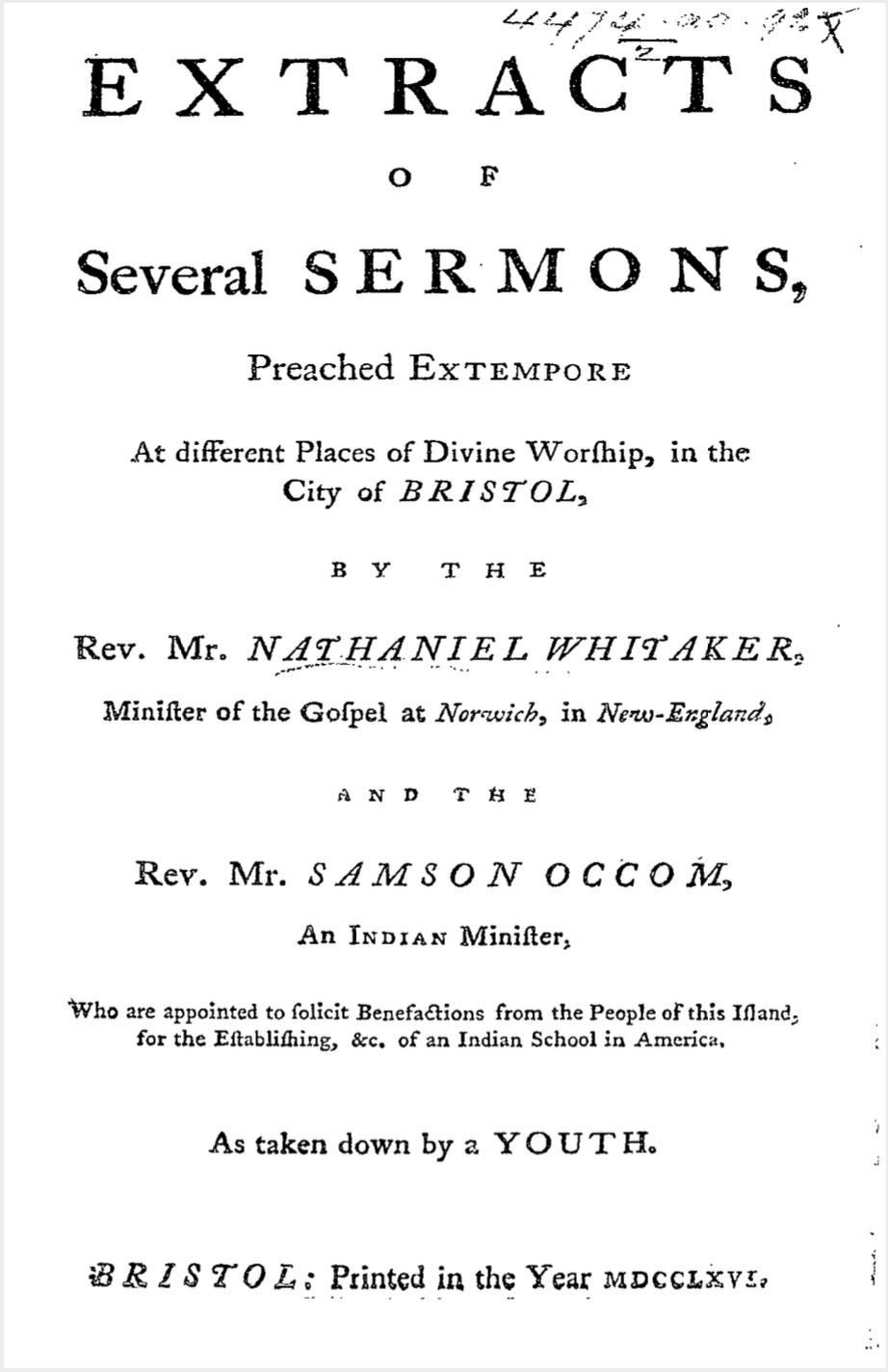
Another example of the diminishment of Occom’s authorial presence in favor of settler authorship is a 1766 publication entitled, “EXTRACTS OF Several SERMONS, Preached EXTEMPORE At different Places of Divine Worship, in the City of BRISTOL, BY THE Rev. Mr. NATHANIEL WHITAKER, Minister of the Gospel at Norwich, in New-England, AND THE Rev. Mr. SAMSON OCCOM, An Indian Minister, Who are appointed to solicit Benefactions from the People of this Island, for the Establishing, &c. of an Indian School in America. As taken down by a YOUTH.”[13] The title page positions Whitaker and Occom equally as authors of the compiled text. Yet this equivalence is misleading, as Occom is the author of four of the included sermons, and Whitaker of only one. The title page thus decenters Occom’s authorial voice in a text primarily authored by him. Whitaker is also granted a more distinguished and specific title than Occom: where Whitaker is described respectfully as a “Minister of the Gospel” in a particular town, Occom is tokenized as an “Indian Minister.”
While Occom exercised significant agency in authoring his sermons, his lack of ownership over his work allowed publishers and editors to appropriate and sideline his voice. The following page will turn to an early example of a Native American proprietary author, Pequot writer William Apess. I will consider how Apess’ 1829 autobiography, A Son of the Forest, subverted print culture’s paratextual sidelining of Indigenous authorship.[1] Karen Weyler, “‘Common, Plain, Every Day Talk’ from ‘An Uncommon Quarter’: Samson Occom and the Language of the Execution Sermon,” 127.[2] Ibid., 134, 137.[3] Ibid., 127-128.[4] Ibid., 116.[5] Samson Occom,“A sermon at the execution of Moses Paul, an Indian: who had been guilty of murder, preached at New Haven in America,” Printed in New Haven, CT, 1788. Reprinted and sold in London by Buckland, Paternoster-row; Dilly, Poultry; Otridge, Strand; J. Lepard, No. 91, Newgate-street; T. Pitcher, No. 44, Barbican; Brown, on the Tolzey Bristol; Binns, at Leeds; and Woolmer, at Exeter, 1789, i.[6] Phillip Round, “Toward an Indian Bibliography,” 16.[7] Samson Occom, “A sermon at the execution of Moses Paul, an Indian: who had been guilty of murder, preached at New Haven in America,” ii.[8] Ibid., ii.[9] Karen Weyler, “‘Common, Plain, Every Day Talk’ from ‘An Uncommon Quarter’: Samson Occom and the Language of the Execution Sermon,” 137.[10] Samson Occom, “A sermon at the execution of Moses Paul, an Indian: who had been guilty of murder, preached at New Haven in America,” iv.[11] Ibid., iv.[12] Ibid., Edwards Preface, iv.[13] Samson Occom and Nathaniel Whitaker, Extracts of Several Sermons, Preached Extempore at Different Places of Divine Worship, in the City of Bristol (Bristol, 1766), title page.